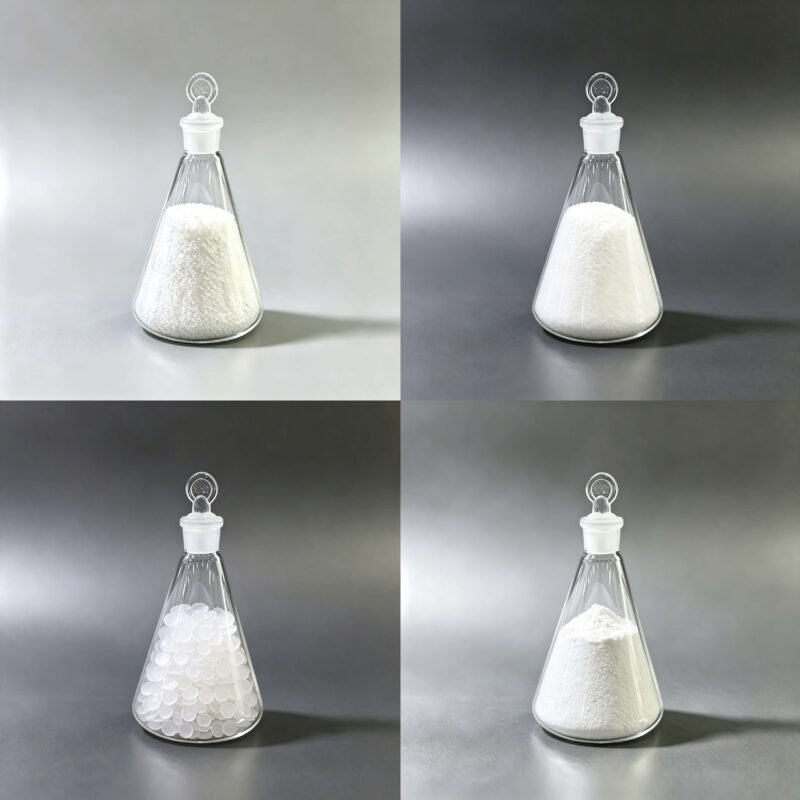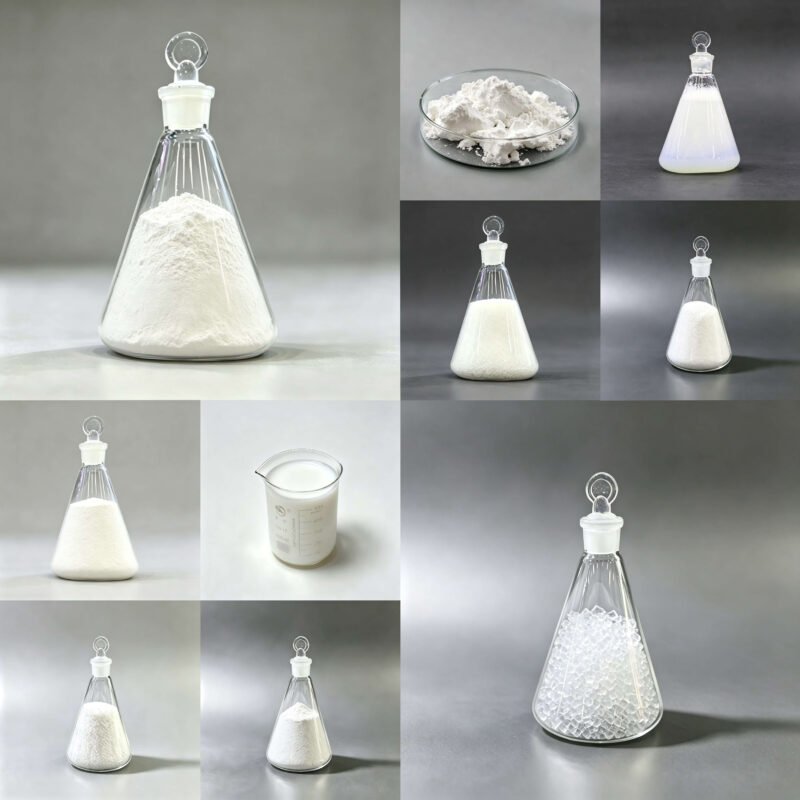


PVDF vs. PVC: Overview
Although both PVDF (Polyvinylidene Fluoride) and PVC (Polyvinyl Chloride) are popular thermoplastic polymers, they cater to separate market needs and applications.
PVDF :This thermoplastic fluoropolymer delivers remarkable chemical stability, inherent strength, and high purity without relying heavily on additives, plasticizers, or stabilizers. It is specifically designed to perform reliably in harsh environments that demand exceptional durability, purity, and resistance to aggressive chemicals.
PVC :A versatile, cost-effective and high-volume plastic. In its neat resin form, PVC is rigid and brittle. Various additives such as plasticizers, stabilizers and lubricants are therefore incorporated to accommodate diverse applications ranging from rigid pipes to flexible hoses. It is well suited for ambient cold water piping, drainage systems, construction and general civil engineering projects.
The fundamental difference between the two lies in their molecular structures, resulting in significant disparities regarding temperature resistance, chemical resistance, mechanical and physical properties, electrical properties, cost, and processing requirements. This blog post provides a comprehensive comparison of PVDF and PVC across these aspects to help you make an informed choice.
Key Differences Between PVDF and PVC
| Property | PVDF | PVC |
| Full Name | Polyvinylidene fluoride | Polyvinyl chloride |
| Polymer Type | Fluoropolymer | Chlorinated polymer |
| Key Elemental Advantage | Strong C–F bond | Carbon-chlorine bond |
| Cost | High | Low |
| Market Size | Relatively small | One of the world’s highest-volume plastics |

PVDF vs. PVC: A Comprehensive Comparison
1. Temperature resistance
- PVDF
This is a high-performance, high-temperature-resistant polymer. It exhibits excellent thermal stability and can typically operate continuously at temperatures up to 150°C without losing its structural integrity. PVDF is the ideal choice for conveying high-temperature fluids or steam, or for handling chemicals under high-temperature conditions.
- PVC
Standard PVC has a much lower thermal threshold, typically limited to operating environments of 60°C to 80°C (actual service temperature depends on the grade, stress, chemical environment, and design conditions). Above this temperature, it begins to soften and rapidly loses mechanical strength. Stabilizers must be added and the formulation adjusted to enhance heat resistance.
2. Chemical resistance
This is one of the major differences between PVDF and PVC.
- PVDF
PVDF exhibits exceptional, near-universal chemical resistance. It withstands concentrated acids (hydrochloric, sulfuric, and nitric acids), halogens, oxidizing agents, and organic solvents. This makes PVDF particularly suitable for applications in chemical processing equipment, semiconductor manufacturing, pharmaceutical systems, and high-purity fluid handling.
- PVC
Although PVC exhibits good resistance to many weak acids and bases, it is more susceptible to attack by aggressive chemicals. Prolonged exposure to certain organic solvents, ketones, or hydrocarbons can cause PVC to swell, become brittle, or dissolve.
3. Mechanical Properties
Both materials possess practical mechanical strength, but their strength characteristics differ.
- PVDF
PVDF possesses exceptional toughness, wear resistance, and mechanical strength, and exhibits excellent creep resistance. It maintains high tensile strength even under thermal or chemical stress.
- PVC
Although PVC has lower overall tensile strength and hardness compared to PVDF, formulation adjustments can impart excellent elongation at break (i.e., greater flexibility). This gives it an advantage in applications requiring flexible connections or structures with a degree of flexibility.
4. UV Resistance and Weatherability
- PVDF
PVDF exhibits excellent UV and weather resistance by withstanding UV radiation, weathering, oxidation, and outdoor environmental exposure; specifically, it does not degrade, fade, or lose mechanical strength even after decades of direct sunlight exposure—which is a key reason why fluoropolymers are widely used in demanding outdoor applications such as architectural coatings and photovoltaic backsheets.
- PVC
Standard PVC is susceptible to UV degradation; without the addition of specific UV stabilizers, titanium dioxide, or impact modifiers, prolonged exposure to sunlight leads to discoloration, chalking, and embrittlement.
5. Electrical Properties
- PVDF
PVDF is an excellent electrical insulating material that maintains good performance even under harsh chemical and thermal conditions. Additionally, PVDF exhibits piezoelectric and pyroelectric properties, enabling specialized applications in sensors, actuators, and energy-related technologies.
- PVC
PVC is also an excellent electrical insulation material with a low dielectric constant; it is widely used in applications such as cable insulation, wire sheathing, and electrical conduits.
6. Purity and Dissolution Characteristics
- PVDF
PVDF is characterized by extremely high purity and biological inertness, with very low levels of extractables. It does not leach contaminants, heavy metals, or organic substances, making it suitable for applications such as ultrapure water systems, semiconductor manufacturing, pharmaceuticals, and food-contact use.
- PVC
In contrast, PVC (especially flexible PVC) often contains plasticizers, stabilizers, and other additives prone to leaching; these compounds can migrate out of the plastic over time, particularly upon contact with certain fluids.
7. Flame resistance
Compared to many hydrocarbon polymers, both exhibit relatively good flame-retardant properties.
- PVDF
The fluorinated molecular structure of PVDF imparts excellent resistance to ignition and flame spread, as well as low smoke generation, making it commonly used for cable jackets that meet requirements for use in ventilated spaces.
- PVC
PVC contains chlorine, which helps enhance its flame resistance; however, when burned, it releases dense smoke and corrosive hydrogen chloride gas.
8. Processing and Additive Requirements
These two materials differ significantly in their manufacturing and compounding characteristics, which is a key consideration for manufacturers.
- PVDF
PVDF exhibits excellent inherent thermal stability and unique melting characteristics. Its processing is generally clean, eliminating the need for complex, specialized thermal stabilizer formulations or wax-based lubricant systems; however, it typically requires higher processing temperatures and stricter process control.
- PVC
PVC offers significant advantages in terms of processing flexibility because manufacturers can adjust its properties by incorporating additives such as stabilizers, lubricants, processing aids, impact modifiers, plasticizers, and fillers or pigments; subsequently, this provides extensive scope for formulation design. To that end, suitable processing methods include extrusion, injection molding, calendering, blow molding, and other conventional processing techniques.
9. Cost Comparison
- PVDF
Due to high raw material costs and complex manufacturing processes—which typically require higher processing temperatures and stricter process controls—the cost is generally higher than that of PVC.
- PVC
It is relatively easy to process and cost-effective, offering exceptional value for money; this is why it has become one of the most widely used plastics globally for infrastructure construction.
10. Application Comparison
- PVDF
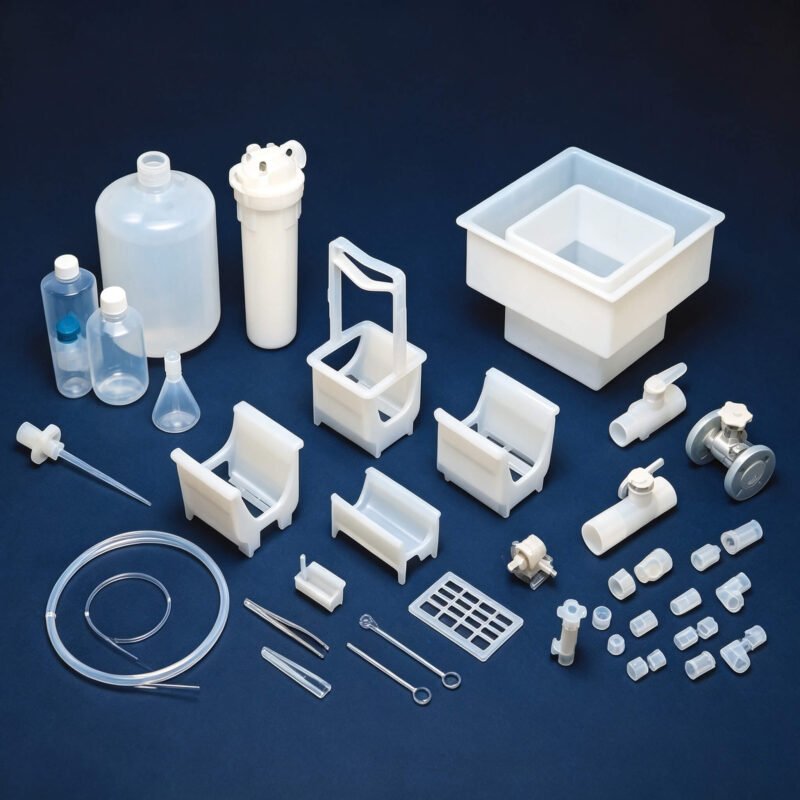
Engineered for demanding, high-end applications where standard plastics fail, this material excels in aerospace, semiconductor fabrication, aggressive chemical processing, and advanced water filtration membranes. It is also extensively utilized across lithium-ion battery binders, architectural coatings, pharmaceutical machinery, wire insulation, and sensitive electronics, as well as industrial pumps, valves, linings, and sensors.
- PVC
Economical and well-suited for high-volume manufacturing, this material is the primary choice for products like construction and decorative sheets, piping, wire insulation, window profiles, and foam boards. Additionally, it sees widespread application in medical tubing, flexible packaging, synthetic leather, and roofing membranes.
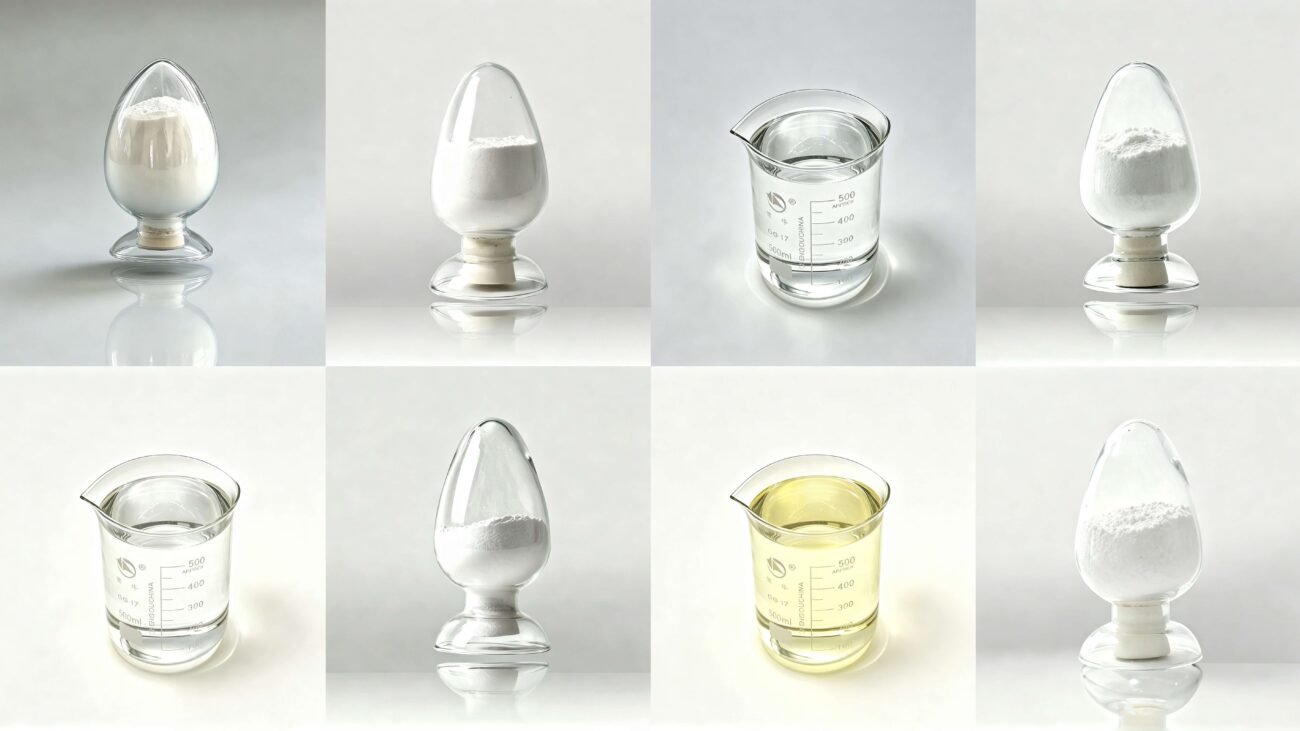
PVDF vs. PVC: How to Choose
The choice between the two depends on a trade-off involving temperature, chemical corrosivity, purity requirements, and cost, while also taking into account the manufacturer’s product grades and specific specifications.
(1) Scenarios where PVDF is the preferred choice
High-temperature environments: Continuous operating temperatures exceeding 60°C, or applications requiring resistance to thermal shock.
Highly corrosive chemicals: Exposure to concentrated acids, strong oxidizing agents, halogens, or aromatic/chlorinated hydrocarbon solvents.
High-purity requirements: Semiconductor, pharmaceutical, or ultrapure water systems with extremely strict controls on extractables and contamination.
Long-term outdoor exposure: Applications requiring inherent UV resistance and weatherability without the need for additional protection.
High toughness requirements: Applications where the material must withstand impact without cracking.
High-end application needs: Specialized for demanding, high-end applications beyond the capabilities of standard plastics.
(2) Scenarios where PVC is the more cost-effective choice
Moderate-temperature water/chemicals: Water treatment, drainage, and ventilation systems operating at ambient temperatures, as well as compatible acid, alkali, and salt solutions.
High cost-effectiveness: PVC is relatively low-cost and easy to process, making it a common choice for large-scale and high-volume applications.
High rigidity requirements: PVC has a higher modulus of elasticity, offering greater stiffness in structural components that must resist deformation.
Low-pressure fluid components: Low-pressure manifolds, valve bodies, and similar parts that do not involve strong solvents or high temperatures.
FAQ
Q: Is PVDF safe?
Under normal conditions of use, experts consider PVDF non-toxic and inert. Note that specific grades must meet the following standards: FDA compliance for food contact; USP Class VI certification for medical/pharmaceutical applications; and NSF/ANSI 61 certification for drinking water contact applications.
Q: What precautions should be taken during PVDF processing?
Use local exhaust ventilation during melt processing; avoid temperatures exceeding 300°C; use a self-contained breathing apparatus in the event of a fire; and perform incineration only in facilities equipped with hydrogen fluoride (HF) scrubbing systems.
Q: What is the most common additive in PVC?
Plasticizers and heat stabilizers are the most common additives used in PVC. Plasticizers make the PVC flexible, while heat stabilizers prevent the material from burning during the manufacturing process.
Q: Are PVC additives safe for the environment?
Modern PVC additives are increasingly focused on sustainability and safety. Many manufacturers have shifted from lead-based stabilizers to calcium-zinc alternatives to meet environmental regulations and safety standards.
Summary
In summary, PVDF trades higher costs for high reliability, high purity, and long service life, whereas PVC meets general requirements for moderate operating conditions while keeping costs under control.
For manufacturers of PVC additives, this comparison highlights a significant market distinction: PVC’s properties are heavily dependent on its formulation; consequently, ingredients such as stabilizers, processing aids, lubricants, and impact modifiers can significantly influence the final product’s processing performance and characteristics. In contrast, the market competitiveness of PVDF relies more heavily on the inherent properties of the polymer itself.
Reference Sources:
Performance Fluoropolymer Partnership (PFP):https://fluoropolymerpartnership.com
PlasticsEurope FPG(Fluoropolymers Product Group):https://www.fluoropolymers.eu/
British Plastics Federation – PVC Information:https://www.bpf.co.uk
SpecialChem – Polymer Additives Database:https://polymer-additives.specialchem.com
PVC Forum:https://www.pvc.org/