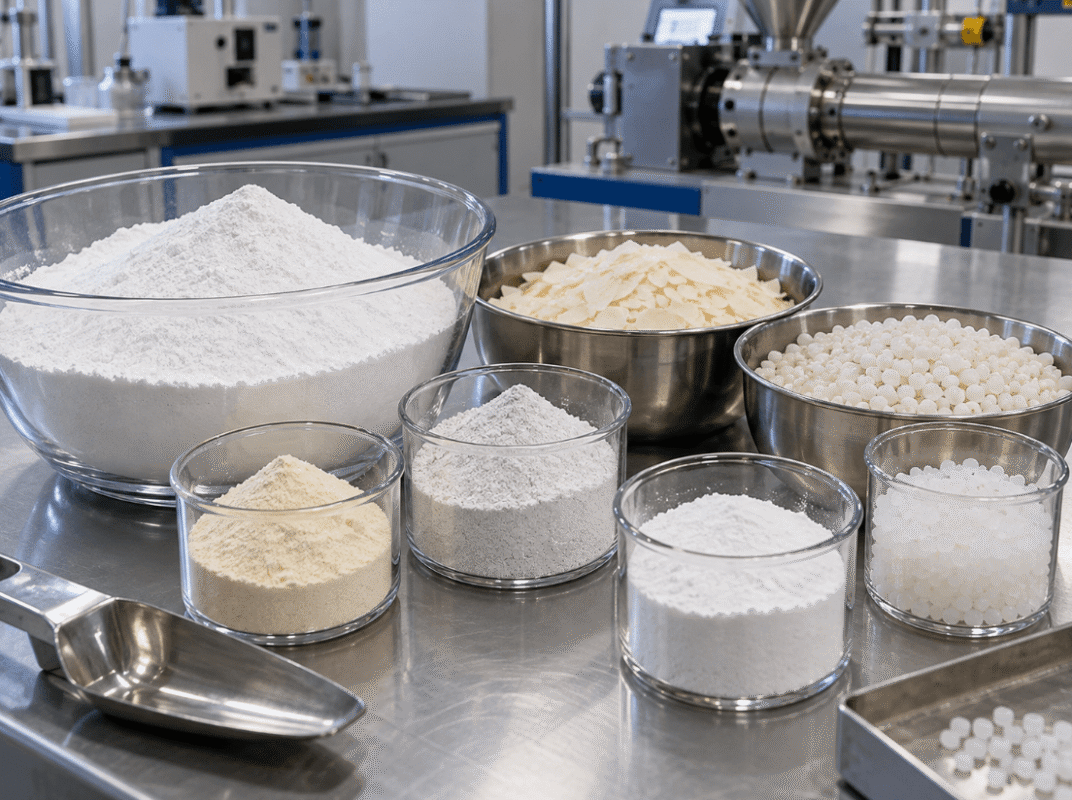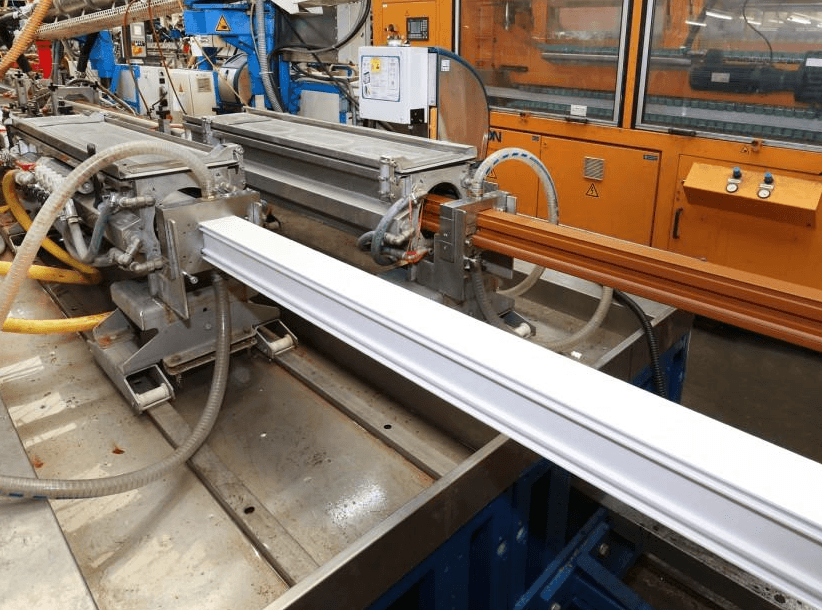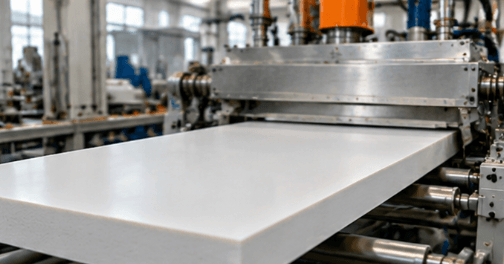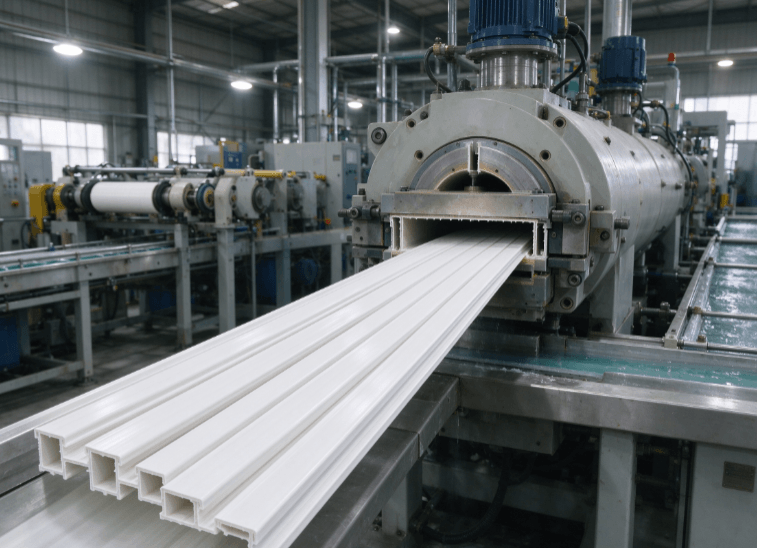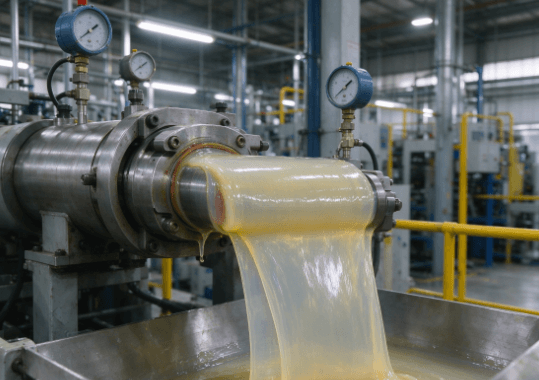

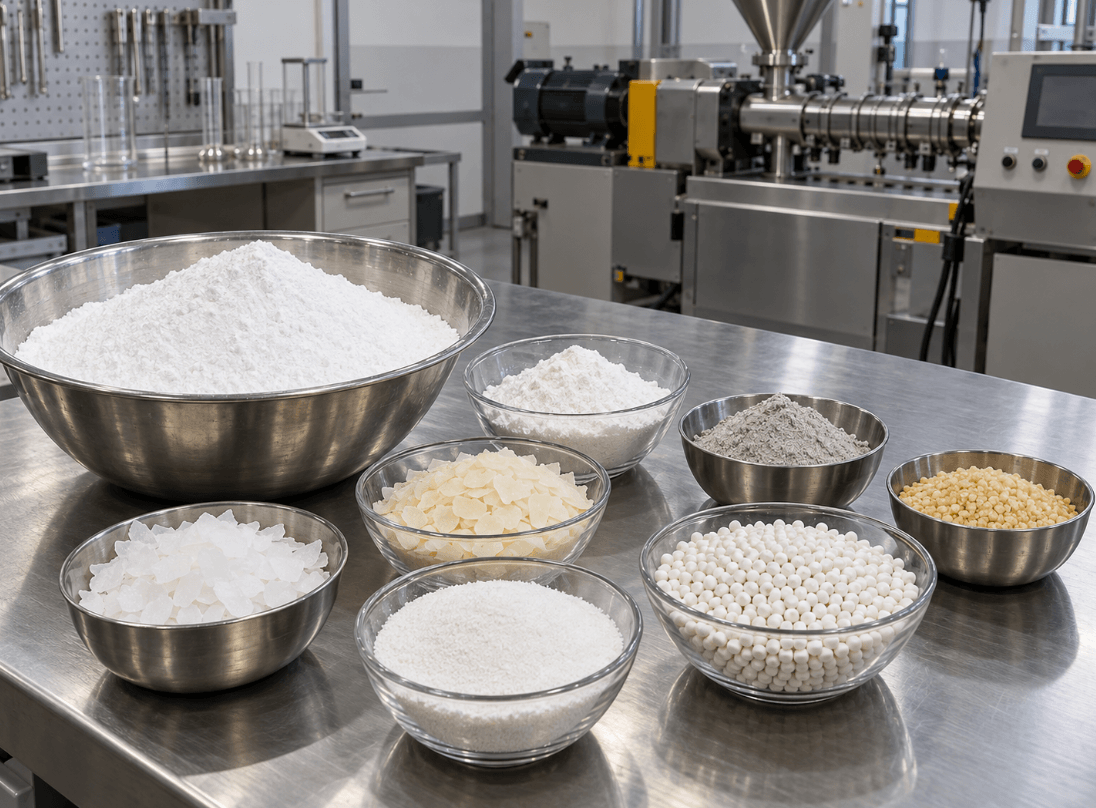
PVC additive selection for extrusion requires balancing heat stabilization, lubrication, processing aids, and performance modifiers around the resin, production process, and finished-product requirements. No single additive determines extrusion quality on its own. A stabilizer may protect PVC against thermal degradation, a lubricant controls friction and release, and a processing aid modifies fusion and melt strength. These functions interact, so the correct formulation must be evaluated as a complete system.
For manufacturers of PVC pipes, profiles, sheets, and foam boards, a balanced additive package helps maintain consistent processing, reduce defects, and meet product specifications. The selection process should begin with the application and its principal processing challenges, followed by grade selection, compatibility review, and controlled production testing.
Why PVC Extrusion Requires a Balanced Additive System
PVC is a heat-sensitive polymer that requires formulation adjustments to achieve the processing behavior and properties required by a finished product. During extrusion, the compound experiences heat, shear, pressure, and changes in flow as it passes through the screw, barrel, and die.
Additives address different requirements, but their effects can overlap. For example, changing the lubricant system may affect fusion timing, while changing the stabilizer or processing aid may influence the formulation’s processing window. Selecting each ingredient independently without considering these interactions can create new problems even when individual additives appear suitable.
A balanced system should meet four objectives:
- Thermal stability: Maintain adequate protection against heat-related degradation during processing.
- Controlled fusion and flow: Develop the required melt structure while maintaining stable extrusion.
- Finished-product performance: Meet requirements for dimensions, surface appearance, impact resistance, or other application-specific properties.
- Production consistency: Deliver repeatable results across normal operating conditions and material batches.
For a broader introduction to additive functions, see the complete guide to PVC additives.
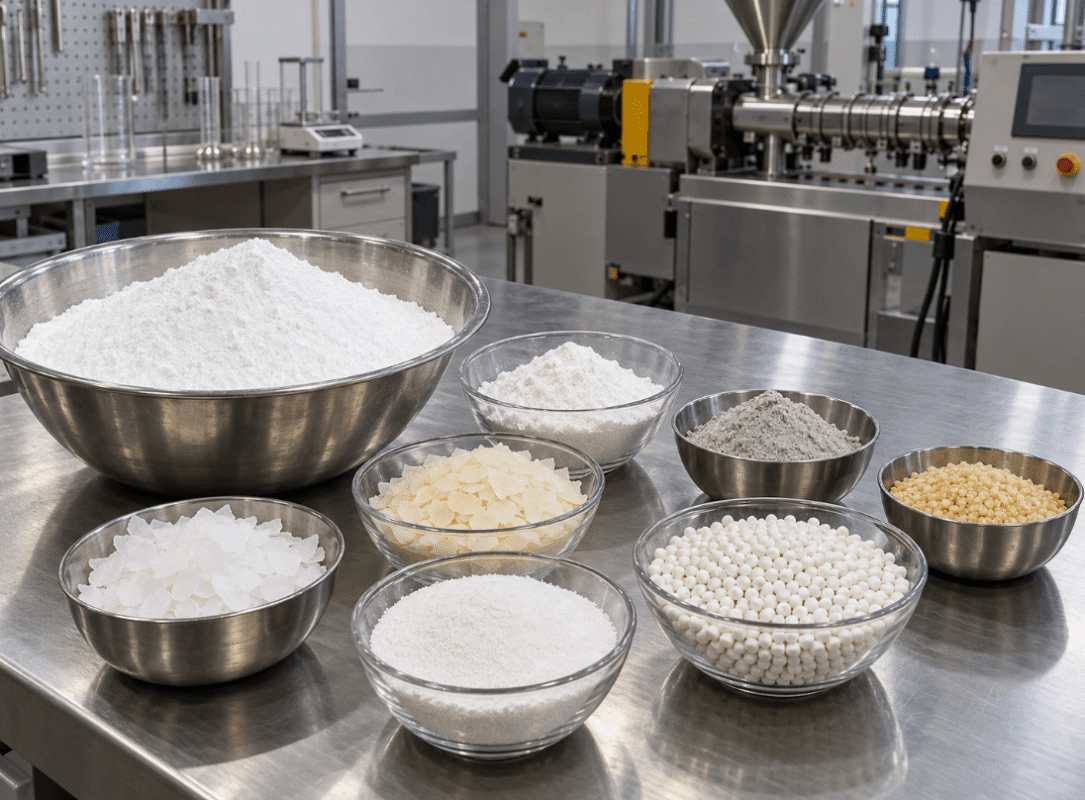
Core Additive Categories for PVC Extrusion
The required additive package depends on the product and extrusion process. The following matrix summarizes the principal categories and the evidence manufacturers should review when selecting a grade.
| Additive Category | Primary Function | Key Selection Consideration |
|---|---|---|
| Heat stabilizers | Delay heat-induced degradation | Processing conditions, formulation compatibility, and product requirements |
| Lubricants | Control friction, melt flow, and metal release | Internal and external lubrication balance |
| Processing aids | Modify fusion, melt strength, and processing behavior | Resin characteristics, die geometry, and surface requirements |
| Impact modifiers | Improve resistance to impact damage | Required toughness, formulation compatibility, and processing effects |
| Foaming agents | Generate gas for cellular structures | Foam type, target density, and gas-release characteristics |
| Pigments and functional additives | Adjust color or specific finished-product properties | Dispersion, compatibility, and end-use requirements |
Not every formulation requires every category. Rigid pipe, window profiles, solid sheets, and foam boards have different requirements. Manufacturers should select additives based on the functions needed rather than adding ingredients simply because they are commonly used elsewhere.
How to Select PVC Additives for Different Extrusion Applications
1. PVC Pipe Extrusion
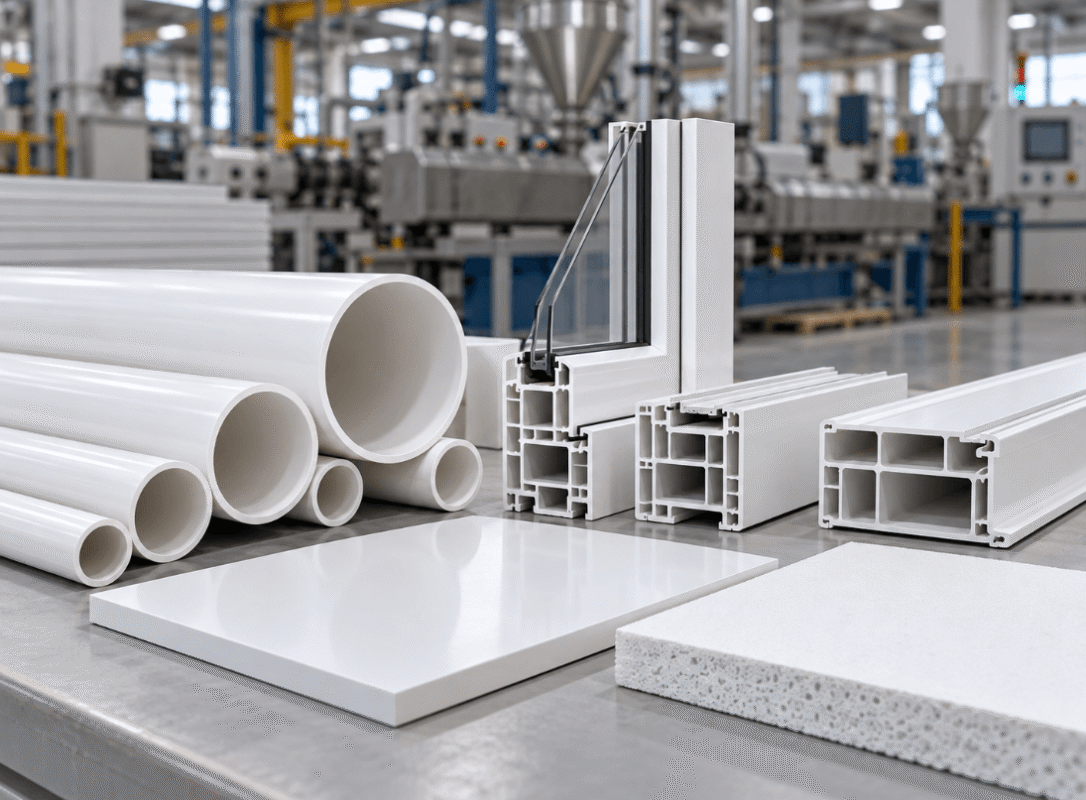
Pipe formulations must satisfy the requirements of the intended pipe type, applicable product specifications, and processing equipment. Dimensional consistency, fusion, thermal stability, and mechanical performance are central considerations.
Stabilizers protect the compound during processing, while lubricants influence fusion and flow. Processing aids or impact modifiers may be needed depending on the resin, formulation, and required performance. The appropriate combination should be validated against the finished pipe’s specifications rather than selected from generic dosage tables.
2. PVC Profile Extrusion
Window frames, door profiles, and decorative sections often have complex cross-sections and visible surfaces. The additive system must support stable melt flow, consistent fusion, die release, and dimensional control during calibration and cooling.
Lubrication imbalance can affect fusion timing and surface appearance, while inadequate melt strength can contribute to flow-related defects in demanding profiles. Review the guide to PVC profile additives for additional application-specific considerations.
3. PVC Sheet Extrusion
Sheet production may prioritize surface uniformity, thickness consistency, gloss, transparency, or other appearance requirements. These objectives influence the selection of stabilizers, lubricants, processing aids, pigments, and other formulation components.
For transparent or appearance-sensitive products, manufacturers should also examine additive compatibility and the possibility of haze, deposits, or surface imperfections. Any formulation change should be evaluated against the specific sheet specification.
4. PVC Foam Board Extrusion
Foam board formulations require coordination between gas generation and the melt’s ability to retain expanding cells. Foaming agents generate gas, while processing aids or foaming regulators can modify melt strength and support cell stability.
Manufacturers should evaluate density, cell structure, surface quality, dimensions, and mechanical properties together. Increasing foaming agent dosage alone may not correct defects caused by insufficient melt strength, poor fusion, or unsuitable cooling conditions.

How Additives Interact During PVC Extrusion
The main challenge is not simply choosing suitable additive categories; it is managing how they work together under the actual processing conditions.
Stabilizers and Lubricants
Heat stabilizers help protect PVC against degradation, while lubricants control friction and influence fusion behavior. A formulation may show discoloration or unstable processing if thermal conditions, stabilization, and lubrication are not properly balanced.
When troubleshooting yellowing, torque changes, or deposits, examine the complete formulation and process history instead of assuming that a single additive is responsible.
Lubricants and Processing Aids
Lubricants influence friction, melt flow, and metal release. Processing aids primarily modify fusion and melt behavior. Their combined effects determine whether the compound develops the required melt structure while moving consistently through the extrusion system.
Excessive external lubrication may delay fusion, while insufficient lubrication may increase friction or sticking under some conditions. A processing aid cannot automatically compensate for an unsuitable lubricant balance.
For more detailed guidance, consult how to choose the right lubricant for PVC extrusion.
Processing Aids and Impact Modifiers
Processing aids and impact modifiers serve different primary purposes. Processing aids influence fusion and melt strength, whereas impact modifiers improve resistance to impact damage. Depending on their chemistry, either category can also affect processing behavior and the properties of the finished product.
Manufacturers should avoid treating these additives as interchangeable. Selection should be based on the specific processing limitation or performance requirement that needs to be addressed.
A Practical Framework for PVC Additive Selection
Step 1: Define the Finished-Product Requirements
Identify the product type, dimensions, surface requirements, mechanical properties, operating environment, and any applicable customer or regulatory specifications. These requirements determine which additive functions are necessary.
Step 2: Document the Existing Formulation
Record the PVC resin grade, stabilizer system, lubricant package, processing aids, impact modifiers, fillers, pigments, and other relevant ingredients. Include the current dosage of each component in a consistent unit, such as phr where appropriate.
Step 3: Identify the Primary Processing Problem
Determine whether the main concern is thermal degradation, unstable fusion, die sticking, surface defects, insufficient impact resistance, or foam instability. The problem should guide the selection of candidate additives.
Step 4: Review Technical Documentation
Request the current technical data sheet and safety data sheet for each candidate grade. Check the intended application, recommended dosage, relevant material properties, compatibility guidance, and any limitations stated by the supplier.
Step 5: Conduct Controlled Trials
Establish a baseline and change one principal variable at a time wherever practical. Record processing temperature, screw speed, output, torque or pressure where available, and the quality of the finished product.
Do not change several additives and multiple processing settings simultaneously during an initial comparison unless the trial has been designed to evaluate those variables together. Otherwise, it becomes difficult to determine what caused the result.
Step 6: Validate Repeatability
Compare the trial results against predefined acceptance criteria. Check that improvements in one property have not caused unacceptable changes in another, and repeat the selected formulation under representative production conditions before approving it for routine manufacturing.
How to Evaluate PVC Additive Suppliers
For commercial sourcing, buyers should assess technical suitability and supply reliability alongside product price. A product description or category listing alone does not establish that a grade will perform correctly in a particular formulation.
- Product suitability: Confirm that the grade is intended for the relevant PVC application and extrusion process.
- Technical documentation: Obtain the current TDS and SDS and clarify the meaning of relevant specifications.
- Quality consistency: Ask about batch specifications and available certificates of analysis.
- Application support: Provide the formulation and processing conditions needed for a meaningful technical recommendation.
- Sample validation: Agree on test conditions and acceptance criteria before bulk purchasing.
- Commercial requirements: Confirm packaging, minimum order quantity, lead time, and export documentation where applicable.
When discussing a formulation with a supplier, include the product type, resin grade, current additive package, filler content, processing equipment, and observed problem. This makes the evaluation more useful than requesting a generic additive recommendation.
For stabilizer options, manufacturers can review the PVC stabilizer product range and verify which grades are appropriate for their intended application.
Conclusion
PVC additive selection for extrusion is a system-level decision. Stabilizers, lubricants, processing aids, impact modifiers, and foaming agents serve different functions, but their effects interact with the resin, equipment, and production conditions.
The most reliable approach is to define the finished-product requirements, identify the main processing challenge, select compatible additive grades, and validate the formulation through controlled trials. This helps manufacturers make evidence-based decisions and reduce the risk of solving one processing problem at the expense of another product requirement.
Frequently Asked Questions
Which additives are commonly used in PVC extrusion?
Common categories include heat stabilizers, lubricants, processing aids, impact modifiers, and, for cellular products, foaming agents. The required combination depends on the resin, extrusion process, finished-product requirements, and the specific processing challenges.
Why should PVC additives be selected as a system?
Additives influence different but interconnected aspects of processing. For example, lubrication affects fusion and flow, while stabilizers protect against thermal degradation. Evaluating the complete formulation helps prevent one additive adjustment from creating another processing or product-quality problem.
How can manufacturers determine the correct additive dosage?
Start with the supplier’s grade-specific technical recommendation, document the existing formulation, and conduct controlled trials. Compare processing behavior and finished-product properties against defined acceptance criteria before approving a dosage for production.
Can one additive improve both processing and finished-product performance?
Some additives can influence more than one property, but the effect depends on their chemistry and the formulation. Manufacturers should verify both processing behavior and finished-product performance rather than assuming that an improvement in one area guarantees an improvement in another.
What information should buyers provide when requesting PVC additive recommendations?
Provide the intended product, PVC resin grade, existing additive package, filler content, extrusion equipment, current processing conditions, and the problem to be addressed. These details help the supplier assess the suitability of a candidate grade and recommend an appropriate validation plan.