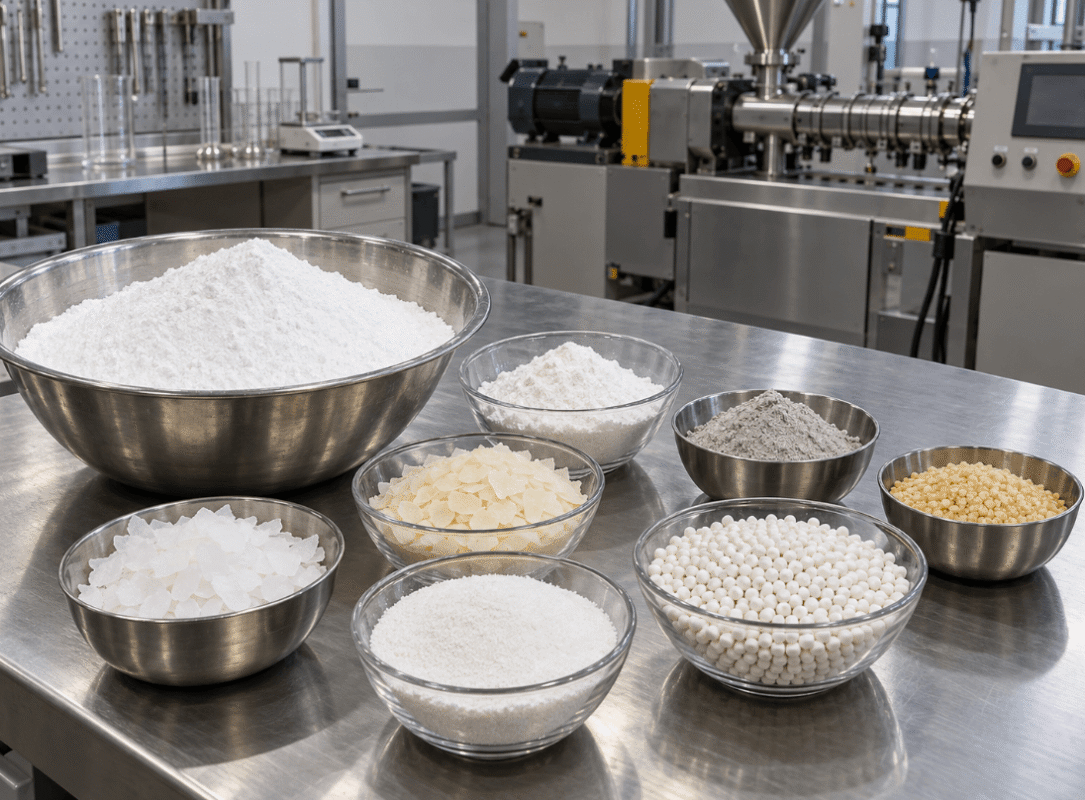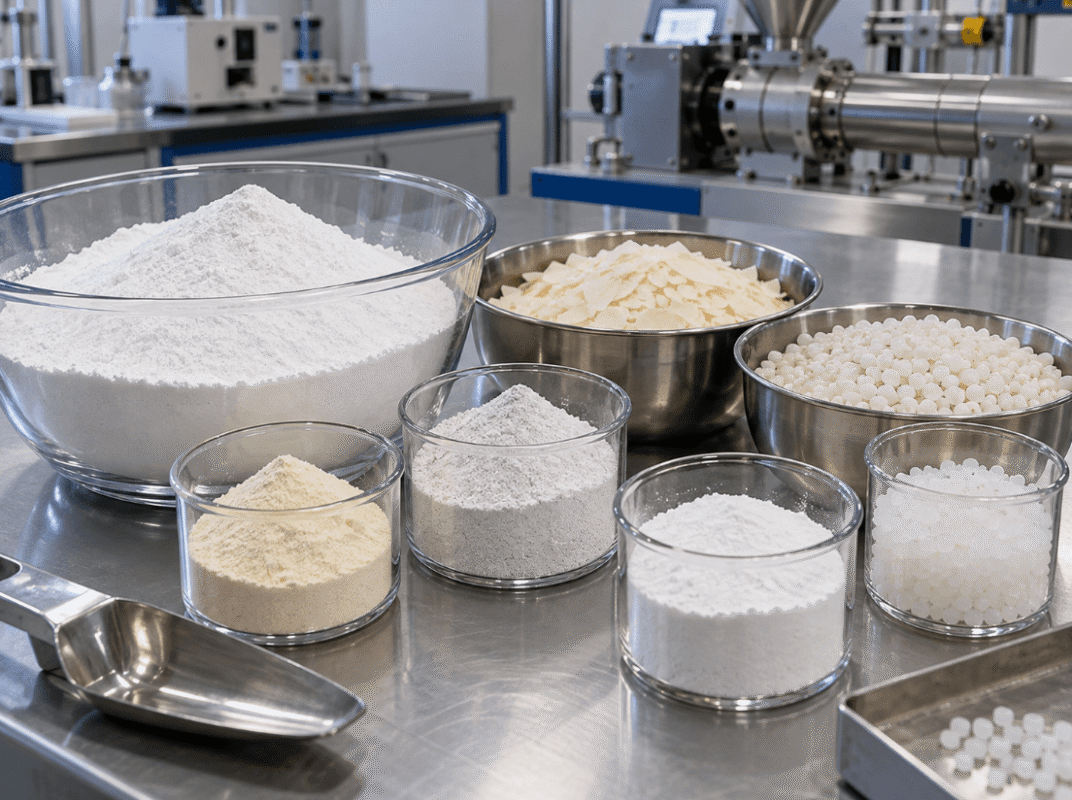

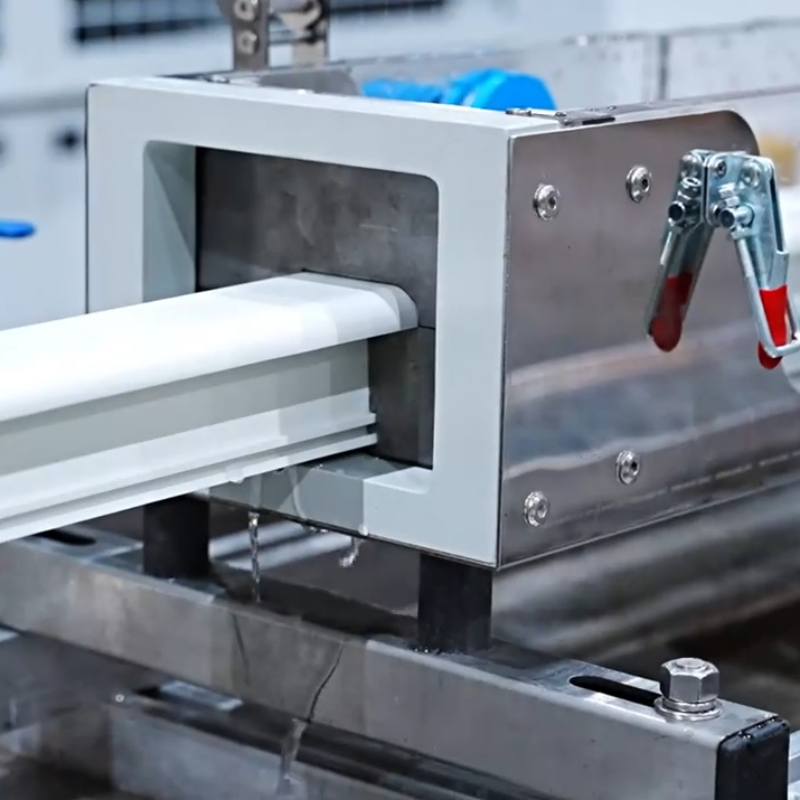
In the PVC extrusion process, there is no single “best” lubricant. Given PVC’s high sensitivity to shear forces, heat, and metal adhesion, a successful extrusion process relies on a carefully balanced lubrication system comprising both internal and external lubricants; manufacturers must strike the right balance between different types of lubricants to achieve optimal results. This blog post outlines the mechanisms of action and performance characteristics of various ‘pvc lubricant for extrusion’. It also provides guidelines for lubricant selection and application, alongside recommendations tailored to specific use cases, to help you pick the appropriate ‘pvc lubricant for extrusion’ for your own PVC products.
A Detailed Explanation of the Mechanism of Action of Lubricants
Understanding the mechanisms of action of lubricants helps you make more precise selections.
- Internal lubrication mechanism: Small molecules of lubricant enter between PVC molecular chains, weakening the intermolecular force, reducing melt viscosity and improving fluidity. This helps reduce processing torque and energy consumption.
- External lubrication mechanism: The lubricant is incompatible with PVC and migrates to the melt surface to form an isolation film to prevent the melt from adhering to metal surfaces (such as screws, barrels, molds). This is crucial for continuous and stable production and smooth surfaces.
- Balance of internal and external lubrication: Internal and external lubrication is a dynamic balance, and the “internal and external” distinction of the same lubricant may change due to the addition amount and processing temperature. When you add stearic acid in small amounts, it acts as an internal lubricant; as you increase the amount, it migrates to the surface to exert an external lubrication effect.
PVC Extrusion Lubricants
1. Optimal External Lubricants (Metal Release and Melt Retardation)
External lubricants exhibit low compatibility with PVC. They migrate to the interface between the PVC melt and the metal surfaces (screw, barrel, and die), forming a lubricating film that prevents adhesion, reduces torque, and retards premature melting.
- Fischer-Tropsch (FT) Wax:
- FT wax possesses a highly linear and precisely controlled molecular structure, characterized by both a high melting point (typically 100°C–105°C) and low viscosity.
- Performance: It delivers exceptional high-temperature mold release properties, enhances the surface gloss of finished products, minimizes mold buildup, and helps stabilize extrusion torque. Compared to traditional paraffin wax, it requires lower dosage levels.
- Polyethylene (PE) Wax:
- Highly suitable for use during the intermediate to late stages of processing. PE wax features a higher molecular weight than paraffin wax, meaning it can maintain the integrity of its external lubricating film even under conditions of intense shear stress and high temperatures.
- Performance: Crucial for rigid extrusion processes utilizing both single-screw and twin-screw extruders; it helps ensure stable melt pressure and facilitates a clean, smooth downstream sizing operation.
- Paraffin Wax:
- Applications: A traditional and highly cost-effective external lubricant characterized by a relatively low melting point (55°C–75°C). It provides excellent lubrication within the initial transition zone of the extruder; however, under high-temperature conditions, it may be prone to volatilization or a loss of film strength. It is typically used in combination with PE wax or FT wax.
2. Optimal Internal Lubricants (Reducing Viscosity and Enhancing Uniformity)
Internal lubricants exhibit high compatibility with PVC. They are able to penetrate between the PVC molecular chains, thereby reducing intermolecular friction and melt viscosity, as well as controlling frictional heat.
- Calcium Stearate:
- Calcium stearate is the undisputed cornerstone of the internal lubrication system for rigid PVC.
- Performance: In addition to reducing melt viscosity and stabilizing the torque curve during the gelation process, it also functions as a secondary acid scavenger (i.e., an auxiliary stabilizer).
- Fatty Acid Esters (e.g., Glycerol Monostearate – GMS / Ester Waxes):
- This is the ideal choice when high demands are placed on transparency, surface finish, or filler tolerance.
- Performance:Fatty acid esters facilitate excellent and uniform plasticization and possess exceptional thermal stability. Manufacturers consider them the “gold standard” for transparent PVC sheets or high-speed extrusion lines, as they do not trigger “blooming” phenomena or cause the finished products to appear hazy.
3. Best Compound/Multi-functional Lubricant
- Oxidized Polyethylene (OPE) Wax:
- OPE wax contains polar carboxyl and hydroxyl groups, endowing it with a unique “dual nature.” It functions as a highly efficient internal and external lubricant.
- Performance Characteristics: It simultaneously improves mold release properties (external lubrication) while facilitating the plasticization process and enhancing the dispersion of fillers and pigments (internal lubrication). Furthermore, it imparts excellent surface gloss and high melt transparency to extruded products.
- MK-101 G60 Polyol Fatty Acid Ester (PETS)
- MK-101 is synthesized through a high-temperature esterification reaction between pentaerythritol and refined stearic acid under catalytic conditions.It is subsequently refined through a series of processing steps, including vacuum alcohol removal, decolorization, filtration, flake formation via condensation, and ultrafine pulverization.
- Characterized by high purity, a high melting point, and low volatility, this product serves as a highly efficient internal and external lubricant—primarily functioning as an internal lubricant—suitable for high-temperature PVC processing.
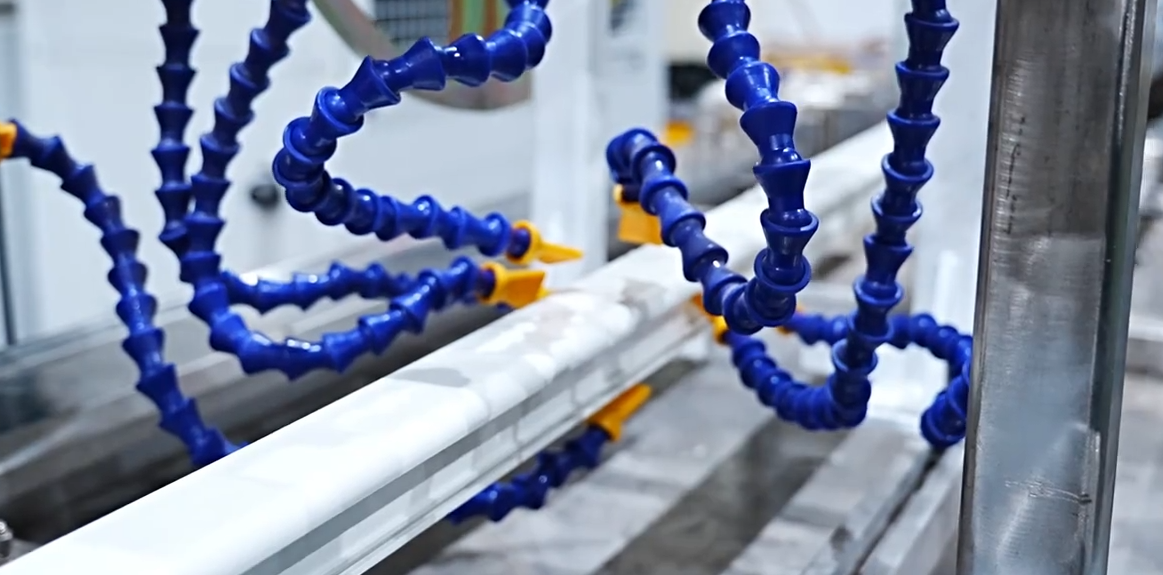
Lubricant Selection and Usage Guide
No single lubricant stands out as the absolute “best” choice; your specific equipment, products, and formulations dictate the optimal selection. Below, we provide a quick selection guide to assist you in making the right choice.
- Analyze Your Formulation: Clearly identify whether the material is rigid or flexible PVC, determine the presence or absence of fillers, identify the type of stabilizers used, and establish the specific requirements for product transparency and surface finish.
- Define Processing Conditions: Determine whether you are using a single-screw or twin-screw extruder, and identify the specific processing temperature range and extrusion speed. High-speed extrusion typically necessitates lubricants with higher melting points and stronger external lubricating properties.
- Start with Recommended Dosages: For most lubricants, the initial addition level falls within the range of 0.1 to 2.5 phr (parts per hundred parts of resin). Strictly avoid adding an excessive amount in a single step.
- Conduct Small-Scale Testing and Evaluation: Before implementing a new formulation, it is imperative to conduct trials—whether through actual production runs, torque rheometry, or extruder die tests. Focus your observations on key parameters such as main motor torque/current, melt temperature, output stability, product surface finish, die fouling (buildup), and the presence of any bloom or exudation during prolonged production runs.
- Fine-Tuning and Optimization: Fine-tune the formulation by adhering to the principle of “small adjustments, applied incrementally.” If you lack sufficient internal lubrication (indicated by excessively high torque), slightly increase the internal lubricant dosage; if you lack sufficient external lubrication (indicated by die adhesion or fouling), slightly increase the external lubricant dosage. Conversely, if poor plasticization or blooming occurs, you must reduce the lubricant dosage or replace the lubricant type.
Selection of Lubricants for Specific Application Scenarios
1. Suitable for Rigid PVC Pipes and Opaque Profiles
The objective is to achieve high output, superior physical properties, and cost control.
- Recommended Formulation System: Calcium Stearate + FT Wax (or PE Wax) + Stearic Acid.
- Explanation of Principle: Calcium stearate primarily serves to regulate internal shear forces and facilitate the plasticization and fusion of the material; the linear structure of the FT wax (or PE wax) provides excellent high-temperature mold-release properties within the mold; meanwhile, the addition of a small amount of stearic acid assists in achieving the initial lubrication effect.
2. Suitable for PVC Foamed Sheets and Profiles
The foam extrusion process is extremely sensitive to operating conditions, as operators must maintain melt strength perfectly to stabilize the cellular structure that chemical blowing agents generate.
- Recommended Formulation System: Calcium Stearate + High Molecular Weight OPE Wax + PE Wax.
- Principle Explanation: In this system, OPE wax plays a pivotal role; it facilitates the uniform plasticization of the material and regulates the gelation rate, while simultaneously ensuring that the process does not compromise melt strength. Formulators must strictly avoid the excessive use of low-melting-point paraffin wax, as this would otherwise lead to the collapse of the foam cells.
3. Suitable for Transparent Sheet and Film Extrusion Processes
Optical clarity, as well as anti-fog and anti-blocking properties, are primary considerations.
- Recommended Formulation System: Ester waxes (e.g., Glyceryl Monostearate/GMS) + Low-dosage OPE wax + Liquid or metallic soaps.
- Principle Explanation: If added in excess, hydrocarbon waxes (such as paraffin wax or PE wax) will compromise the transparency of the finished product; conversely, high-purity fatty acid esters not only ensure that the base material remains completely transparent but also effectively guarantee smooth flow during the processing stage.
Summary
For the PVC extrusion process, the selection of the “optimal lubricant” depends on the type of product you manufacture (such as pipes and fittings, profiles, foamed boards, and sheets), as well as the balance between melting rate and melt flowability. You continuously optimize the PVC extrusion lubricant selection through testing, basing your choices on specific formulation, equipment, and product requirements.
FAQ
Q: What happens during the production process if the amount of internal lubricant is insufficient?
The melt viscosity will increase and its flowability will deteriorate, leading to higher torque, increased energy consumption, a rough surface finish, and potentially even melt fracture.
Q: What happens if I use an excessive amount of internal lubricant?
It will reduce the melt strength, resulting in uneven wall thickness in the finished product; in severe cases, the melt may flow directly out of the die head.
Q: What problems arise during the production process if the amount of external lubricant is insufficient?
The friction between the polymer melt and the metal surfaces increases, causing the melt to easily adhere to the screw and the mold. This leads to issues such as scratches on the product surface, mold fouling, and difficulties in demolding.
Q: What impact does using an excessive amount of external lubricant have on the finished product?
Excessive lubricant cannot be effectively absorbed by the polymer melt; upon cooling, it migrates to the product’s surface, resulting in “blooming.” This compromises the product’s aesthetic appearance and hinders subsequent processing steps (such as printing or bonding), while also significantly delaying plasticization and reducing the product’s overall mechanical strength.
Reference Sources
Specialchem – “Lubricants for PVC: Internal vs External” : https://polymer-additives.specialchem.com/
Plastics Industry Association (PLASTICS):https://www.plasticsindustry.org/
ScienceDirect – Polymer Science Research:https://www.sciencedirect.com/
Plastics Technology Online:https://www.ptonline.com/