
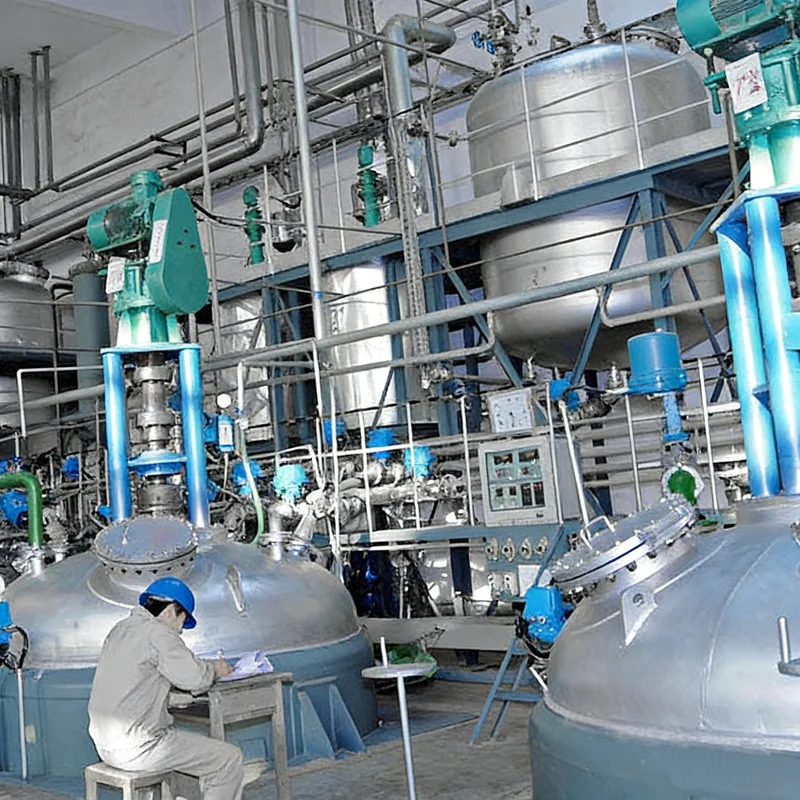
How to Reduce Production Costs in PVC Manufacturing
In the highly competitive landscape of polymer processing, the ability to reduce PVC production cost is often the primary driver of market sustainability. For facility managers and manufacturing consultants, cost reduction is not simply a matter of purchasing cheaper raw materials. Rather, it is an engineering challenge that requires balancing chemical formulation with mechanical efficiency.
PVC (Polyvinyl Chloride) manufacturing is unique due to the material’s thermal sensitivity and its heavy reliance on a complex matrix of additives. High-volume production lines are sensitive to even minor fluctuations in energy consumption, scrap rates, and additive efficiency. By applying a systematic approach to rheological management and thermal stability, manufacturers can achieve significant bottom-line improvements without compromising structural integrity.
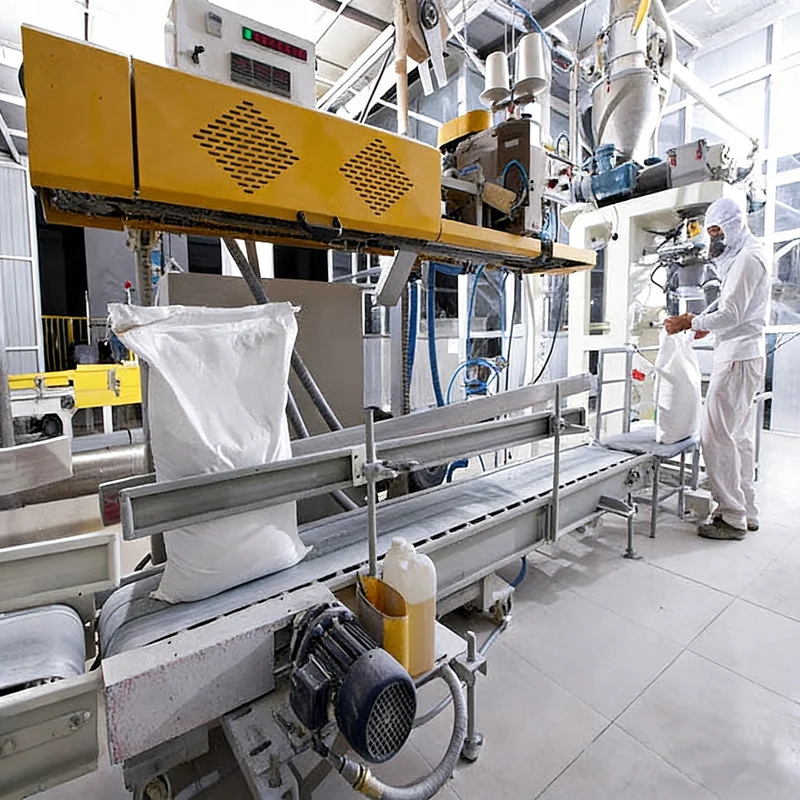
1. Optimize Formulation with High-Efficiency Additives
The raw material cost, specifically PVC resin, typically accounts for over 70% of the total production expenditure. While resin prices are dictated by global commodity markets, the efficiency with which the resin is utilized is controlled by the additive package.
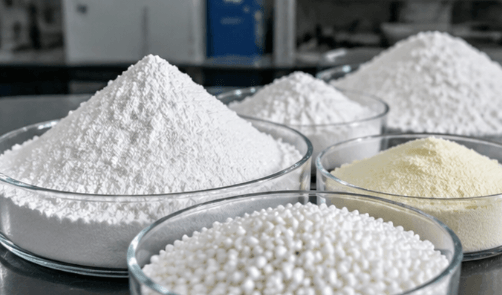
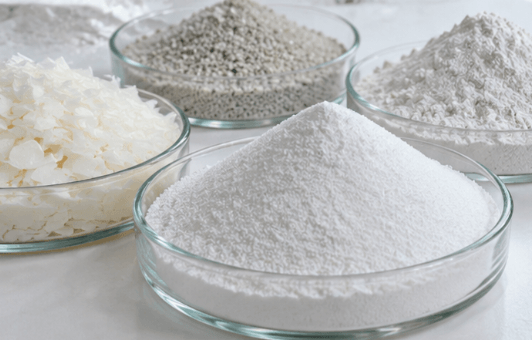
A common mistake in procurement is selecting stabilizers or lubricants based on price-per-kilogram rather than “cost-per-unit-produced.” High-efficiency additives, such as those found in MKQ Chem’s product portfolio, allow for a broader processing window.
- Internal and External Lubricant Balance: Correct lubrication reduces friction between polymer chains and the extruder barrel. This prevents localized “scorching,” which leads to batch rejection.
- One-Pack Stabilizers: Utilizing integrated “one-pack” systems reduces weighing errors in the mixing room and ensures a more homogenous melt, reducing the risk of inconsistent wall thickness in pipes or profiles.
2. Strategic Management of Filler Loading
Increasing the loading of calcium carbonate (CaCO3) is a traditional method used to reduce PVC production cost. However, simply adding more filler often leads to increased brittleness and poor surface finish.
To increase filler loading successfully, engineers must utilize high-performance ACR processing aids. These aids increase melt strength and improve the “wetting” of the filler particles by the PVC resin. In large-volume production, a 5-10% increase in filler loading—facilitated by superior processing aids—can result in substantial annual savings while maintaining the required impact strength per ASTM D256 standards.
3. Energy Consumption and Torque Management
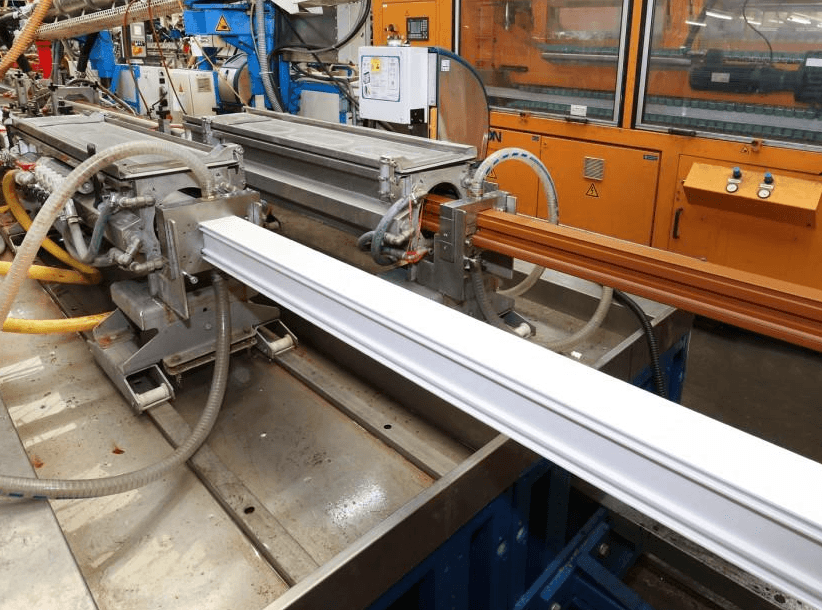
Extrusion is an energy-intensive process. The electrical load on the extruder motor is directly proportional to the melt viscosity. By managing the rheology of the PVC compound, manufacturers can significantly lower their kilowatt-hour (kWh) per ton of output.
| Cost Driver | Engineering Variable | Impact of Optimization |
| Energy Usage | Melt Viscosity / Torque | 5–15% Reduction in power costs |
| Scrap Rate | Thermal Stability Time | Lower rework and material waste |
| Output Speed | Gelation Rate | Higher throughput per machine hour |
| Additive Load | Dispersion Efficiency | Reduced “over-formulation” |
Reducing torque is achieved through the precise application of internal lubricants. When the friction between PVC molecules is reduced, the motor requires less power to shear the material. Furthermore, advanced processing aids promote faster gelation at lower temperatures, allowing for reduced heater band settings.
4. Minimizing Scrap via Enhanced Thermal Stability
In PVC manufacturing, thermal degradation—often called “zipper degradation”—is the leading cause of unscheduled downtime. When PVC stays in the barrel too long at high temperatures, it releases hydrochloric acid, leading to a rapid loss of physical properties and discoloration.
A high-performance heat stabilizer doesn’t just prevent yellowing; it protects the material during “restart” scenarios or fluctuating line speeds. For OEM project managers, investing in stabilizers with higher “static stability time” ensures that even if a line stops temporarily, the material remains viable, drastically reducing the volume of purged scrap.
5. Transitioning to Data-Driven Manufacturing Logic
Modern manufacturing consultants emphasize the “Total Cost of Ownership” (TCO) of a formulation. Sampling delays may occur when testing new additives, but the long-term ROI is found in consistency.
- Reduction in “Plate-out”: Lower-quality lubricants often deposit on the die (plate-out), requiring frequent stops for cleaning. High-purity lubricants extend the duration between maintenance cycles.
- Wall Thickness Consistency: Improved melt flow leads to better dimensional stability. In pipe production, this allows for “running to the lower tolerance,” which saves 1–3% of material per linear meter without falling out of compliance with ISO 1452 or ASTM D1785 standards.
By integrating performance chemicals like those offered at MKQ Chem, manufacturers can bridge the gap between “low-cost ingredients” and “low-cost production.”
FAQ
How can I reduce the cost of my PVC formulation without losing quality?
The most effective way is to increase the filler-to-resin ratio while simultaneously upgrading your processing aid. A high-quality ACR aid allows the PVC melt to “hold” more calcium carbonate while maintaining a smooth surface and impact resistance.
Does high torque always mean high energy costs?
Generally, yes. High torque indicates that the extruder motor is working harder to shear a high-viscosity melt. Balancing internal and external lubricants is the primary technical method for lowering torque and energy consumption.
What is the “cost-per-unit” logic in PVC additives?
Instead of looking at the price per bag of an additive, calculate the total cost to produce 1,000 meters of pipe. Often, an additive that is 10% more expensive allows for 20% faster line speeds or 5% less scrap, resulting in a lower unit cost.
How does “plate-out” affect production costs?
Plate-out refers to the accumulation of additives on the die surface. This forces production stops for cleaning and creates surface scratches on the product. Using lubricants with better compatibility with the PVC matrix reduces this effect and increases machine uptime.
Can “regrind” or recycled PVC reduce costs effectively?
Yes, but regrind has a lower thermal stability threshold because it has already undergone one heat cycle. When using regrind, you must “over-stabilize” the formulation to prevent degradation during the second extrusion cycle.
What affects PVC manufacturing costs?
PVC manufacturing costs are mainly affected by raw materials, additives, energy consumption, production efficiency, and waste rates.
How can PVC manufacturers reduce production costs?
Manufacturers can reduce costs by optimizing formulations, selecting suitable additives, improving extrusion efficiency, and reducing production waste.
Do PVC additives help lower production costs?
Yes. The right PVC additives can improve processing efficiency, reduce defects, and help manufacturers achieve more consistent production.
Which PVC additives improve manufacturing efficiency?
PVC stabilizers, lubricants, and processing aids can improve thermal stability, melt flow, and overall processing performance.
Reference Sources
- ISO 1452: Plastics piping systems for water supply and for buried and above-ground drainage and sewerage under pressure — Unplasticized poly(vinyl chloride) (PVC-U).
- ASTM D1785: Standard Specification for Poly(Vinyl Chloride) (PVC) Plastic Pipe, Schedules 40, 80, and 120.
- SPE (Society of Plastics Engineers): Technical papers on PVC rheology and additive synergy. 4spe.org
- Vinyl Institute: Industry documentation on the sustainability and life cycle of PVC products. vinylinfo.org
- Journal of Vinyl and Additive Technology: Academic research on the optimization of PVC processing.