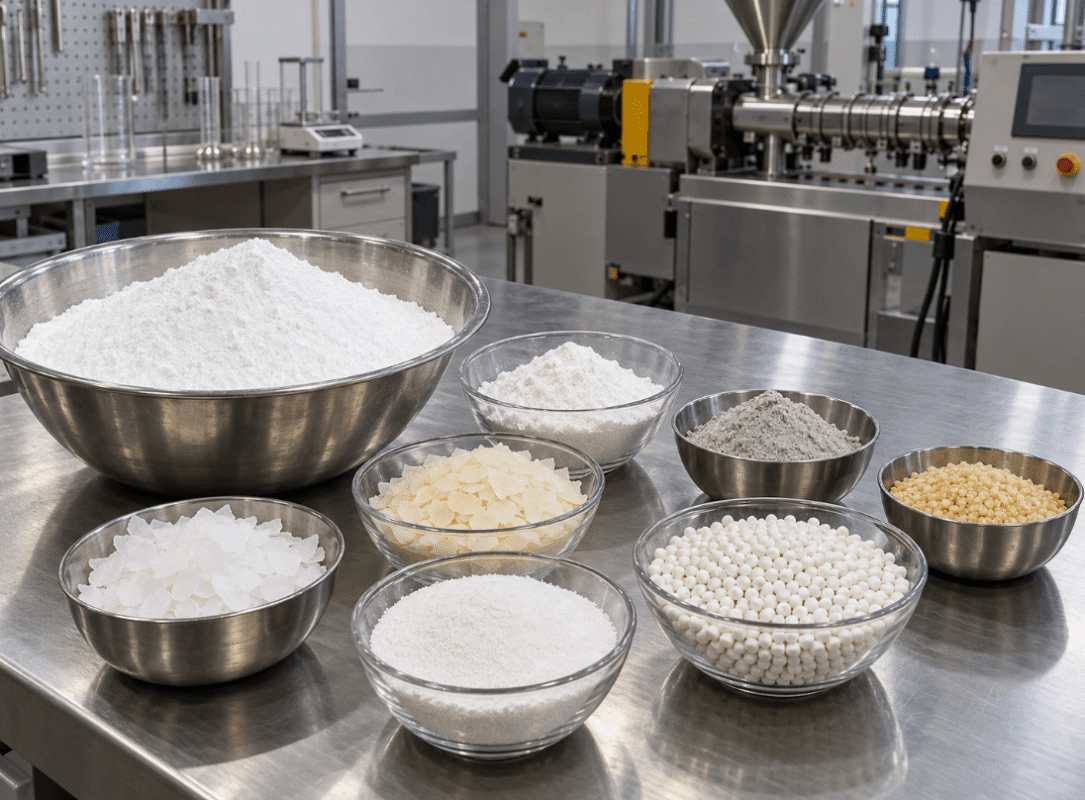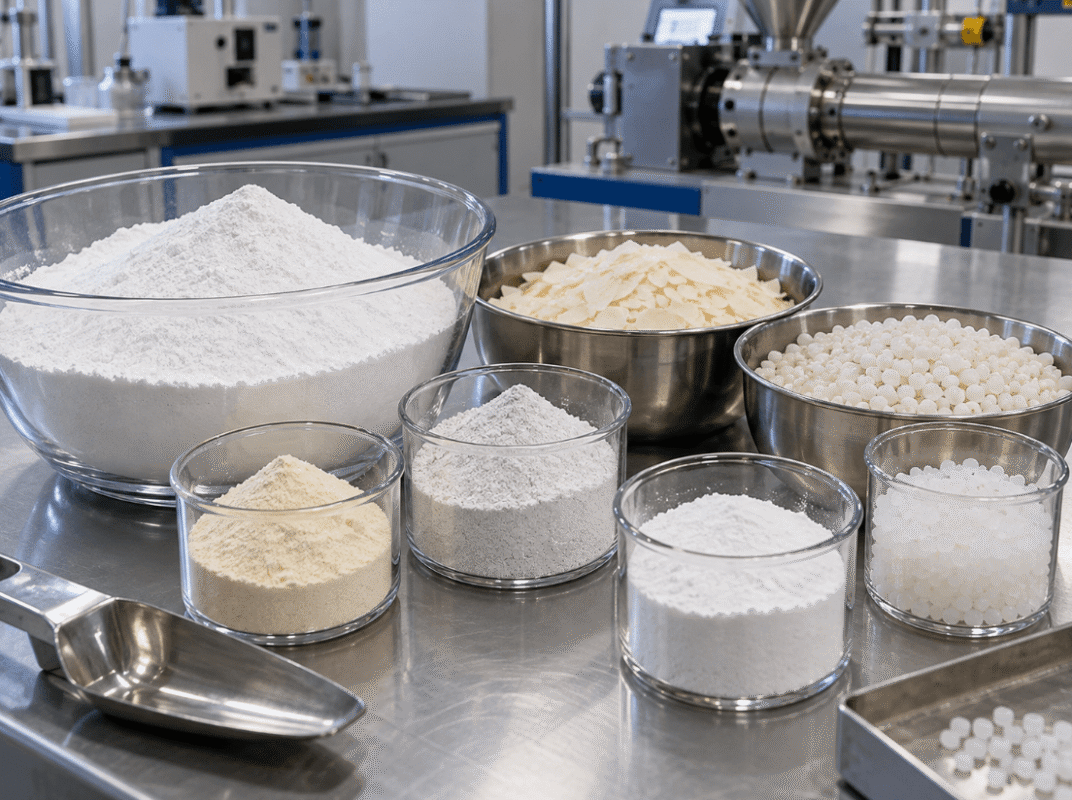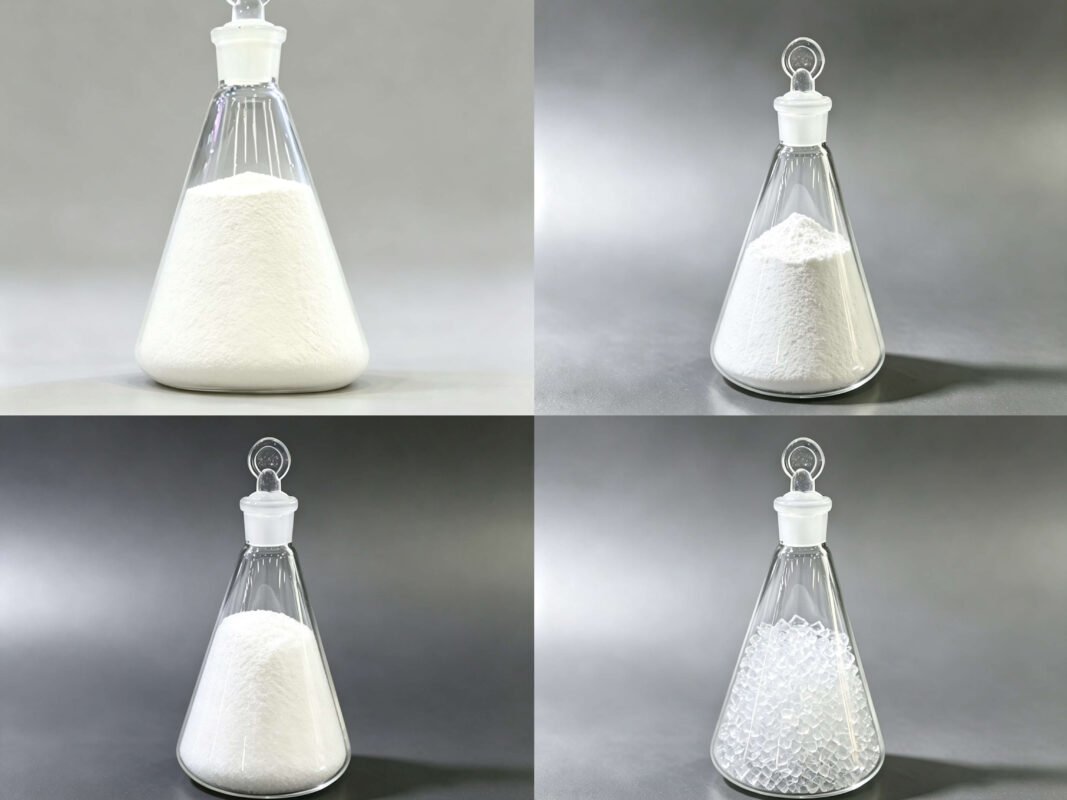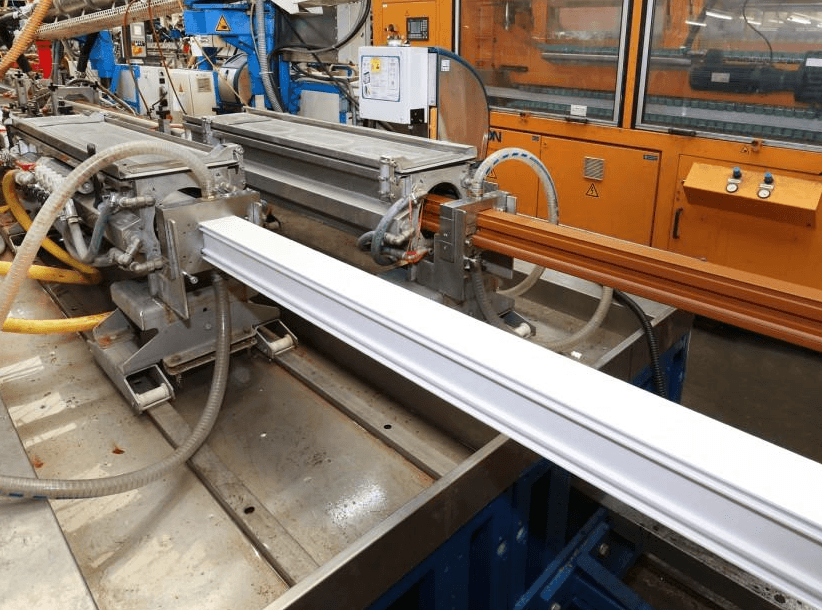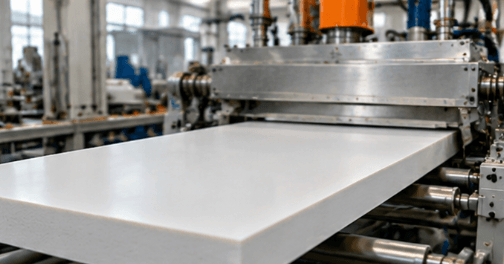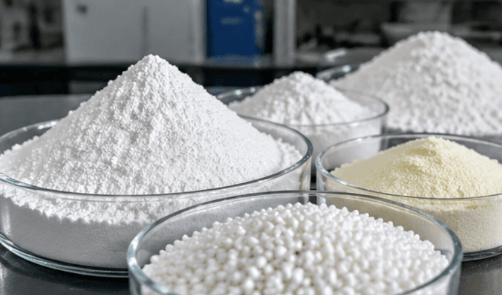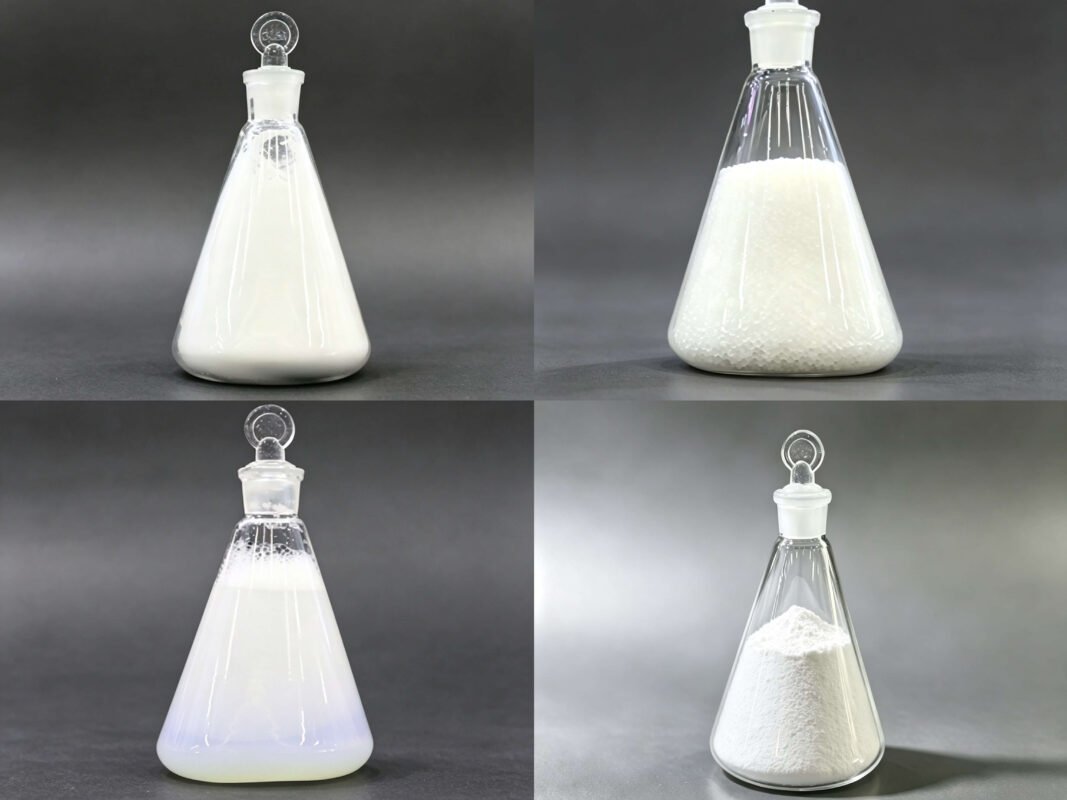

PVC lubricant dosage affects fusion behavior, melt flow, extrusion stability, and the surface quality of finished products. The correct amount depends on the lubricant type, PVC resin grade, filler loading, stabilizer system, processing temperature, and equipment. Manufacturers must balance internal and external lubrication rather than simply increasing the total lubricant content. Excessive lubrication can delay fusion or cause plate-out, while insufficient lubrication may lead to sticking, high friction, and unstable extrusion.
For PVC pipe, profile, sheet, and foam board manufacturers, the goal is to establish a formulation that maintains stable production and consistent product quality across normal operating conditions.
What Is the Typical PVC Lubricant Dosage?
PVC lubricant dosage is generally expressed in phr, meaning parts by weight per 100 parts of PVC resin. There is no universal dosage that works for every formulation because internal lubricants, external lubricants, and multifunctional lubricants behave differently.
The starting dosage should follow the specific product’s technical data sheet and intended application. Manufacturers should then validate the recommended range through controlled production trials.
| Lubricant Type | Primary Function | Dosage Consideration |
|---|---|---|
| Internal lubricant | Controls internal friction and melt flow | Evaluate viscosity, fusion behavior, and torque |
| External lubricant | Reduces friction between PVC melt and metal surfaces | Evaluate release, fusion delay, and plate-out |
| Multifunctional lubricant | Combines internal and external lubrication effects | Assess its contribution to the complete lubrication system |
For example, MKQ Chemical specifies a recommended dosage of 0.3–1.0 phr for its MK-2021 oxidized polyethylene wax (OPE wax), based on 100 parts of PVC resin, with the upper end recommended for highly filled systems. This is a product-specific guideline, not a universal dosage for all PVC lubricants.
Internal vs. External Lubricant Dosage
Internal and external lubricants serve different functions in PVC processing. Internal lubricants primarily reduce friction within the compound and influence melt flow, while external lubricants reduce friction at the interface between the PVC melt and metal processing surfaces.
The balance between these two functions affects fusion timing, extrusion pressure, material release, and surface appearance. A formulation with sufficient total lubricant can still perform poorly if the ratio between lubricant types is unsuitable.
When Internal Lubrication Is Insufficient
Insufficient internal lubrication may contribute to excessive friction, higher torque, and difficult melt processing. The actual effect depends on resin characteristics, temperature, shear, and the rest of the formulation.
Before increasing the internal lubricant dosage, check whether the PVC compound is reaching the required fusion state and whether the temperature profile and screw conditions are appropriate.
When External Lubrication Is Excessive
Too much external lubricant can delay PVC fusion, reduce effective material conveyance, or encourage additive deposits on the die and other metal surfaces. In some formulations, it can also contribute to poor surface appearance or inconsistent product properties.
For a more detailed explanation of these mechanisms, see the PVC lubricant selection guide.
What Factors Affect PVC Lubricant Dosage?
1. PVC Resin Grade
Different PVC resin grades can exhibit different fusion characteristics, melt viscosity, and processing behavior. A lubricant dosage that works for one resin may not provide the same results with another grade.
When changing resin suppliers or grades, compare the new material under controlled conditions before adjusting the lubrication system.
2. Calcium Carbonate and Filler Loading
Calcium carbonate and other fillers change compound rheology and influence friction, fusion, and processing stability. Highly filled formulations may require a different lubrication balance from unfilled or lightly filled PVC compounds.
However, increasing filler content does not automatically justify increasing every lubricant. Evaluate dispersion, torque, fusion behavior, and surface quality together.
3. Processing Temperature and Screw Conditions
Temperature, screw speed, shear, residence time, and output all affect the way lubricants behave during PVC processing. A dosage adjustment that improves one extrusion line may not transfer directly to another line with different equipment or thermal conditions.
Record actual processing conditions during trials. If temperature and lubricant dosage are changed simultaneously, it becomes harder to determine which change caused the result.
4. Product Type and Surface Requirements
Different PVC products have different processing priorities. Pipes require consistent dimensions and reliable fusion; window profiles often demand a uniform finish; sheets may require controlled gloss and appearance; foam boards need a lubrication system compatible with the foaming process.
Choose the lubricant system according to the final application and processing route rather than relying solely on a general dosage range.
How PVC Lubricant Dosage Affects Surface Quality
Surface defects can indicate an imbalance in lubrication, but they are not always caused by lubricant dosage alone. Die condition, thermal stability, contamination, fusion, and cooling can produce similar symptoms.
| Observed Problem | Possible Lubrication-Related Cause | Recommended Check |
|---|---|---|
| Material sticking to the die | Insufficient external lubrication or unsuitable processing conditions | Inspect the die and review release behavior |
| Plate-out or deposits | Excessive lubricant migration or additive incompatibility | Review external lubricant dosage and formulation compatibility |
| Rough or uneven surface | Possible poor fusion or unstable flow | Check lubricant balance, temperature, and die condition |
| Unstable extrusion output | Possible over-lubrication or inconsistent fusion | Compare torque, pressure, and material conveyance |
| Discoloration | Possible thermal degradation or stabilizer imbalance | Review temperature, residence time, and stabilization |
Do not assume that every surface defect requires more lubricant. Identify the underlying cause before changing the formulation.
For additional troubleshooting context, refer to common PVC processing problems and their solutions.
How to Optimize PVC Lubricant Dosage in Production
Step 1: Establish the Current Formulation
Record the PVC resin grade, lubricant types and dosages, filler loading, stabilizer system, and other relevant additives. Express dosage consistently in phr so different trials can be compared accurately.
Step 2: Define the Processing and Quality Targets
Set measurable acceptance criteria for extrusion output, torque, pressure, fusion behavior, surface appearance, dimensions, and relevant finished-product properties. The criteria should reflect the actual product specification.
Step 3: Confirm the Supplier’s Recommended Range
Review the technical data sheet for the selected lubricant. Confirm the intended application, recommended dosage, handling requirements, and any known formulation limitations before beginning the trial.
Manufacturers can compare available grades in the PVC lubricant product category and request application-specific guidance before bulk purchasing.
Step 4: Change One Variable at a Time
Use controlled dosage increments within the supplier’s recommended range. Keep other formulation components and processing conditions as consistent as practical. Record each change and the resulting production behavior.
Step 5: Validate Repeatability
Repeat the selected formulation under representative production conditions. Confirm that the required surface quality, dimensional consistency, and processing stability are maintained across production runs before approving the change.
What Should Buyers Confirm with a PVC Lubricant Supplier?
Commercial buyers should evaluate technical suitability alongside product consistency and supply reliability. A lubricant should not be selected on price or a generic product description alone.
- Technical specifications: Request the TDS and SDS for the exact grade.
- Dosage guidance: Confirm the recommended range for the intended PVC application.
- Quality control: Ask about batch specifications and available certificates of analysis.
- Sample testing: Agree on sample quantity and a practical validation method.
- Supply capability: Confirm packaging, minimum order quantity, lead time, and export documentation.
- Technical support: Provide the current formulation and processing conditions to obtain a relevant recommendation.
A useful technical discussion should establish the target application, resin grade, filler loading, processing equipment, and observed production issue. These details help the supplier recommend a grade and trial plan that can be evaluated under actual manufacturing conditions.

Conclusion
Optimizing PVC lubricant dosage requires a balance between internal lubrication, external release, fusion behavior, and the requirements of the finished product. Excessive lubricant can delay fusion or cause deposits, while insufficient lubrication may contribute to sticking, high friction, and unstable processing.
The most reliable approach is to start with the lubricant supplier’s grade-specific guidance, adjust dosage through controlled trials, and verify results against defined production and surface-quality criteria. For manufacturers evaluating a new lubricant, formulation details and actual processing conditions are essential for selecting a suitable product.
Frequently Asked Questions
What is the typical PVC lubricant dosage?
There is no universal dosage for all PVC lubricants. The appropriate amount depends on the lubricant chemistry, PVC resin grade, filler loading, processing method, and intended product. Follow the technical data sheet for the specific grade and validate the dosage through controlled trials.
What happens if too much lubricant is added to PVC?
Excessive lubrication, particularly from external lubricants, can delay fusion, interfere with material conveyance, and contribute to plate-out or surface defects. The effect depends on the formulation and processing conditions.
How do internal and external lubricants differ?
Internal lubricants primarily influence friction and flow within the PVC compound. External lubricants primarily reduce friction between the melt and metal surfaces. Most rigid PVC formulations require an appropriate balance of both functions.
Can lubricant dosage affect PVC surface gloss?
Yes. Lubricant balance can influence release, fusion, and surface appearance. However, gloss defects can also result from die condition, temperature, cooling, or contamination, so the underlying cause should be identified before changing dosage.
How should manufacturers test a new PVC lubricant?
Record the baseline formulation and processing conditions, confirm the supplier’s recommended range, and conduct controlled dosage trials. Compare torque, pressure, fusion behavior, surface quality, dimensions, and repeatability before approving the new formulation.