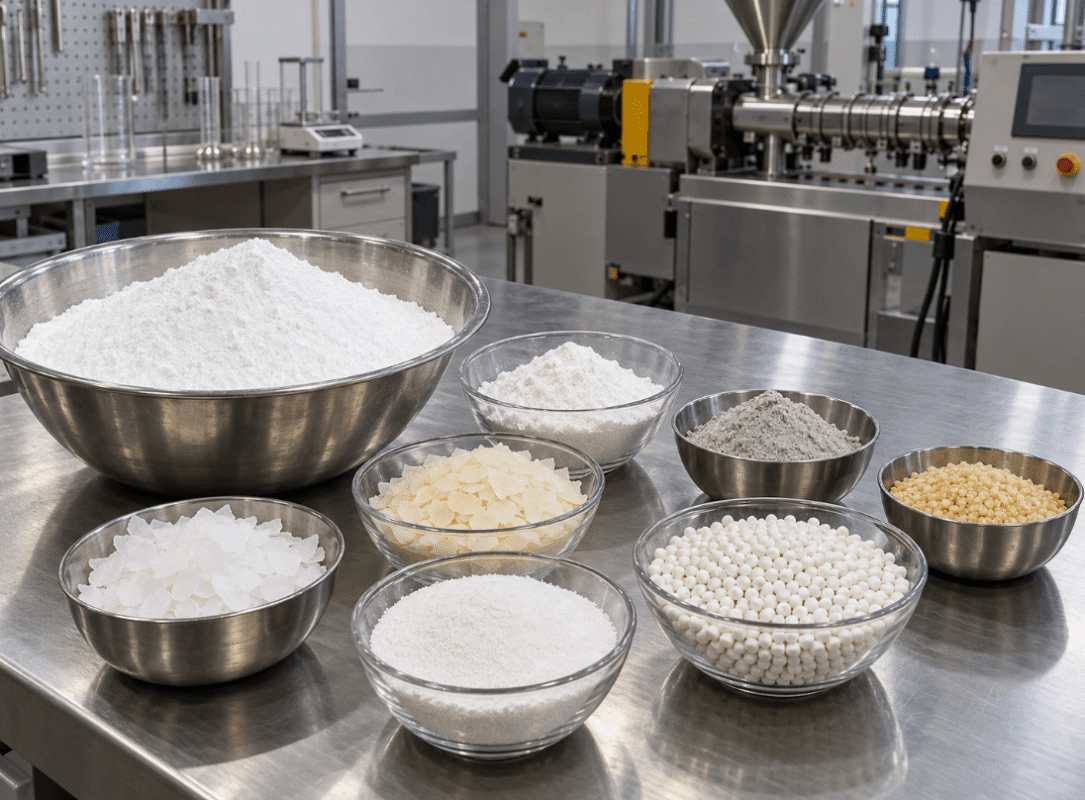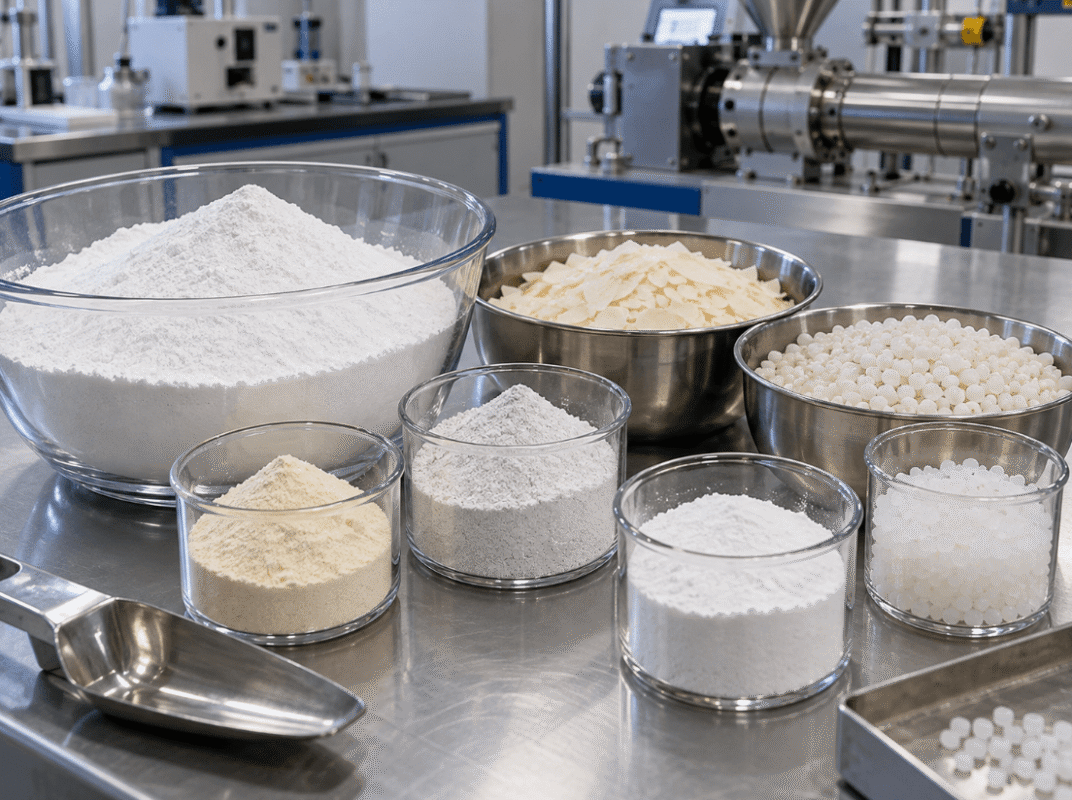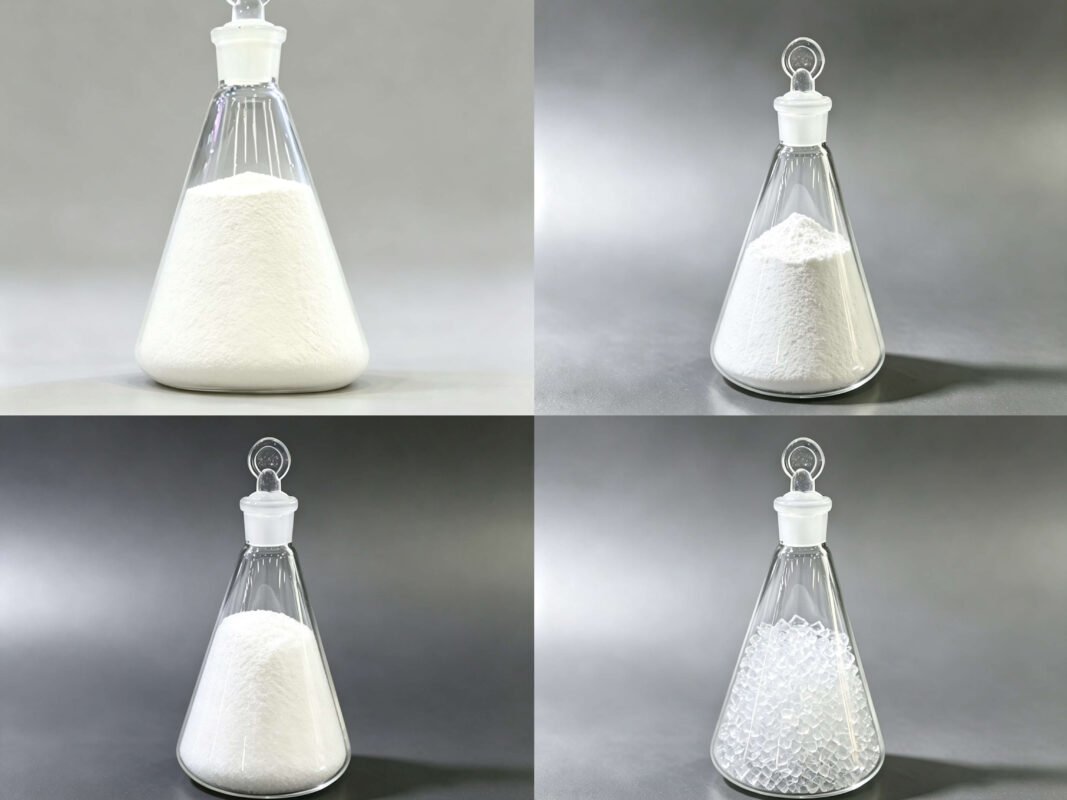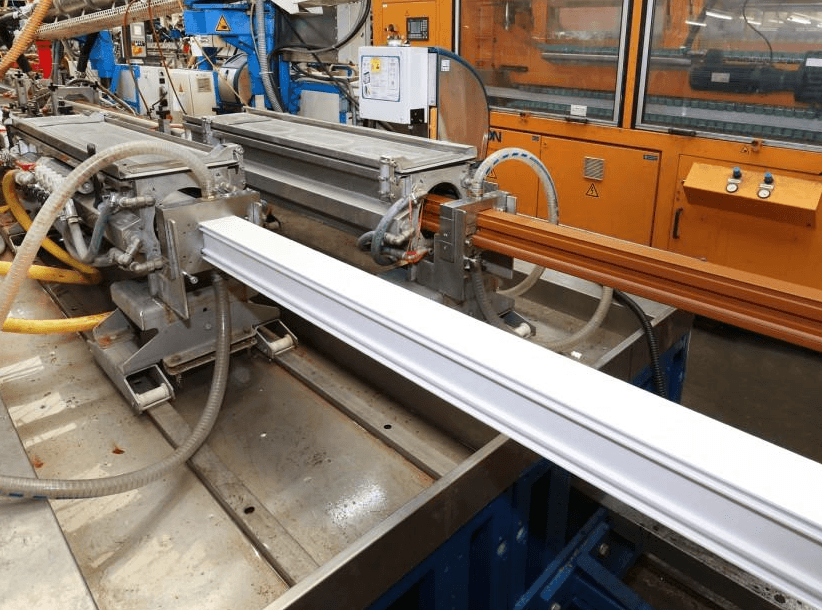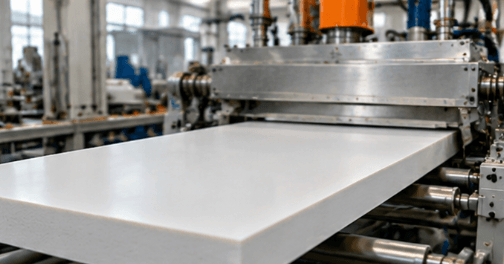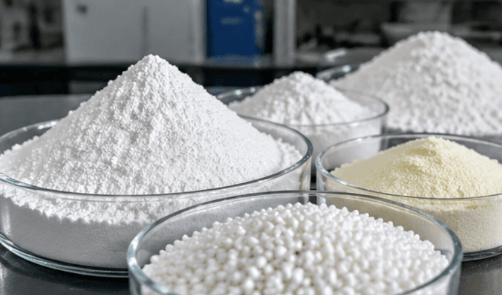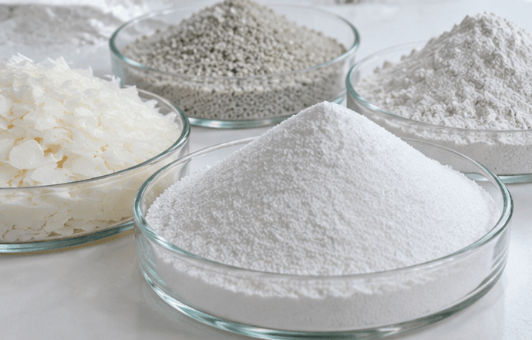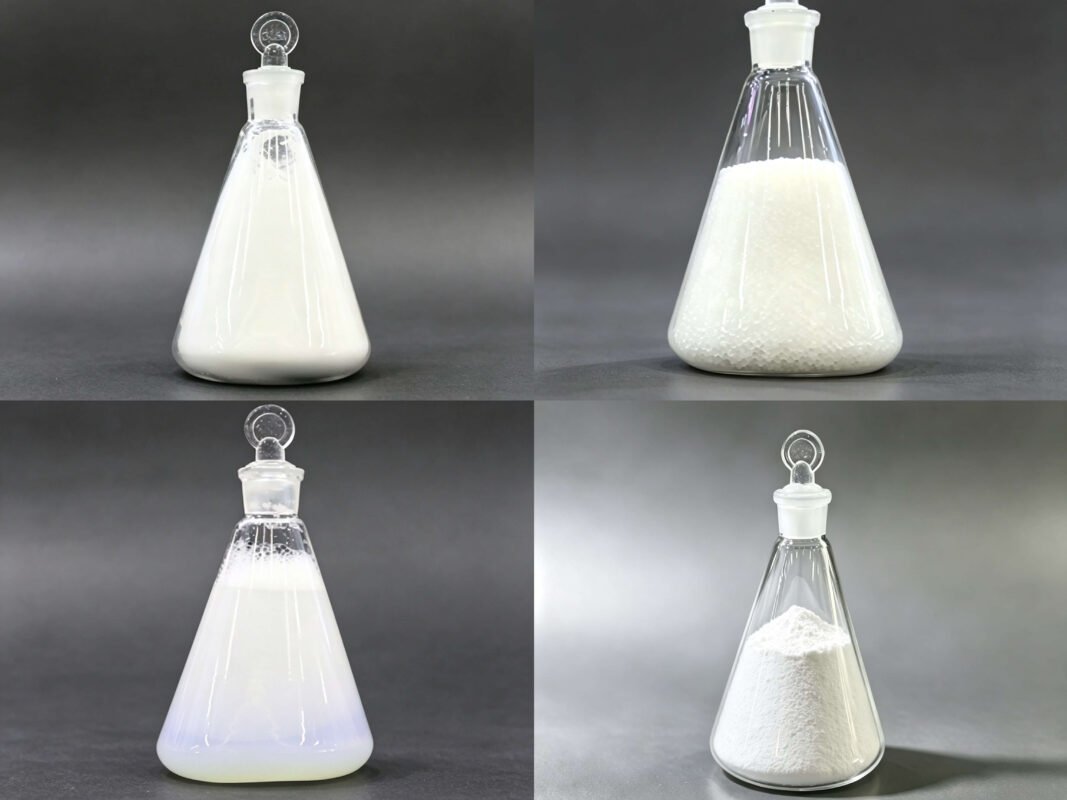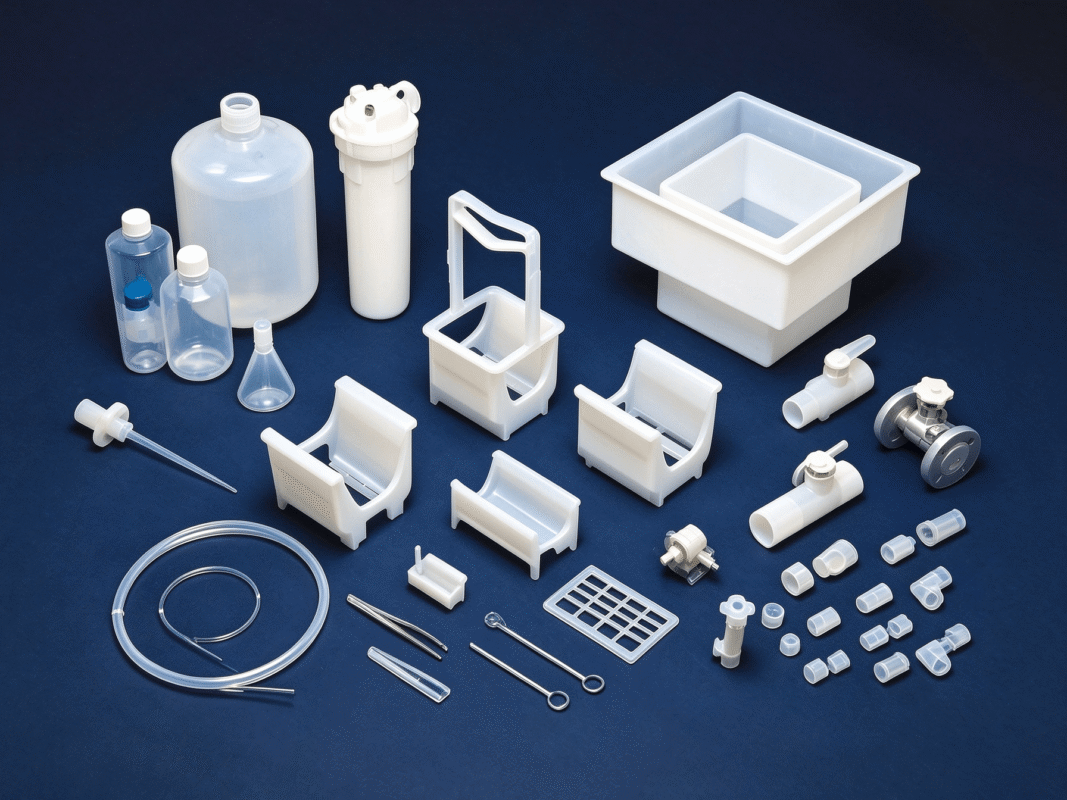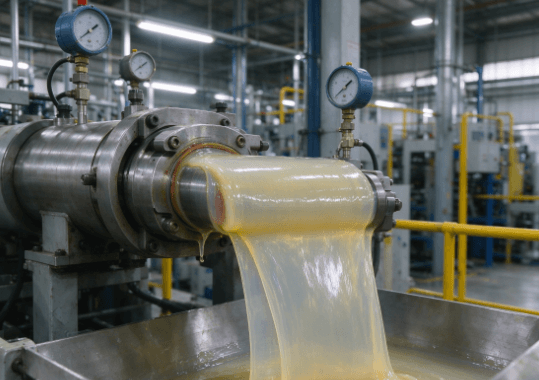

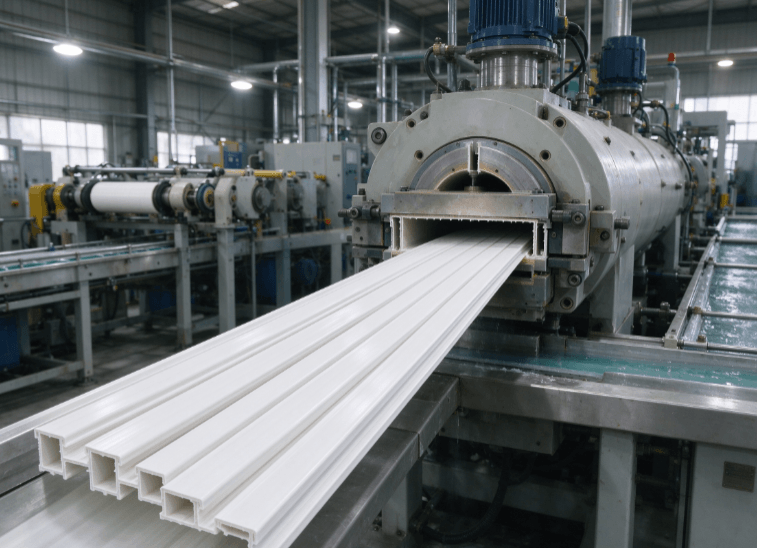
PVC processing aid for PVC profiles improves fusion consistency, melt strength, and surface finish during extrusion. Acrylic processing aids (ACR) help rigid PVC compounds develop a more homogeneous melt, reducing fusion-related roughness and supporting dimensional stability. The appropriate grade depends on resin characteristics, lubrication balance, filler content, and processing conditions.
For manufacturers producing window frames, door profiles, and decorative PVC sections, processing aid selection directly affects surface appearance, extrusion stability, and production consistency.
How PVC Processing Aids Improve Profile Extrusion
Rigid PVC profiles require controlled fusion before the compound enters the extrusion die. Incomplete fusion can produce rough surfaces, inconsistent mechanical properties, and unstable processing.
Acrylic processing aids modify PVC melt rheology, promoting more uniform fusion and increasing melt elasticity.
Their main functions include:
- Improved fusion: Promotes consistent PVC gelation and melt development.
- Higher melt strength: Helps complex profiles maintain their shape during extrusion.
- Smoother surface finish: Reduces defects associated with incomplete fusion.
- Stable extrusion: Supports consistent processing under suitable operating conditions.
These benefits are especially relevant for rigid PVC profiles with demanding dimensional and surface-quality requirements.
Manufacturers can explore the role of ACR processing aid for PVC extrusion to understand how different grades influence fusion and melt behavior.
Improving PVC Fusion and Melt Strength
PVC fusion depends on processing temperature, mechanical shear, resin properties, and lubricant balance.
When fusion is insufficient, PVC particles may not develop a sufficiently homogeneous melt before entering the die. This can produce rough surfaces and inconsistent product performance.
However, excessive fusion or processing stress can increase torque, melt temperature, and thermal degradation risk.
A suitable processing aid should improve fusion efficiency without creating unnecessary extrusion pressure.
Factors Affecting PVC Fusion
| Factor | Effect on Profile Extrusion |
|---|---|
| PVC resin | Influences fusion behavior and melt viscosity |
| ACR processing aid | Promotes fusion and increases melt elasticity |
| Lubricant balance | Controls friction and fusion timing |
| Calcium carbonate | Changes compound rheology and fusion behavior |
| Processing temperature | Affects fusion and degradation risk |
| Screw configuration | Determines shear and residence time |
Processing aids should be evaluated as part of the complete formulation rather than as an isolated solution.
How Processing Aids Improve PVC Profile Surface Finish
Surface appearance is particularly important for architectural PVC profiles, including window frames, door frames, and decorative trims.
Poor fusion can create uneven texture, dull surfaces, and inconsistent gloss. A suitable acrylic processing aid promotes melt uniformity, helping improve the finished profile’s appearance.
However, not every surface defect originates from insufficient fusion.
Common PVC Profile Surface Problems
| Surface Defect | Possible Cause | Recommended Action |
|---|---|---|
| Rough surface | Incomplete fusion | Adjust fusion conditions and evaluate ACR |
| Uneven gloss | Inconsistent melt development or cooling | Review formulation and calibration |
| Die lines | Die contamination or damage | Inspect and clean die surfaces |
| Yellowing | Excessive thermal exposure | Review stabilizers and processing temperature |
| Flow marks | Unstable melt flow | Check die conditions and extrusion settings |
Increasing processing aid dosage will not resolve defects caused by damaged tooling, contamination, or inadequate stabilization.
For further troubleshooting, manufacturers can refer to the PVC extrusion surface defects guide to identify common extrusion problems and corrective measures.
Choosing the Right ACR Processing Aid for PVC Profiles
Not all acrylic processing aids provide the same balance of fusion promotion, melt strength, and processability.
General-purpose ACR grades are commonly evaluated for conventional rigid PVC profiles, while higher-molecular-weight grades may be appropriate when greater melt elasticity is required.
General-Purpose vs. High-Molecular-Weight ACR
| Selection Factor | General-Purpose ACR | High-Molecular-Weight ACR |
|---|---|---|
| Primary function | Fusion improvement | Greater melt strength |
| Typical application | Standard rigid PVC profiles | Complex profiles requiring greater melt support |
| Fusion performance | Promotes melt development | Depends on grade |
| Melt elasticity | Moderate improvement | Generally greater improvement |
| Processing considerations | Balance fusion and flow | Monitor viscosity and pressure |
Higher molecular weight does not automatically guarantee better performance.
For standard PVC profiles, the preferred grade provides adequate fusion, smooth surfaces, and stable extrusion without excessive viscosity.
Manufacturers should also consider how processing aids interact with stabilizers, impact modifiers, lubricants, and fillers. The guide to PVC profile additives explains how these components contribute to processing performance and finished-product quality.
How Much Processing Aid Should Be Used?
Processing aid dosage is usually expressed in phr, meaning parts per hundred parts of PVC resin by weight.
The appropriate dosage depends on:
- Processing aid grade and molecular characteristics
- PVC resin properties
- Calcium carbonate content
- Lubrication system
- Extruder design and processing conditions
Manufacturers should begin with the supplier’s recommended dosage range and conduct comparative trials.
During testing, monitor fusion behavior, torque, melt temperature, extrusion pressure, surface quality, and dimensional stability.
Excessive processing aid may increase melt viscosity and processing load without delivering proportional improvements.
The objective is to identify the lowest validated dosage that consistently meets production requirements.

What Should PVC Profile Manufacturers Evaluate Before Purchasing?
Selecting a processing aid supplier requires more than comparing additive prices.
For consistent industrial production, manufacturers should evaluate both technical performance and supply reliability.
| Evaluation Criterion | What Buyers Should Verify |
|---|---|
| Product specifications | Grade characteristics and intended applications |
| Technical documentation | TDS, SDS, and available quality specifications |
| Fusion performance | Laboratory or production trial results |
| Batch consistency | Product specifications and available COA |
| Sample availability | Suitability for extrusion trials |
| Supply capability | MOQ, packaging, and delivery lead time |
Where finished profiles must comply with applicable requirements, manufacturers should also evaluate relevant specifications such as the EN 12608 series for PVC-U window and door profiles.
A reliable supplier should provide technical information suitable for evaluating the additive in the customer’s actual formulation.
Practical Testing Before Bulk Purchasing
Before changing a production formulation, manufacturers should conduct controlled trials under representative extrusion conditions.
Step 1: Establish the Baseline
Record the existing formulation, operating conditions, production output, and profile quality.
Step 2: Select Candidate Processing Aids
Choose ACR grades based on the identified fusion, melt-strength, or surface-quality requirements.
Step 3: Compare Processing Performance
Monitor torque, melt temperature, die pressure, and extrusion stability while keeping other variables consistent wherever practical.
Step 4: Inspect Finished Profiles
Evaluate surface appearance, gloss, dimensional consistency, and relevant mechanical properties.
Step 5: Confirm Repeatability
Verify the selected formulation across representative production conditions and material batches.
Controlled testing helps manufacturers avoid unnecessary formulation changes and identify processing aids that deliver measurable production benefits.
Conclusion
The right PVC processing aid for PVC profiles improves fusion consistency, melt strength, and surface finish while supporting stable extrusion.
General-purpose acrylic processing aids are often suitable for conventional rigid PVC profiles, while more demanding applications may require grades with different rheological characteristics.
Final selection should be based on resin compatibility, formulation balance, extrusion conditions, and controlled production testing.
Manufacturers seeking suitable PVC additive solutions can contact MKQ Chemical with their resin specifications, current formulation, production conditions, and required profile properties to discuss processing aid selection and sample evaluation.
Frequently Asked Questions
What does PVC processing aid do in profile extrusion?
PVC processing aid promotes fusion, increases melt strength, and improves processing consistency. Acrylic processing aids are commonly used in rigid PVC profiles to support uniform melt development and better surface quality.
Can ACR processing aid improve PVC profile gloss?
Yes. A suitable ACR grade can improve surface uniformity and gloss when incomplete fusion contributes to the problem. Results also depend on lubrication, temperature, die condition, and cooling.
Is high-molecular-weight ACR better for PVC profiles?
Not necessarily. Higher-molecular-weight grades generally increase melt elasticity but may also increase viscosity and processing load. Selection should depend on profile geometry and processing requirements.
What is the difference between PVC processing aid and impact modifier?
Processing aids primarily improve fusion and melt behavior, while impact modifiers primarily increase resistance to impact damage in finished PVC products.
How should manufacturers choose a PVC processing aid supplier?
Manufacturers should evaluate product specifications, technical documentation, batch consistency, sample support, and delivery reliability. Controlled production trials are essential before bulk purchasing.