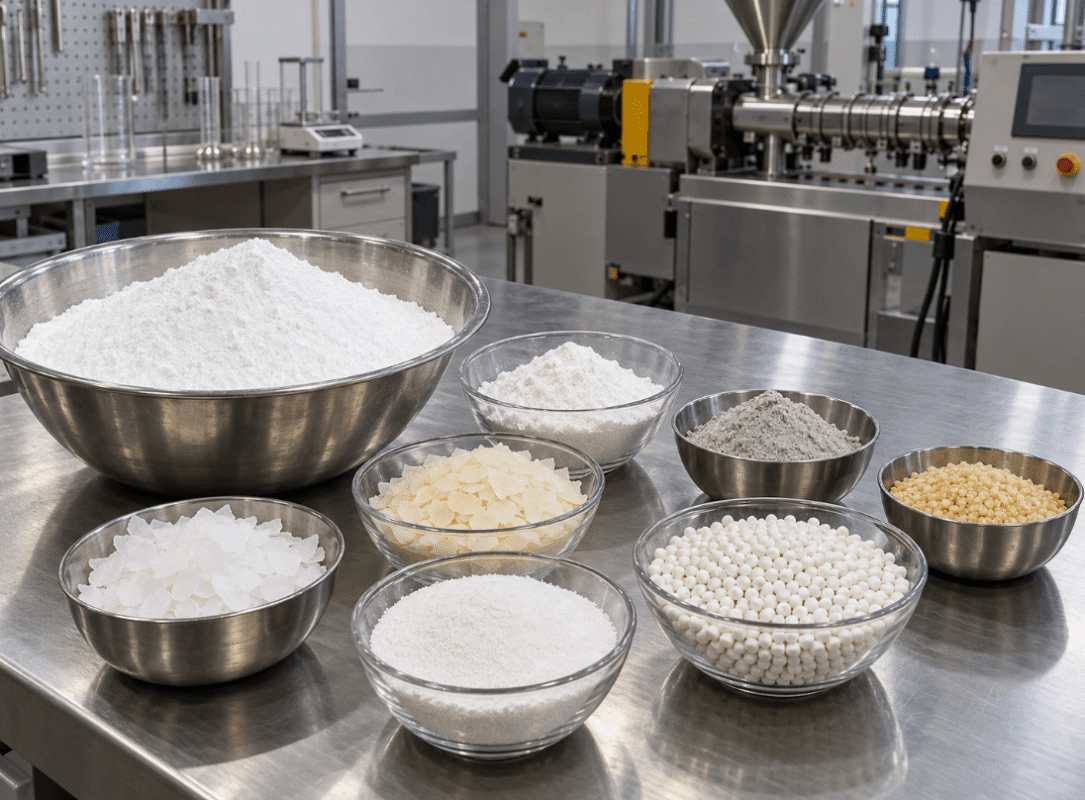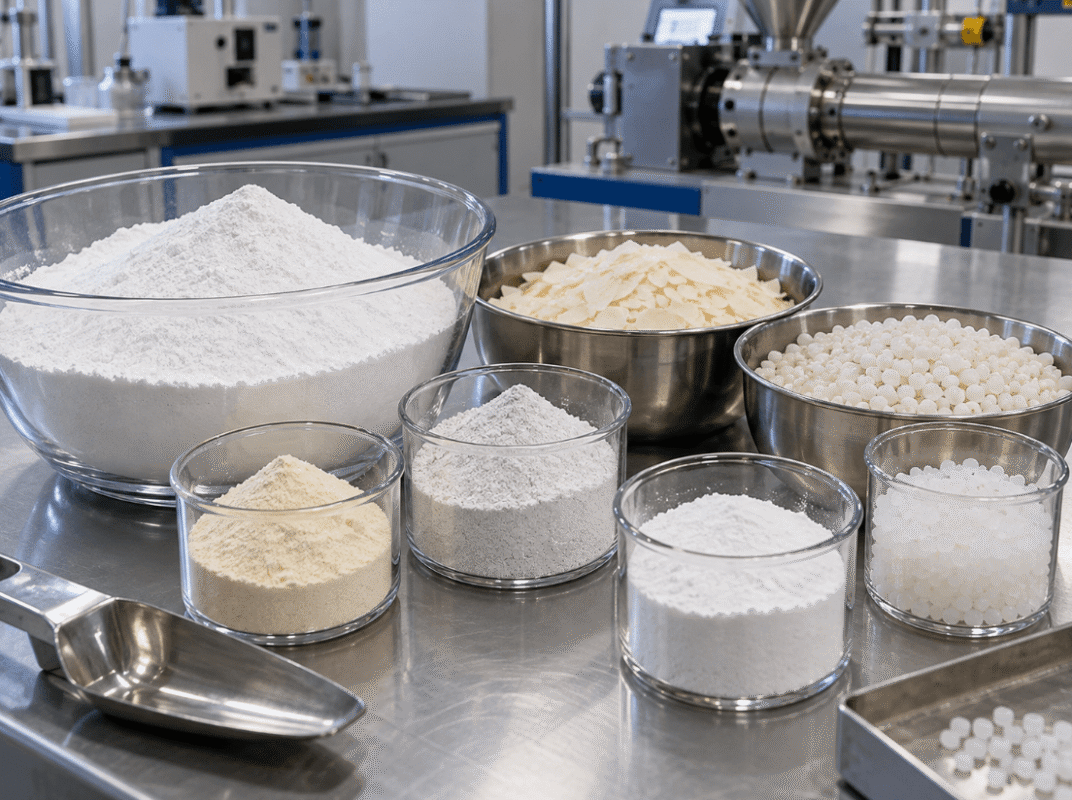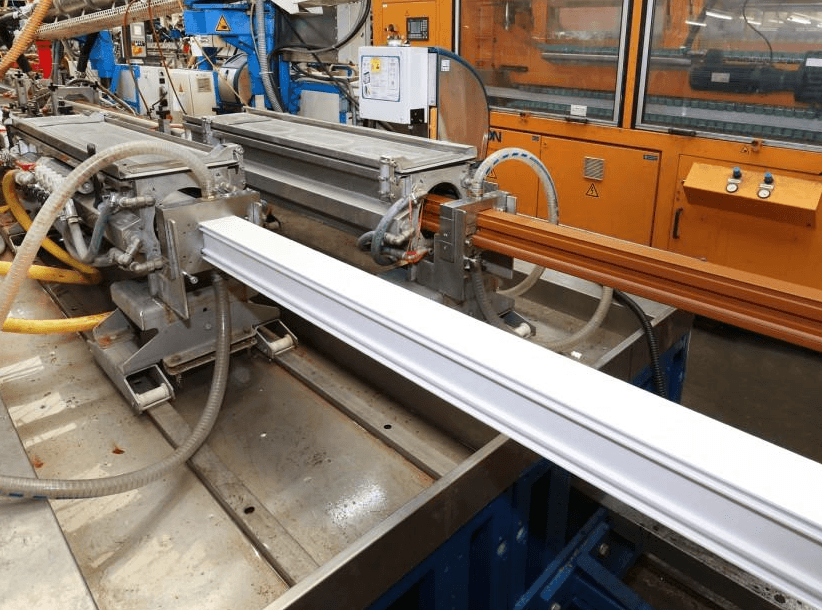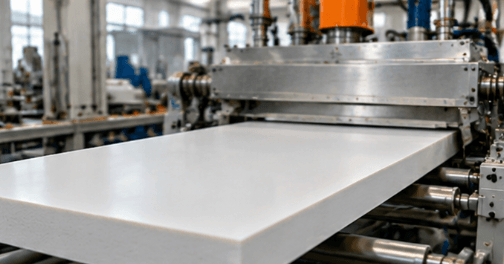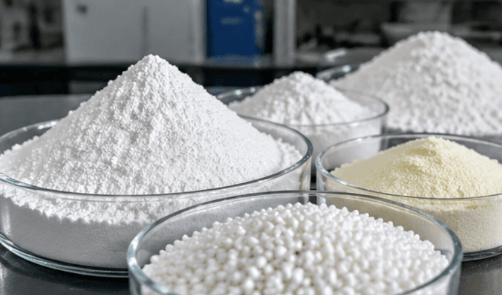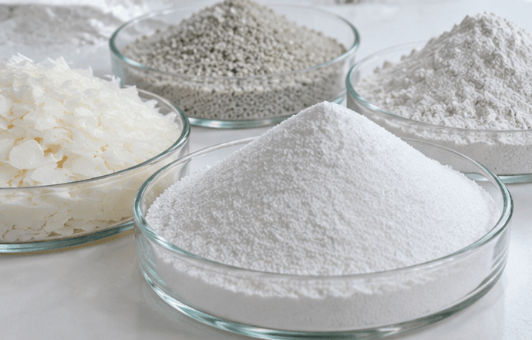

ACR processing aid for PVC extrusion is recommended when a PVC formulation needs improved fusion, higher melt strength, better surface quality, or more stable extrusion. It is particularly useful for rigid PVC profiles, pipes, sheets, and foamed products where melt behavior directly affects product quality.
However, ACR is not necessary in every formulation. Its effectiveness depends on PVC resin characteristics, lubricant balance, filler content, and processing conditions.
What Does ACR Processing Aid Do in PVC Extrusion?
ACR (acrylic processing aid) modifies PVC melt behavior during extrusion. It helps PVC particles fuse more consistently and improves melt strength without changing the primary function of the base resin.
Its main benefits include:
- Faster PVC fusion: Promotes more uniform melting and processing.
- Improved melt strength: Helps extruded products maintain their shape before cooling.
- Better surface finish: Reduces certain defects associated with poor fusion.
- Stable extrusion: Supports more consistent processing under suitable operating conditions.
Unlike thermal stabilizers, ACR primarily controls fusion and melt rheology rather than preventing PVC degradation.
The correct grade matters. General-purpose ACR processing aids focus on fusion and processability, while high-molecular-weight grades are often selected for applications requiring greater melt strength.
When Should You Use ACR Processing Aid?
Manufacturers should consider ACR when extrusion problems are related to insufficient fusion or inadequate melt strength.
1. Poor PVC Fusion
Slow or incomplete fusion can cause rough surfaces, inconsistent mechanical properties, and unstable processing.
ACR may improve melt homogeneity, but lubricant balance and actual melt temperature should be checked first.
2. Surface Defects in PVC Profiles
Rigid PVC profiles require controlled melt flow to achieve consistent surface quality.
An appropriate ACR grade can reduce fusion-related roughness and improve surface uniformity. However, it cannot correct defects caused by damaged dies or material contamination.
3. Insufficient Melt Strength
Complex profiles and foamed PVC boards require enough melt strength to maintain their shape during forming and cooling.
Higher-molecular-weight ACR grades are commonly considered when melt strength is the main processing limitation.
4. High Filler Content
Increasing calcium carbonate loading can change PVC fusion behavior and processing stability.
ACR may help maintain consistent extrusion, although performance also depends on filler particle size, surface treatment, and dispersion.
ACR Processing Aid Applications in PVC Manufacturing
Different PVC products require different processing characteristics.
| Application | Main processing requirement | ACR function |
|---|---|---|
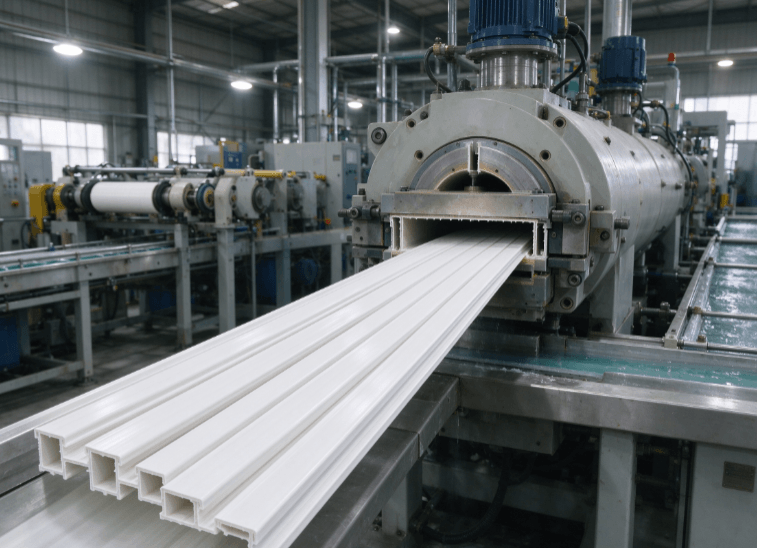
| PVC profiles | Dimensional stability and smooth surfaces | Improves fusion and melt strength |
| PVC pipes | Uniform processing and melt consistency | Supports homogeneous fusion |
| PVC sheets | Surface quality and thickness control | Improves melt behavior |
| Foamed PVC boards | Foam-cell stability | Increases melt strength |
| Highly filled PVC | Consistent fusion and extrusion | Improves processing stability |
For PVC foam extrusion, high-molecular-weight acrylic processing aids are often preferred because the melt must support expanding gas cells.
For rigid profiles and pipes, the priority is usually balanced fusion, manageable viscosity, and stable extrusion pressure.
How to Choose the Right ACR Processing Aid for PVC Extrusion
Selection should begin with the processing problem rather than additive price or molecular weight alone.
Three factors deserve particular attention.
1. Processing objective
Determine whether the formulation requires faster fusion, improved surface quality, or greater melt strength.
A general-purpose fusion aid may not provide the same performance as a dedicated foam-processing grade.
2. Dosage and formulation compatibility
ACR dosage is commonly expressed in phr (parts per hundred parts of PVC resin).
For example, 1 phr means 1 kg of additive for every 100 kg of PVC resin.
The appropriate dosage varies by grade and formulation. Excessive ACR may increase melt viscosity, torque, and extrusion pressure.
3. Production testing
Compare candidate grades under consistent extrusion conditions. Important measurements include:
- Fusion time and torque
- Melt pressure and motor load
- Extrusion output stability
- Surface appearance
- Finished-product dimensions
ASTM D2538 provides a recognized method for evaluating PVC fusion characteristics using a torque rheometer.

ACR vs Fluoropolymer Processing Aids
Although both belong to the broader category of polymer processing additives, ACR and fluoropolymer processing aids serve different purposes.
| Additive | Main function |
|---|---|
| ACR processing aid | Promotes PVC fusion and modifies melt strength |
| Fluoropolymer processing aid | Addresses certain die-wall flow problems in compatible polymer systems |
| PVC lubricant | Controls friction and influences processing flow |
| PVC thermal stabilizer | Protects PVC against thermal degradation |
Fluoropolymer processing aids are widely associated with polyolefin extrusion and should not automatically be considered substitutes for ACR in PVC.
Manufacturers evaluating different additive technologies can review MKQ Chemical’s fluoropolymer and PVC product range to explore relevant material categories.
The final choice should be based on the additive’s chemical function, product specifications, and compatibility testing.
Conclusion
ACR processing aids are most valuable when PVC extrusion requires better fusion, increased melt strength, or improved surface consistency.
For rigid profiles, pipes, and sheets, the focus should be balanced processability and stable product dimensions. Foamed PVC applications often place greater emphasis on melt strength.
Before changing the formulation, manufacturers should identify the underlying processing limitation and verify the selected ACR grade through controlled trials.
FAQ
Is ACR processing aid necessary for all PVC extrusion applications?
No. ACR is primarily useful when a formulation requires improved fusion, melt strength, or processing stability.
What is the difference between ACR processing aid and ACR impact modifier?
ACR processing aids mainly improve fusion and melt rheology. Acrylic impact modifiers primarily improve the impact resistance of finished PVC products.
Can too much ACR cause extrusion problems?
Yes. Excessive ACR can increase melt viscosity, torque, and extrusion pressure, potentially reducing processing efficiency.
How do you evaluate ACR processing aid performance?
Compare fusion behavior, extrusion pressure, surface quality, dimensional consistency, and finished-product properties against a control formulation.
Reference Sources
1. ASTM International — ASTM D2538-25: Standard Practice for Fusion of Poly(Vinyl Chloride) Compounds Using a Torque Rheometer. https://store.astm.org/d2538-25.html
2. Dow — Acrylic Processing Aids: Technical information on acrylic additives for polymer processing. https://www.dow.com/en-us/product-technology/pt-plastic-additives/pg-plasticadd-acrylic-processing-aids.html
3. MKQ Chemical — Fluoropolymer and PVC Products: https://zh-cn.mkqchem.com/fluoropolymer-pvc-product/