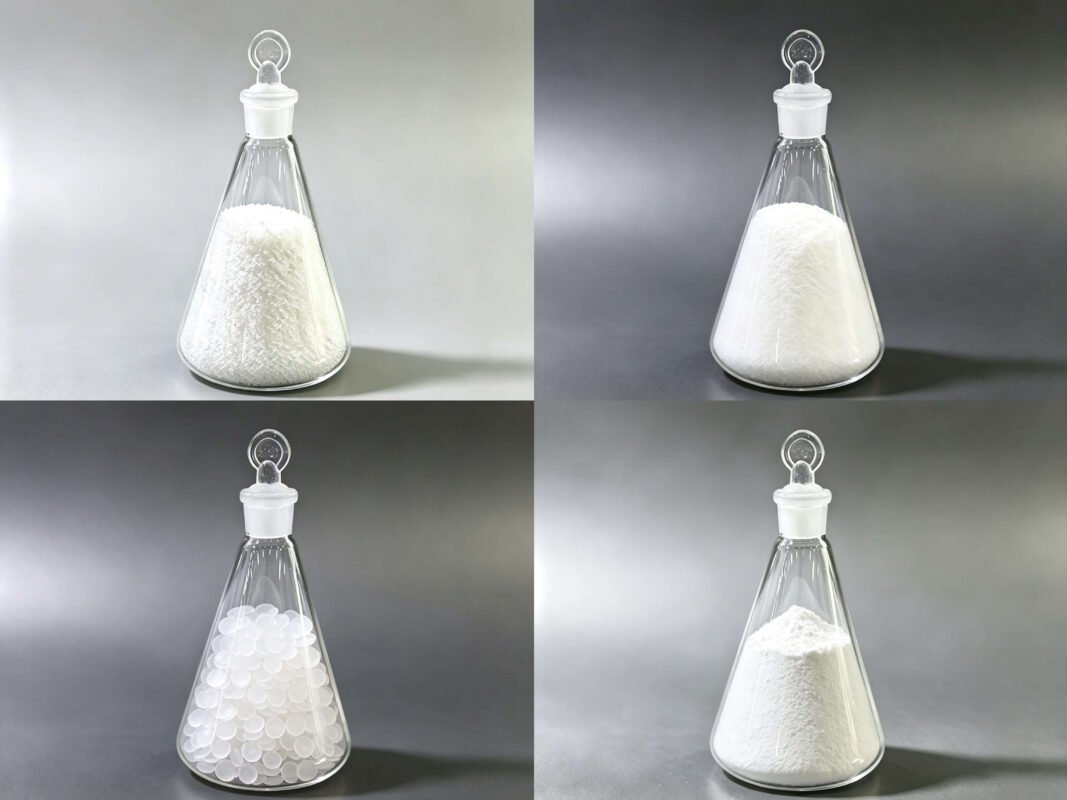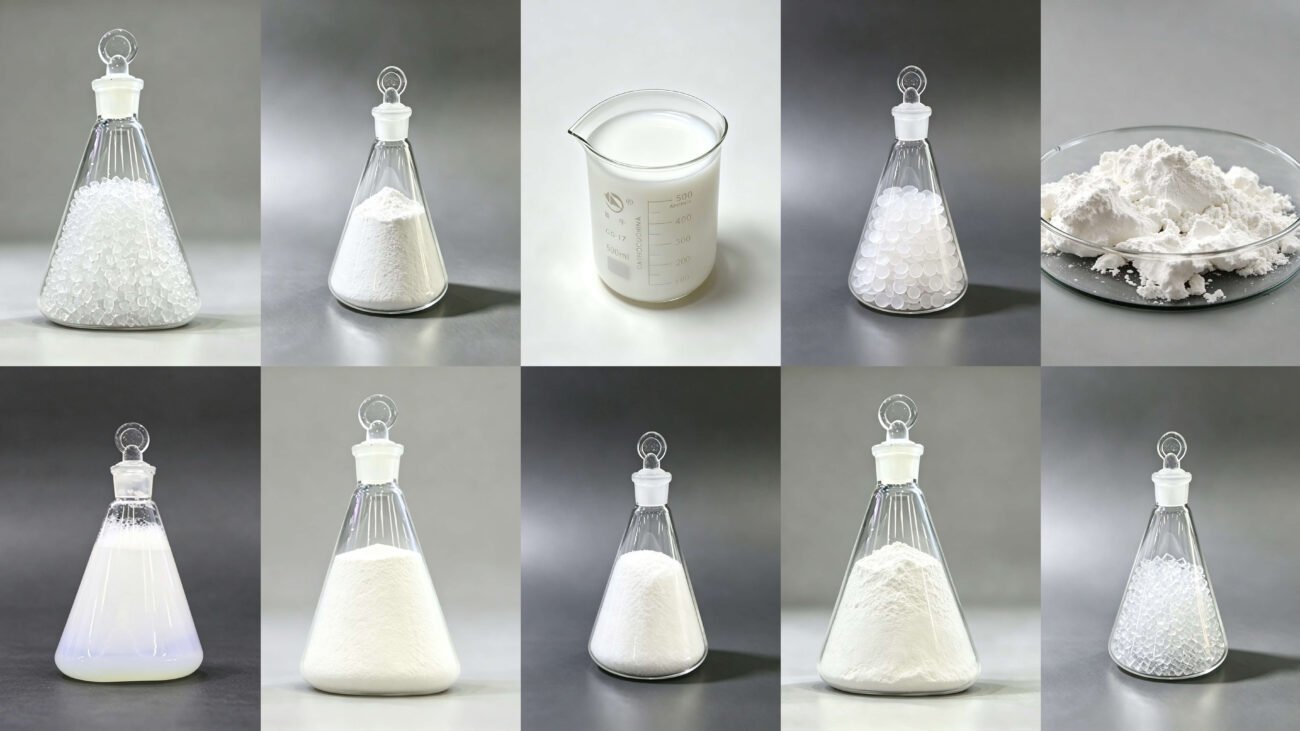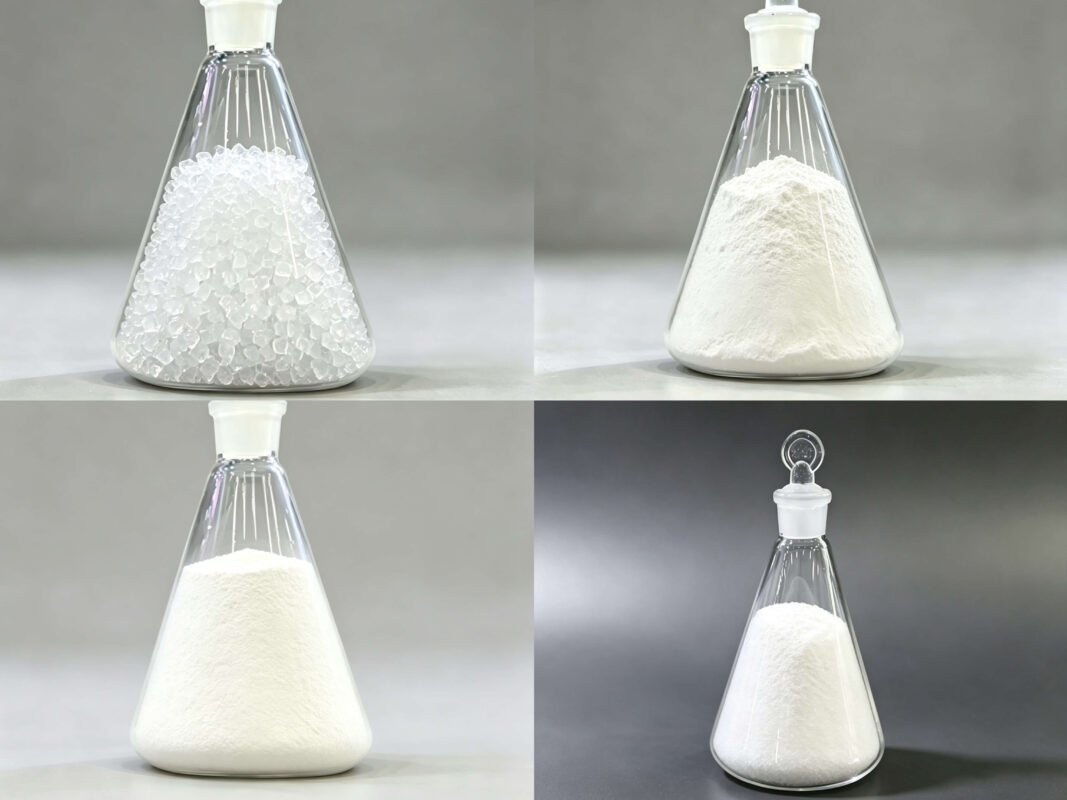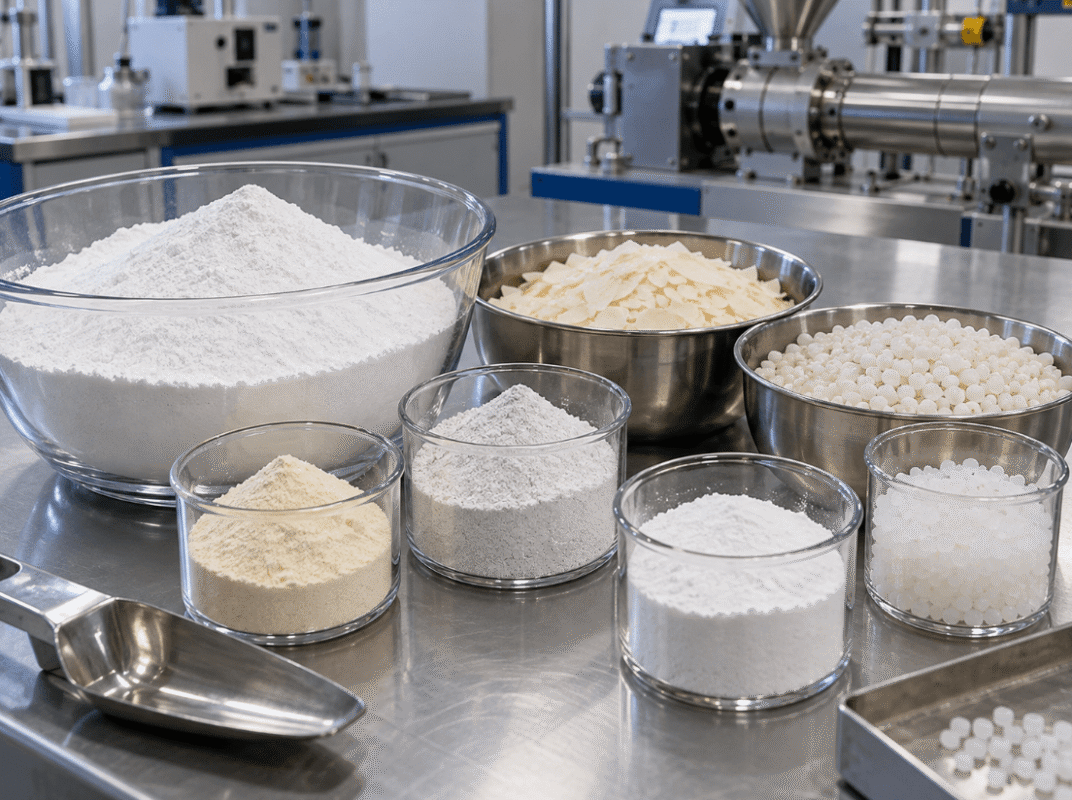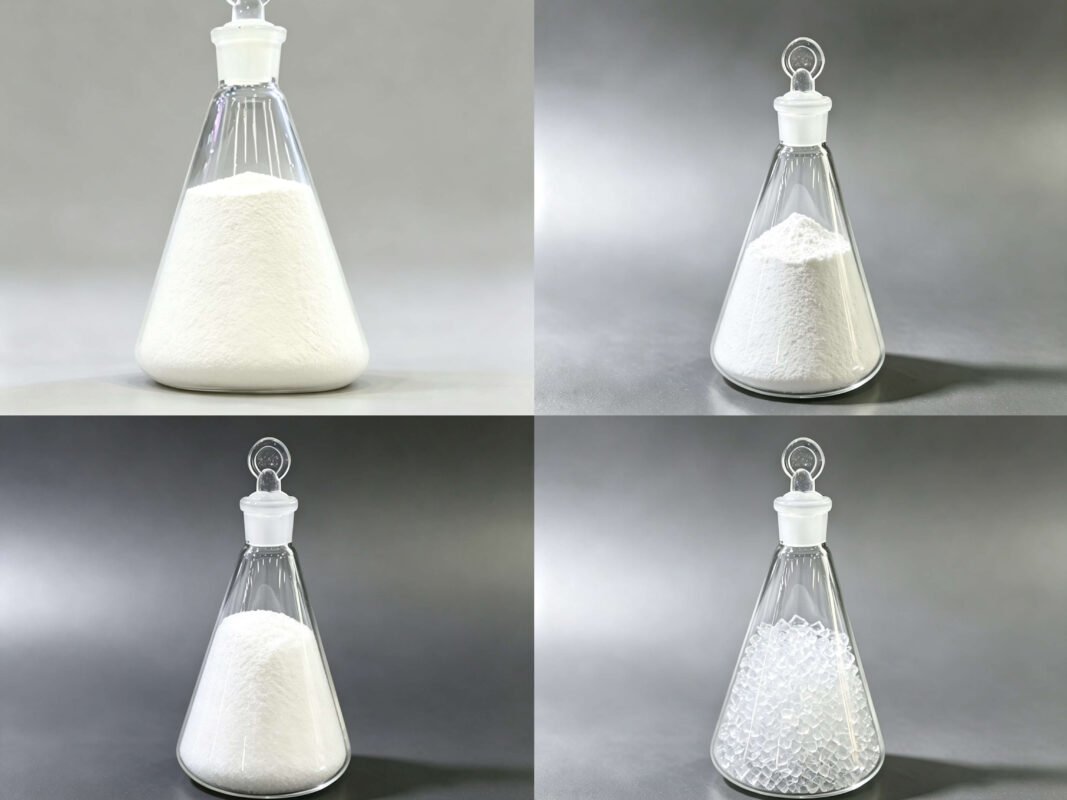

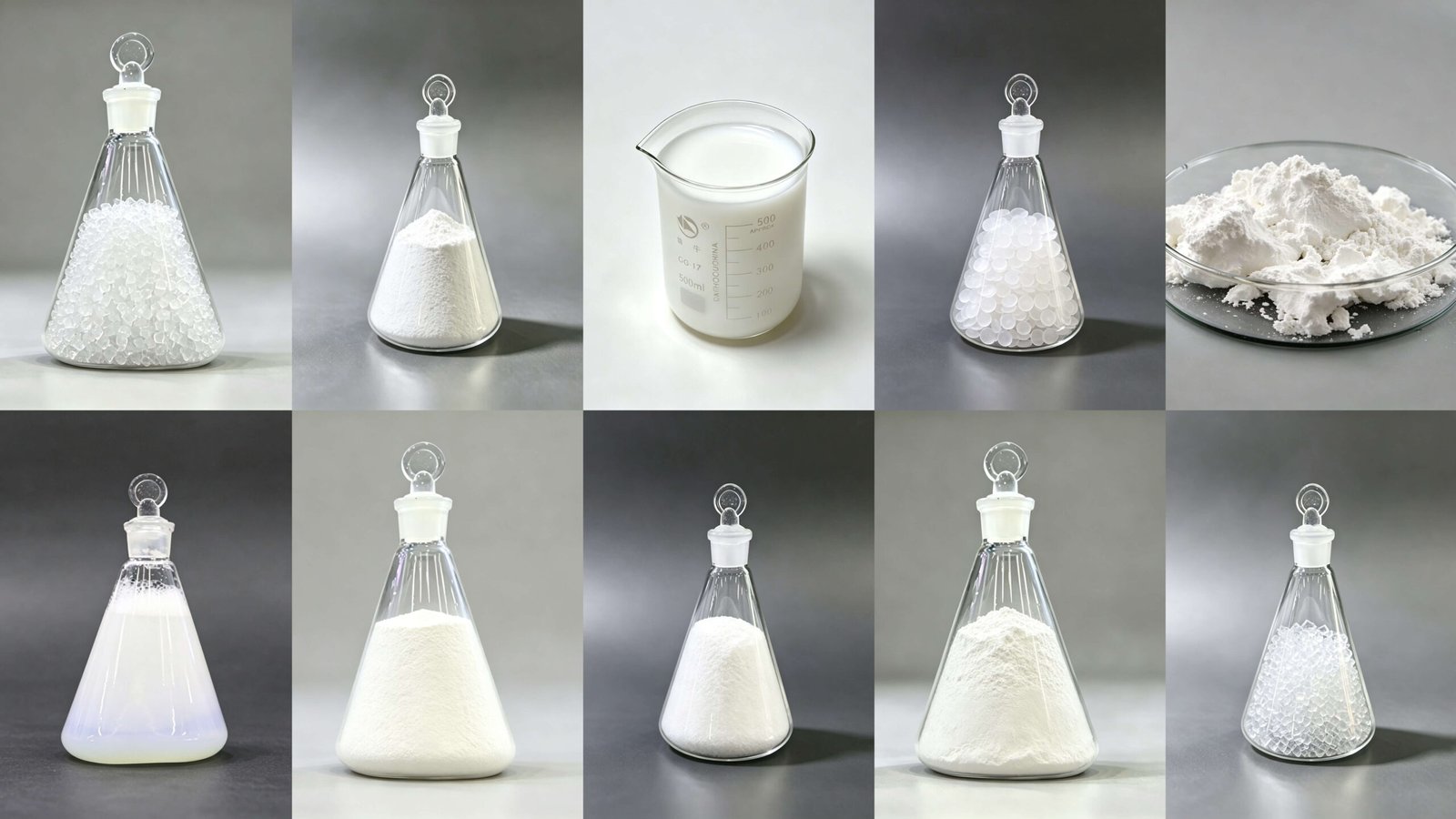
Comparison of Six Types of fluoropolymers from MKQ Chem
fluoropolymers are a class of high-performance plastics renowned for their chemical resistance, thermal stability, electrical insulation properties, and durability. However, materials such as PVDF, PTFE, FEP, PCTFE, PFA, and ETFE are not interchangeable. Their fundamental differences lie in their molecular structures, which dictate the specific balance of properties—including temperature resistance, mechanical strength, flexibility, processability, transparency, and cost—exhibited by each material.
Determining the optimal choice depends on the intended application, operating environment, manufacturing process, and required service life.
fluoropolymers Key Properties: Side-by-Side Comparison
Although all six materials exhibit excellent chemical inertness, their physical properties differ:
| Property | PVDF | PTFE | FEP | PCTFE | PFA | ETFE |
| Typical Melting Point | 170–177°C | 327°C | 255–275°C | 210–220°C | 300–310°C | 255–275°C |
| Typical Continuous Service Temperature | ~150°C | ~260°C | ~200°C | ~120–150°C | ~260°C | ~150°C |
| Chemical Resistance | Very good to excellent (depending on the specific chemical) | Excellent | Excellent | Very good | Excellent | Very good to excellent |
| Mechanical Strength | High | Low to moderate | Moderate | Moderate to high | Moderate | High |
| Optical Clarity | Limited transparency (varies by grade) | Generally opaque | High transparency | Often translucent | Usually translucent or transparent | Good transparency |
| Gas and Moisture Barrier Properties | Good | Relatively poor | Moderate | Excellent | Moderate | Good |
| Flexibility | Moderate | Excellent | Excellent | Moderate | Excellent | Good |
| Melt-Processable | Yes | No (cannot be processed via conventional melt methods) | Yes | Yes (requires careful processing) | Yes | Yes |
| Abrasion/Friction Resistance | Good | Excellent | Very good | Good | Very good | Good |
The values provided above are for reference and qualitative comparison only; they do not constitute universal design limits. Actual performance depends on factors such as the specific grade, molecular weight, additives, manufacturing process, and testing conditions. References: Published technical literature and manufacturer specifications.
How to interpret temperature data:
PTFE and PFA: Typically the preferred materials when long-term high-temperature resistance and broad chemical compatibility are required.
FEP: Offers a lower maximum temperature limit than PTFE or PFA, but is favored for its high transparency and ease of melt-processing.
ETFE: An ideal choice when toughness, abrasion resistance, and mechanical durability are more critical than maximum temperature resistance.
PVDF: Provides a well-balanced combination of chemical resistance, strength, cost, and suitability for standard thermoplastic processing.
PCTFE: Particularly well-suited for low-permeability barrier applications and cryogenic sealing, rather than serving as a general-purpose high-temperature alternative.
Cost Comparison and Economic Considerations
There is no universally applicable price ranking among these six materials, as prices depend on factors such as grade, purity, processing requirements, suppliers, and procurement volume.
| Material | General Cost Considerations |
| PVDF | Generally cost-effective for use in chemically resistant engineering components. |
| PTFE | Price varies significantly depending on the grade and form; standard-grade material can be affordable, while specialty grades and machined parts may be expensive. |
| FEP | Typically higher in cost than general-purpose engineering plastics, but offers excellent melt-processability. |
| PCTFE | Specialty grades are relatively expensive; used primarily for barrier applications and cryogenic environments. |
| PFA | Suitable for high-purity and high-temperature melt-processing applications; generally considered a premium option. |
| ETFE | Typically classified as a high-end engineering material; its high toughness and durability offer good value for the investment. |
To ensure a fair comparison, the total cost of ownership—rather than just the price of the resin—should be evaluated, taking into account factors such as:
– Material consumption and scrap rates
– Processing equipment and molding cycle times
– Required post-processing or secondary fabrication steps
– The impact of chemical and temperature resistance on service life
– Maintenance, replacement frequency, and downtime
For instance, PVDF may be the most economical choice for certain chemical piping systems; conversely, in semiconductor chemical delivery systems—where requirements for purity and operating conditions are exceptionally stringent—PFA, despite its higher price, offers superior value.
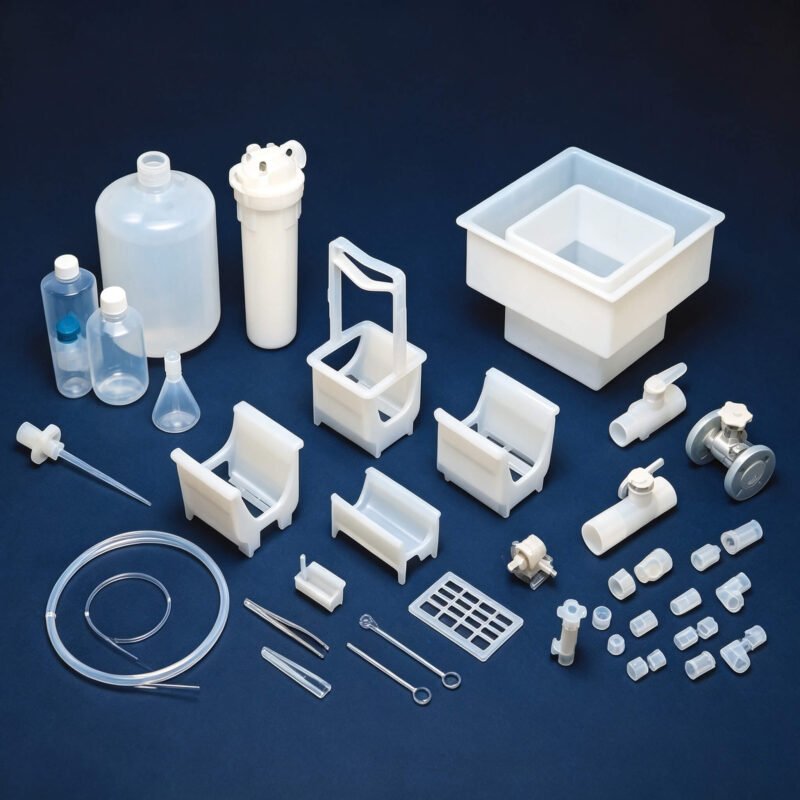
Six Types of fluoropolymers: How to Choose?
The answer depends on the specific application, and should also take into account the manufacturer’s product grades and specific technical parameters.
If conditions below apply: choose PVDF →MKQ PVDF Product Series
– You require a balance of chemical resistance, mechanical properties, and processability, while seeking a more cost-effective alternative to high-end perfluoropolymers.
– The application involves structural piping, chemical storage tanks, or scenarios requiring high rigidity and wear resistance.
– The application entails filtration or other processes that leverage its well-established performance in chemical engineering environments.
If conditions below apply: choose PTFE → MKQ PTFE Product Series
– You require an extremely low coefficient of friction, broad chemical resistance, and high-temperature performance, and are willing to accept the associated processing limitations.
– You need to manufacture components with simple geometries, such as molded parts, or items machined from film or sheet stock (e.g., gaskets).
If conditions below apply: choose FEP → MKQ FEP Product Series
– Requires chemical resistance, electrical insulation, and transparency, while being melt-processable
– Material must possess flexibility and offer lower mass-production costs
– Suitable for use across a range of temperatures (including lower temperatures)
If conditions below apply: choose PCTFE → MKQ PCTFE Product Series
– When gas permeability, moisture resistance, and dimensional stability are critical
– When the primary requirement involves handling cryogenic liquids/gases
If conditions below apply: choose PFA → MKQ PFA Product Series
– A combination of high-temperature resistance, chemical resistance, and melt-processability is required (especially for demanding applications with high-purity requirements).
– Seamless fabrication, complex geometries, or an ultra-high level of cleanliness is essential.
If conditions below apply: choose ETFE → MKQ ETFE Product Series
– The material requires toughness, weather resistance, high transparency, and melt-processability.
– High mechanical strength and lightweight mechanical durability are essential.
– The application involves aerospace cable insulation or transparent architectural facades.
The above is provided for reference purposes only. Final selection should be verified and confirmed based on the technical data sheet for the specific grade and the actual operating conditions.
Conclusion
In summary, PTFE, PFA, and FEP—the “perfluorinated trio”—are primarily designed for extreme chemical and thermal environments. Meanwhile, ETFE, PVDF, and PCTFE—the “modified trio”—retain key advantages of fluoropolymers while gaining unique mechanical, barrier, or functional properties through structural modifications.
The “best” fluoropolymer is not necessarily the one with the highest temperature rating or the broadest chemical resistance; no single material excels in every aspect. Final material selection should be based on a comprehensive assessment of chemical compatibility, mechanical loading, temperature, manufacturing requirements, and total system cost.
This guide serves only as a preliminary screening tool and does not constitute material certification. For pressure-bearing components, seals, and high-purity systems, always verify the specific resin data sheets and component-level requirements.
FAQ
Q: Which materials are transparent?
FEP and PFA are particularly well-suited for the production of transparent tubing and films. ETFE can also be used to create transparent films, while the transparency of PVDF and PCTFE depends on the product’s form and specific grade. Conventional PTFE is generally opaque.
Q: Which fluoropolymer offers the best chemical resistance?
PTFE serves as a common benchmark for broad chemical inertness, and PFA also exhibits exceptional chemical resistance. Actual chemical compatibility depends on the specific chemicals involved, their concentration, temperature, applied stress, and the material grade.
Q: Among PVDF, PTFE, FEP, PCTFE, PFA, and ETFE, which has the highest strength?
In many standard comparisons, ETFE and PVDF typically exhibit higher tensile strength than unfilled PTFE, FEP, or PFA. However, the relative strength depends on the material grade, testing methodology, temperature, and whether one is evaluating tensile strength, impact resistance, or creep resistance.
Q: Can these materials be directly substituted for one another?
They cannot simply be swapped out for one another. Any substitution requires an evaluation of chemical compatibility, operating temperature, mechanical load, permeability, manufacturing processes, regulatory requirements, and expected service life.
Q: Which materials are the easiest to process?
PVDF, FEP, PFA, and ETFE are conventional melt-processable thermoplastics. While PCTFE can also be melt-processed, it requires strict control over thermal conditions. PTFE generally necessitates specialized processing techniques—such as paste extrusion or compression molding—followed by a sintering process.
Reference Sources:
Performance Fluoropolymer Partnership (PFP): https://fluoropolymerpartnership.com
Green Science Policy Institute(GSPI): https://greensciencepolicy.org
DBpedia: https://www.dbpedia.org/
Department of Chemistry & Biotechnology, School of Engineering, The University of Tokyo-Fluoroorganic Chemistry Lab: https://www.chembio.t.u-tokyo.ac.jp/department/lab/kawaguchi.html
Plastics Engineering:https://www.plasticsengineering.org