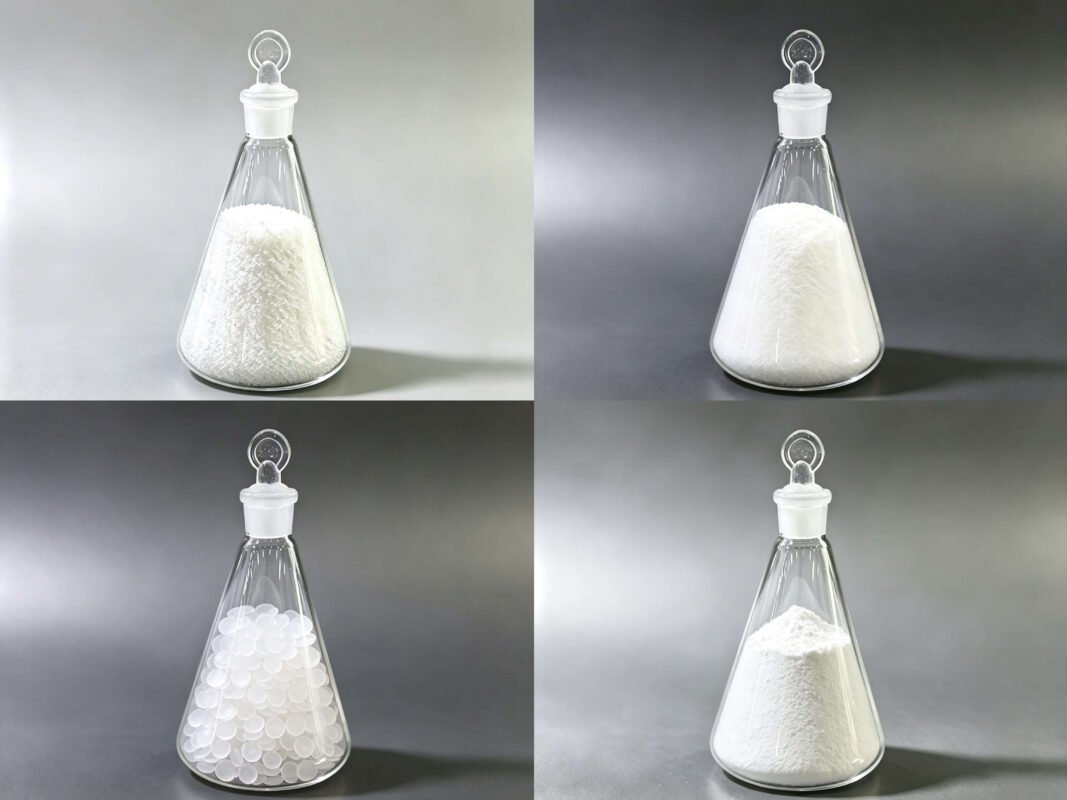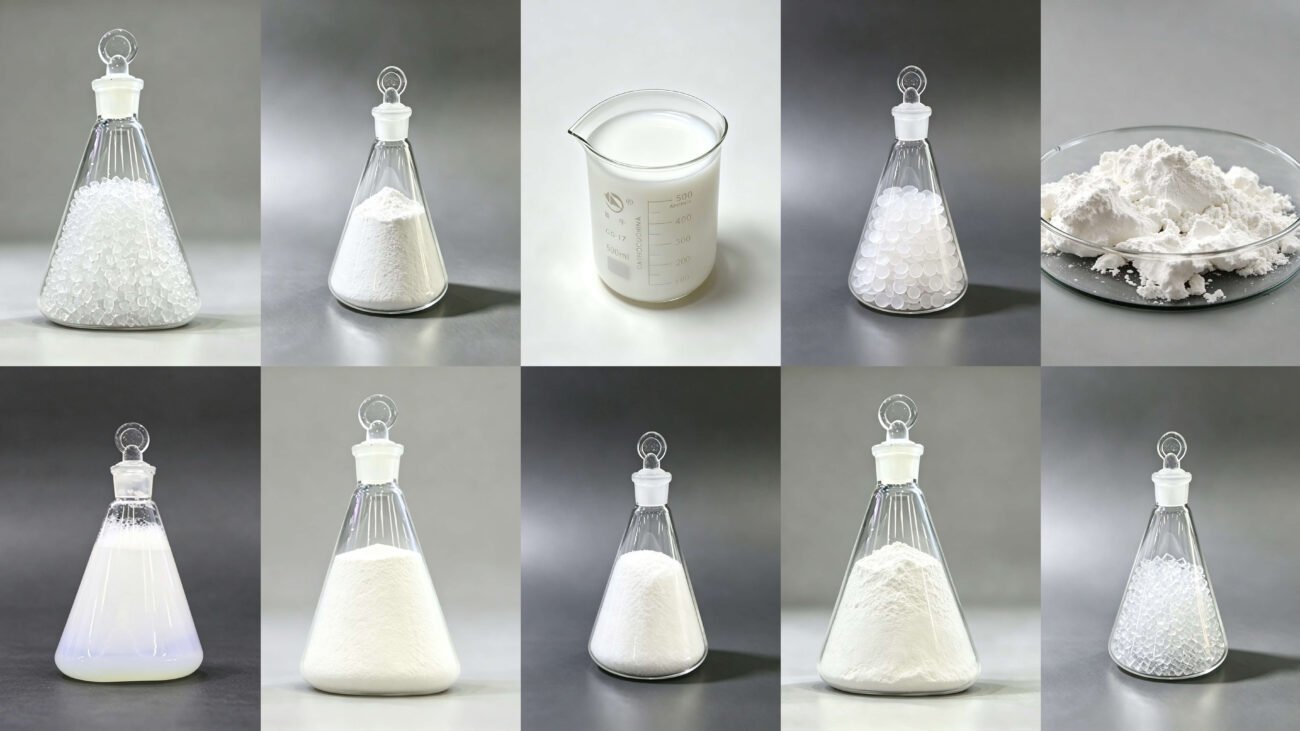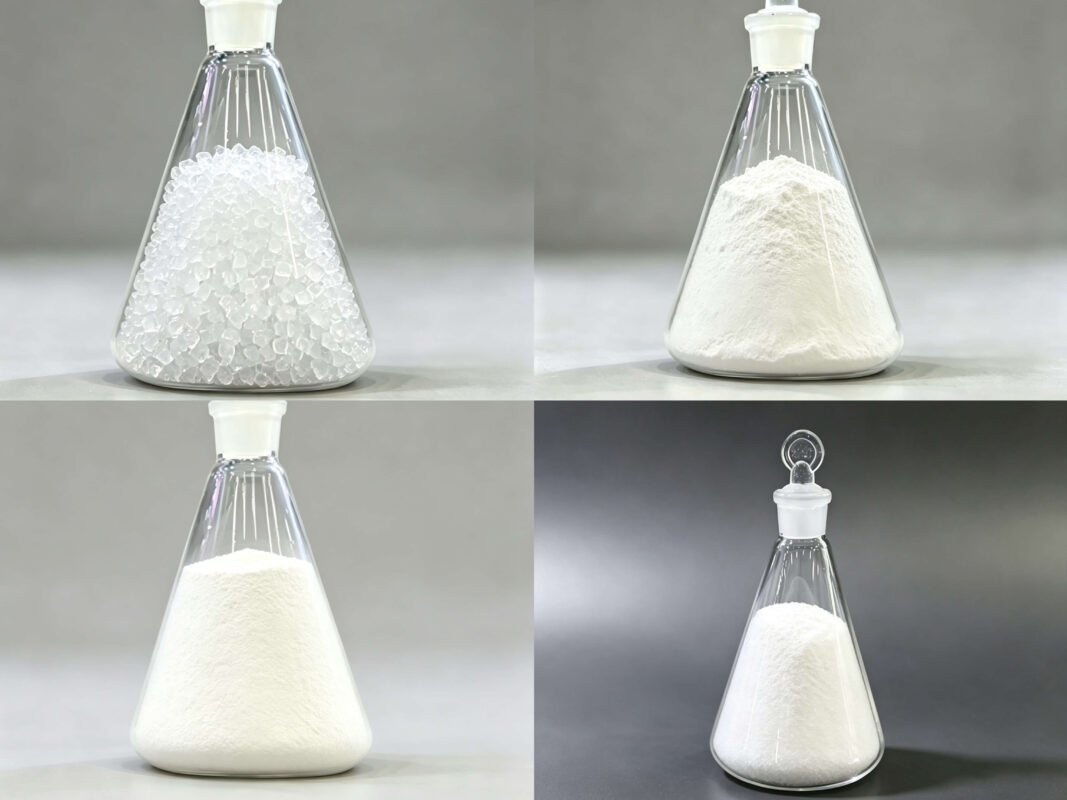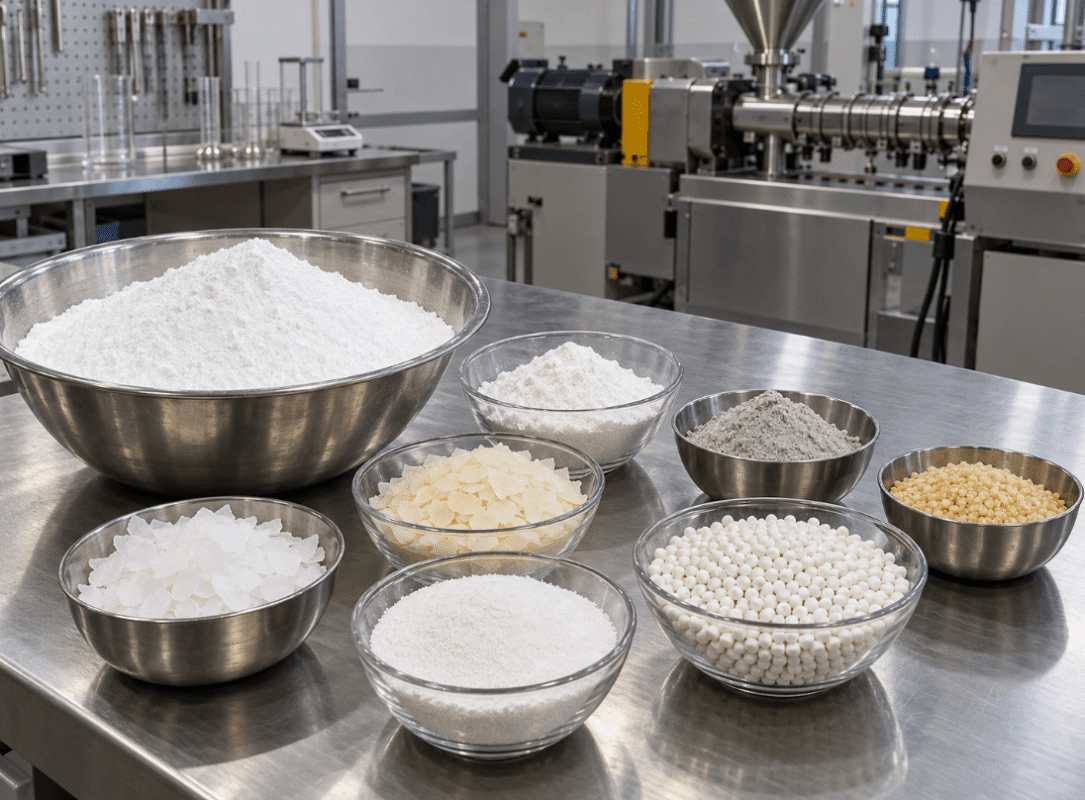


PVC processing aid dosage affects fusion, melt strength, extrusion stability, and the surface quality of finished PVC products. The correct amount depends on the processing aid grade, PVC resin characteristics, filler content, lubricant balance, extrusion equipment, and final application. A dosage suitable for a rigid PVC profile may not work for a foam board because the two products have different melt-strength and processing requirements. Manufacturers should use grade-specific technical recommendations as a starting point and confirm the dosage through controlled production trials.
For PVC processors, the objective is not to maximize additive loading. It is to use an appropriate amount that provides the required processing performance without increasing viscosity, torque, pressure, or material costs unnecessarily.
What Is PVC Processing Aid Dosage?
PVC processing aid dosage is the quantity of processing aid added to a PVC formulation, usually expressed in phr (parts per hundred resin). One phr means one part by weight of additive for every 100 parts by weight of PVC resin.
For example, adding 2 kg of processing aid to 100 kg of PVC resin represents a dosage of 2 phr. The calculation is based on PVC resin weight, not the total weight of the compound containing fillers and other additives.
Processing aids are not all interchangeable. General-purpose acrylic processing aids primarily improve fusion and processing behavior, while high-molecular-weight grades may provide additional melt strength for demanding applications. Foaming regulators are often selected when the melt must support an expanding cellular structure.
What Is the Typical Processing Aid Dosage for PVC?
There is no universal dosage for every PVC application. The appropriate range depends on the processing aid chemistry, product type, resin grade, filler loading, and equipment conditions.
The following ranges are general formulation references rather than fixed production recommendations. The supplier’s current technical data sheet and application-specific guidance should take priority.
| PVC Application | Processing Aid Type | Dosage Consideration |
|---|---|---|
| Rigid PVC profiles | General-purpose acrylic processing aid | Determine according to fusion, surface finish, and profile geometry |
| PVC pipes | General-purpose processing aid | Evaluate fusion, output stability, and mechanical requirements |
| PVC sheets | Processing aid for sheet extrusion | Consider surface appearance, transparency where relevant, and melt uniformity |
| Standard PVC foam boards | Processing aid for foaming applications | Balance melt strength, density, and cell stability |
| High-expansion PVC foam boards | High-molecular-weight processing aid or foaming regulator | Evaluate gas retention, melt elasticity, and equipment torque capacity |
MKQ Chemical’s published technical guidance distinguishes general-purpose processing aids from high-molecular-weight foaming regulators. For example, its MK-304 product documentation specifies a recommended dosage of 2.0–6.0 phr for that particular grade. This is a product-specific reference and should not be applied to all PVC processing aids.
Manufacturers can review the functions of PVC processing aids to understand how different grades influence fusion, melt strength, and extrusion performance.
Six Factors That Affect PVC Processing Aid Dosage
1. PVC Resin Grade and K-Value
PVC resin characteristics influence fusion behavior, melt viscosity, and processing requirements. Different K-values can produce different melt responses under the same extrusion conditions.
A formulation developed for one resin grade may not deliver identical results after switching to another resin supplier or K-value. Manufacturers should therefore evaluate the processing aid dosage again whenever the base resin changes significantly.
During trials, keep the resin grade consistent when comparing candidate processing aids. This makes it easier to identify whether a performance difference comes from the additive or the resin.
2. Processing Aid Type and Molecular Characteristics
Different processing aids are designed to address different processing requirements. General-purpose acrylic processing aids support PVC fusion and plasticization, while high-molecular-weight grades are often selected when greater melt strength and elasticity are needed.
For rigid profiles and pipes, fusion consistency and surface quality may be the primary selection criteria. In foam board production, the melt must also retain expanding gas bubbles without excessive cell coalescence or collapse.
Increasing the dosage of a general-purpose processing aid does not necessarily reproduce the performance of a specialized foaming regulator. Grade selection should come before dosage adjustment.
3. Calcium Carbonate and Filler Loading
Calcium carbonate and other fillers influence compound rheology, fusion behavior, and processing resistance. Highly filled PVC formulations may require different processing aid characteristics from formulations with lower filler content.
However, increasing filler content does not automatically mean that more processing aid is required. The actual response depends on filler particle characteristics, dispersion, resin grade, lubrication, and equipment conditions.
When changing filler loading, evaluate torque, melt pressure, fusion behavior, surface quality, and finished-product properties together.
4. Lubricant Balance
Internal and external lubricants influence friction, fusion timing, and material release from metal surfaces. Processing aids and lubricants perform different primary functions, but their combined effects influence the behavior of the PVC compound.
Excessive external lubrication may delay fusion, while an unsuitable internal lubrication balance can affect melt flow. If extrusion becomes unstable after changing processing aid dosage, review the lubricant system before making further adjustments.
Manufacturers should evaluate the complete formulation rather than treating processing aid dosage as an independent variable.
5. Extruder Design and Processing Conditions
Screw configuration, screw speed, temperature profile, shear, residence time, and production output all influence how a processing aid performs.
For example, a formulation that works on one twin-screw extrusion line may not produce the same results on equipment with different screw geometry or output requirements. Changes in processing conditions can alter fusion behavior and melt pressure even when the additive dosage remains unchanged.
Record actual operating conditions during dosage trials. Do not assume that a successful dosage on one production line can be transferred directly to another.
6. Finished-Product Requirements
The target product determines which processing properties matter most.
- PVC profiles: Fusion consistency, surface finish, dimensional accuracy, and stable die flow.
- PVC pipes: Uniform fusion, stable extrusion output, and required mechanical properties.
- PVC sheets: Melt uniformity, surface appearance, and optical requirements where applicable.
- PVC foam boards: Melt strength, foam-cell stability, target density, and surface quality.
A dosage should be judged against the finished-product specification rather than simply by whether it makes the material easier to process.
What Happens When Processing Aid Dosage Is Too High or Too Low?
Both insufficient and excessive processing aid can create processing problems. The actual symptoms depend on the grade, formulation, and equipment.
| Dosage Condition | Possible Processing Effects | What to Investigate |
|---|---|---|
| Insufficient dosage | Incomplete fusion, rough surfaces, unstable melt behavior | Grade suitability, fusion conditions, and resin characteristics |
| Excessive dosage | Higher melt viscosity, increased torque or pressure, unnecessary material cost | Actual melt behavior, dosage, and equipment limits |
| Unsuitable processing aid grade | Weak melt support or inadequate processing improvement | Application requirements and product specifications |
| Incompatible formulation | Unstable processing or inconsistent finished-product quality | Lubricant balance, stabilizers, fillers, and other additives |
Increasing dosage is not always the correct solution to rough surfaces or poor extrusion output. The problem may originate from the lubricant system, temperature profile, die condition, or resin characteristics.
How to Determine the Correct PVC Processing Aid Dosage
Step 1: Establish a Baseline Formulation
Record the PVC resin grade, K-value where available, filler loading, stabilizer package, lubricant system, processing aid grade, and current dosage. Also document the extrusion settings and finished-product specifications.
Step 2: Confirm the Supplier’s Recommended Range
Review the technical data sheet for the selected grade. Confirm the intended application, recommended dosage, physical properties, and any specific formulation requirements.
Do not transfer the dosage of one processing aid to another simply because both products are described as acrylic additives.
Step 3: Conduct Controlled Dosage Trials
Use the supplier’s recommended range as the starting point. Adjust the dosage in controlled increments while keeping other formulation components and processing conditions as consistent as practical.
Record the effect of each change rather than relying only on visual observations.
Step 4: Evaluate Processing and Product Quality
Compare the following indicators:
- Fusion behavior and plasticization consistency.
- Extruder torque and motor load.
- Melt pressure and temperature.
- Production output and stability.
- Surface appearance and dimensional consistency.
- Relevant mechanical properties of the finished product.
Step 5: Confirm Production Repeatability
Repeat the selected formulation under representative production conditions. Confirm that the improvement is consistent across production runs before approving the dosage for routine manufacturing.
For foam board applications, manufacturers can also refer to the PVC processing aid for foam board guide, which discusses the relationship between melt strength, foam stability, and processing conditions.
How to Evaluate a PVC Processing Aid Supplier
For commercial sourcing, buyers should evaluate technical suitability and product consistency rather than comparing additives only by price.
- Product identification: Confirm the exact grade and intended PVC application.
- Technical documentation: Request the current TDS and SDS.
- Dosage guidance: Verify the recommended range for the actual resin and extrusion process.
- Quality consistency: Ask about batch specifications and available certificates of analysis.
- Sample testing: Agree on the trial method and acceptance criteria before bulk purchasing.
- Commercial conditions: Confirm packaging, MOQ, lead time, and export documentation where applicable.
When requesting a recommendation, provide the supplier with the intended product, resin grade, current formulation, filler content, extrusion equipment, and the processing problem to be addressed. This information supports a more meaningful technical evaluation.
For application-specific product selection, manufacturers can review the ACR processing aid for PVC guide and compare the available processing aid technologies.
Conclusion
PVC processing aid dosage depends on the resin grade, additive characteristics, filler loading, lubrication balance, extrusion conditions, and finished-product requirements. A dosage suitable for a rigid profile may not be appropriate for a foam board or another PVC application.
The most reliable approach is to select the correct grade first, follow its technical recommendations, and validate dosage through controlled production trials. Monitoring fusion behavior, torque, pressure, output, and finished-product quality helps manufacturers identify an appropriate dosage without increasing additive consumption unnecessarily.
Frequently Asked Questions
What is the typical PVC processing aid dosage?
There is no universal dosage for all PVC processing aids. The appropriate amount depends on the grade, PVC resin characteristics, application, filler loading, and extrusion conditions. Manufacturers should follow the supplier’s grade-specific recommendation and validate it through production trials.
Does PVC processing aid dosage depend on resin K-value?
Yes. Resin K-value is related to molecular characteristics and can influence fusion and melt behavior. When changing resin grades, manufacturers should reassess processing aid performance rather than automatically retaining the previous dosage.
Can excessive processing aid cause extrusion problems?
Yes. Excessive dosage may increase melt viscosity, torque, or extrusion pressure and raise material costs without proportional performance improvements. The effect depends on the additive grade and formulation.
Is processing aid dosage the same for PVC foam boards and profiles?
No. Foam boards often require greater melt strength to support expanding gas cells, while rigid profiles place different emphasis on fusion, die flow, and dimensional stability. The appropriate processing aid grade and dosage must match the application.
How can manufacturers test a new PVC processing aid?
Establish a baseline formulation, confirm the supplier’s recommended dosage range, and conduct controlled trials. Compare fusion, torque, pressure, output, surface appearance, and finished-product properties before approving the new formulation.