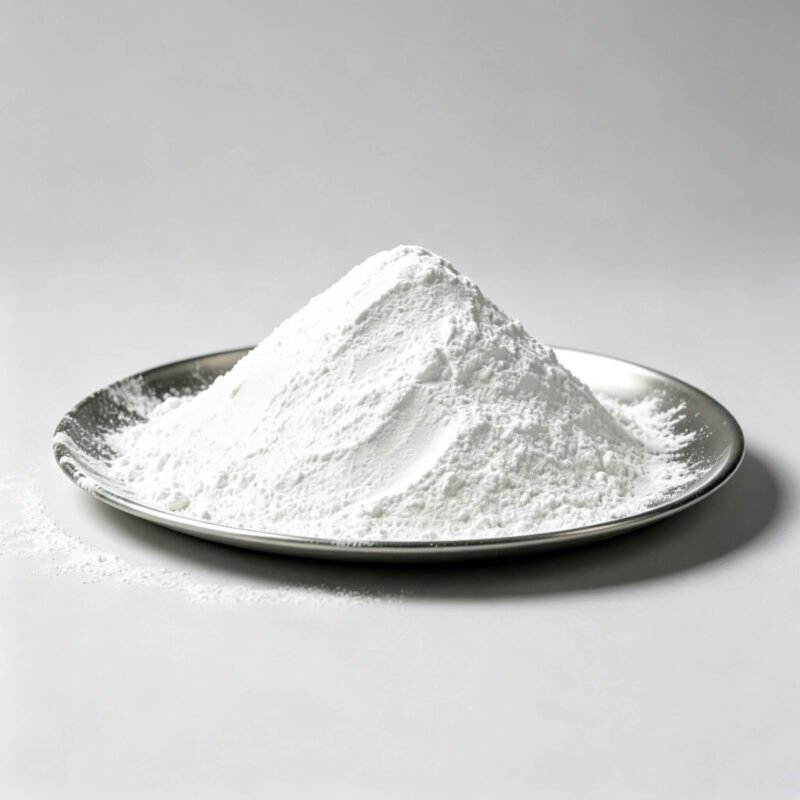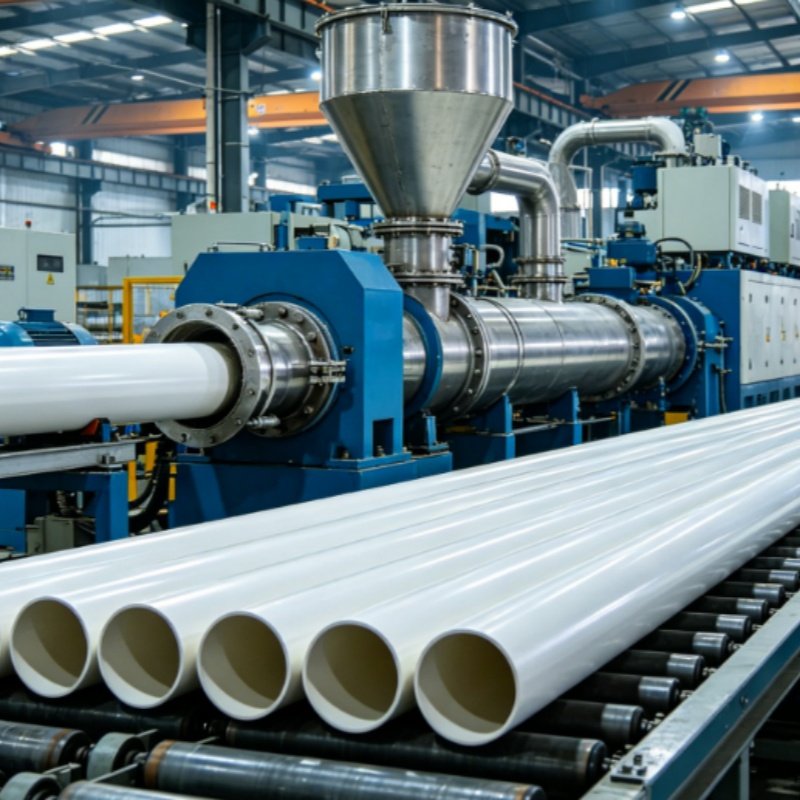

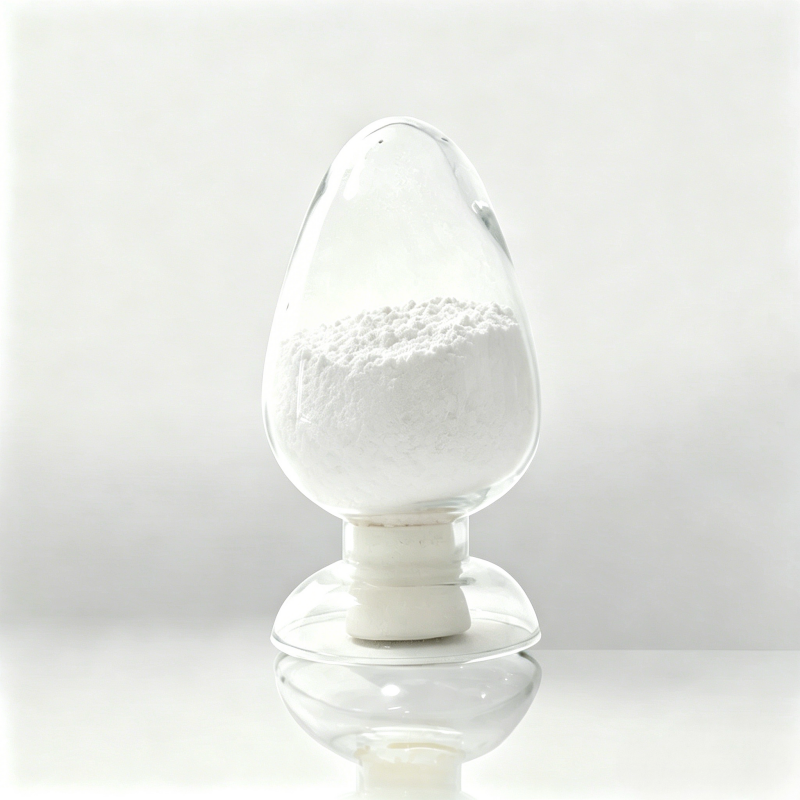
In the production of PVC foam boards, processing aids constitute an essential and critical requirement. During the foam board extrusion process, chemical blowing agents decompose to release gases, thereby generating bubbles within the molten PVC matrix. The primary function of processing aids is to impart sufficient strength and elasticity to the PVC melt, enabling it to effectively entrap these expanding bubbles and prevent them from coalescing or collapsing. This capability is paramount to the successful production of stable, uniform, and low-density foam boards.
Fundamentally, processing aids achieve these objectives by facilitating the faster and more uniform melting of PVC particles, thereby ensuring that the melt maintains a state of high homogeneity. This blog post explores the specific mechanisms by which various PVC processing aids function in the production of foam boards. It lists several common PVC processing aid for foam board—serving as a practical reference to assist you in selecting the most suitable additives for your specific PVC foam board applications—and also outlines strategies for addressing common processing issues through appropriate procedural adjustments, with the aim of providing you with valuable assistance.
PVC Processing Aid for Foam Board
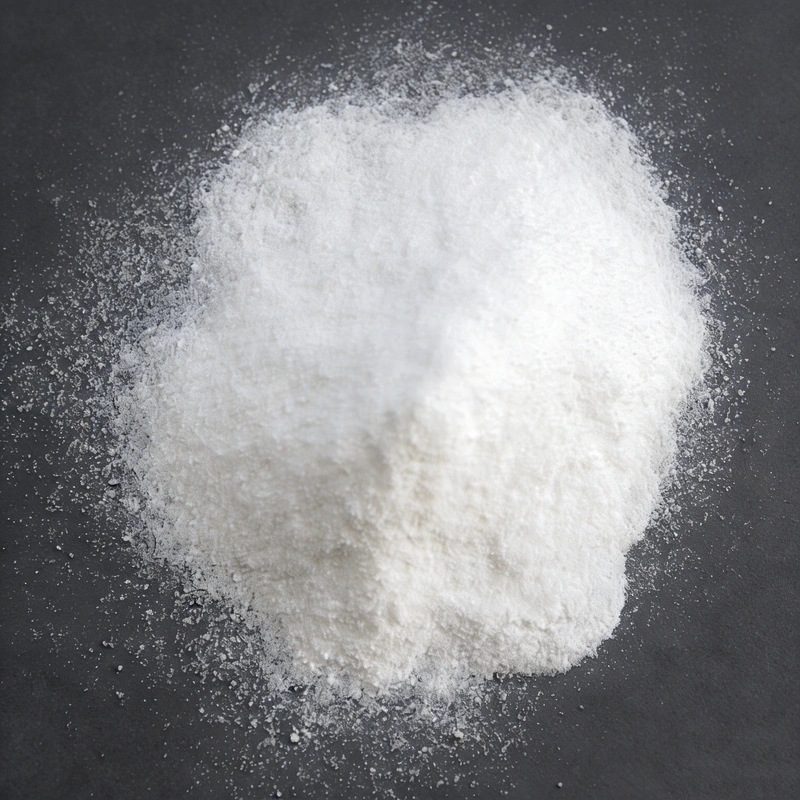
The production of PVC foamed boards requires the use of specialized processing aids to achieve superior results. The following are the main types of processing aids used for PVC foamed boards:
| Type | Lubricating Processing Aid | High Melt Strength Processing Aid | Balanced, General-Purpose Processing Aid |
| Function | Improves flowability and reduces friction (excessive use may compromise the strength and cell uniformity of foamed boards) | Specifically designed for foaming applications(Prevents foam collapse,enhances board rigidity, improves surface quality) | Combines both lubricating and melt strength properties |
| Characteristics | Accelerated plasticization rate,enhanced surface gloss, reduced torque,improved mold release performance (easy separation from metal surfaces) | Strong melt elasticity,excellent bubble stabilization,higher foaming ratio,uniform cellstructure | Balanced plasticization and flowability, stable extrusion process, easy formula adjustment |
| Scope of Application | Thin foamed boards / Decorative panels;High-speed extrusion production lines;High-volume production;Limitations; | Free-foamed boards;Celuka-foamed boards;Thick boards;Low-density foamed products; | General-purpose foamed boards;Medium-density boards;Standard production lines; |
Key Characteristics and Selection Criteria
Selecting the appropriate processing aids directly impacts critical parameters such as the surface gloss, foam structure uniformity, cell density, production efficiency, and hardness of PVC foam boards—factors that often determine the ultimate success or failure of the final product. Therefore, when selecting processing aids for foam boards, you should place particular emphasis on the following key characteristics:
- High Melt Strength (Most Critical): This enables the melt to effectively support the expanding cellular structure, thereby preventing its collapse and enhancing foaming stability.
- Molecular Weight: Typically, manufacturers select ultra-high or extremely high molecular weight acrylate copolymers to provide the requisite melt strength and elasticity.
- Melting Promotion and Lubrication: These additives accelerate the melting process and improve flow properties, thereby enhancing product surface quality, minimizing defects, and steadily boosting production efficiency.
- Torque Stability: Crucial for enabling long-term, continuous extrusion production.
PVC Processing Aid for Foam Board Key selection considerations include:
- Compatibility: The additive must exhibit excellent compatibility with the following components: PVC resin, stabilizers, lubricants, blowing agents, fillers (such as calcium carbonate), etc.
- Processing Conditions: You should tailor your selection of the additive to your specific process type (free foaming or the Celuka process), production line speed, and temperature stability requirements.
- Sheet Thickness: Manufacturers typically optimize different grades of additives specifically for either thick-sheet or thin-sheet foaming processes.
- Formulation Balance: The addition of processing aids affects the lubrication properties of the system; therefore, you may need to fine-tune the lubricant system within your formulation accordingly.
- Dosage: Please adhere to the supplier’s recommended dosage (typically 1~8 phr,parts per hundred parts of resin) to achieve the optimal balance between performance and cost.
Common Processing Issues and Adjustment Strategies
If you are operating a twin-screw extruder and encounter processing difficulties, you should typically investigate the dosage or grade of the processing aids first:
| Problem | Possible Cause | Solution |
| Cell Collapse | Insufficient Melt Strength | Increase the dosage of the foaming regulator |
| Rough Surface | Poor Melting/Fusion | Increase the dosage of processing aids |
| Low Output | Slow Melting Rate | Use a fast-melting type of processing aid |
| Coarse and Uneven Cells, or “Large Voids” in the Core | Poor cell stability; melt strength is too low, causing tiny bubbles to coalesce and form large voids | Slightly increase the dosage of high-molecular-weight ACR, or switch to an ACR grade with an even higher molecular weight |
| Rough or Yellowed (Overheated) Board Surface | The molecular weight of the processing aid is too high relative to the current temperature profile, generating excessive shear heat and leading to localized degradation (scorching) | Moderately reduce the dosage of ACR, or optimize the external lubrication system (e.g., PE Wax or calcium stearate) to reduce shear torque |
| Excessively High Density (Board is Too Heavy) | Insufficient cell expansion. The melt is either too stiff to expand fully, or too soft to retain the gas, causing the gas to escape through the die opening | Ensure that the degree of gelation is at an optimal level. If the PVC is insufficiently plasticized, it indicates that the ACR has not yet fully fused; in this case, adjust the temperatures in the various heating zones, or check if a faster-melting processing aid is required |
In summary
By carefully selecting appropriate processing aids, manufacturers can not only produce foamed boards that are lighter in weight, stronger, and possess superior surface finish, but also significantly enhance production efficiency.
FAQ
Q: What is the difference between processing aids and foaming regulators used in foam boards?
Processing aids primarily serve to improve the melting characteristics, flow properties, and processability of PVC; whereas foaming regulators mainly enhance melt strength, bubble stability, and foam structure. However, in foam board formulations, manufacturers often combine these two types of additives to achieve optimal overall performance.
Q: What is the typical dosage of processing aids used in the production of PVC foam boards?
The general dosage range is 0.8 ~ 2.5 phr (for standard processing aids) and 4 ~ 8 phr (for foam regulators/high-melt-strength ACRs). However, the actual dosage in practical production depends on factors such as board density, board thickness, extruder design, the foaming system used, and the filler content.
Reference Sources
Plastics Engineering – Advances in PVC Foaming Technology : https://www.4spe.org/
Chemical Book (Chemical Database) :https://www.chemicalbook.com/
Plastics Technology Magazine – Processing Additives for PVC : https://www.ptonline.com/
European Plastics Converters (EuPC) – Additives in PVC Processing : https://www.plasticsconverters.eu