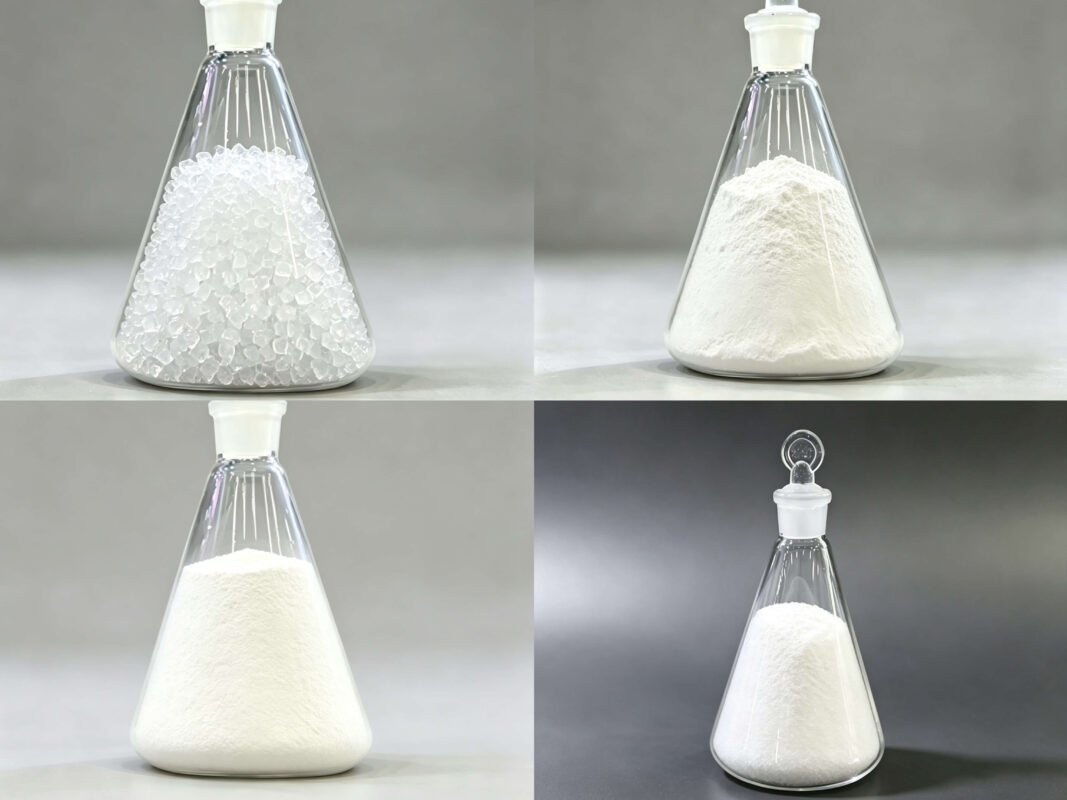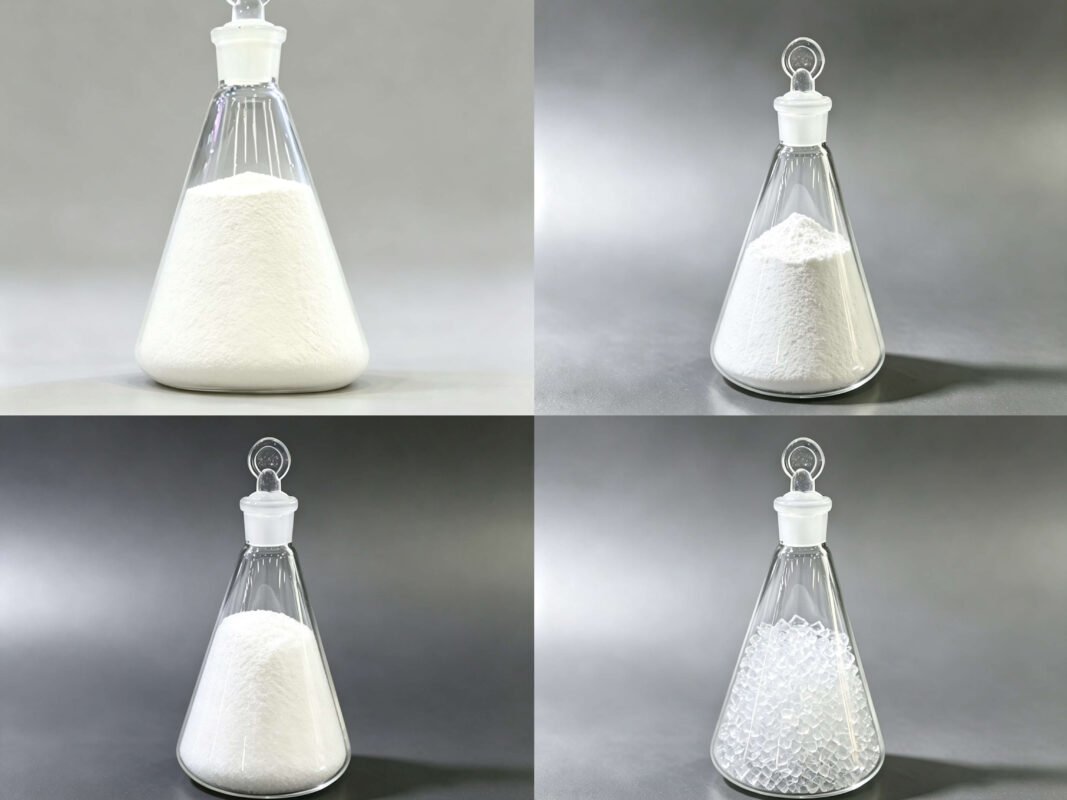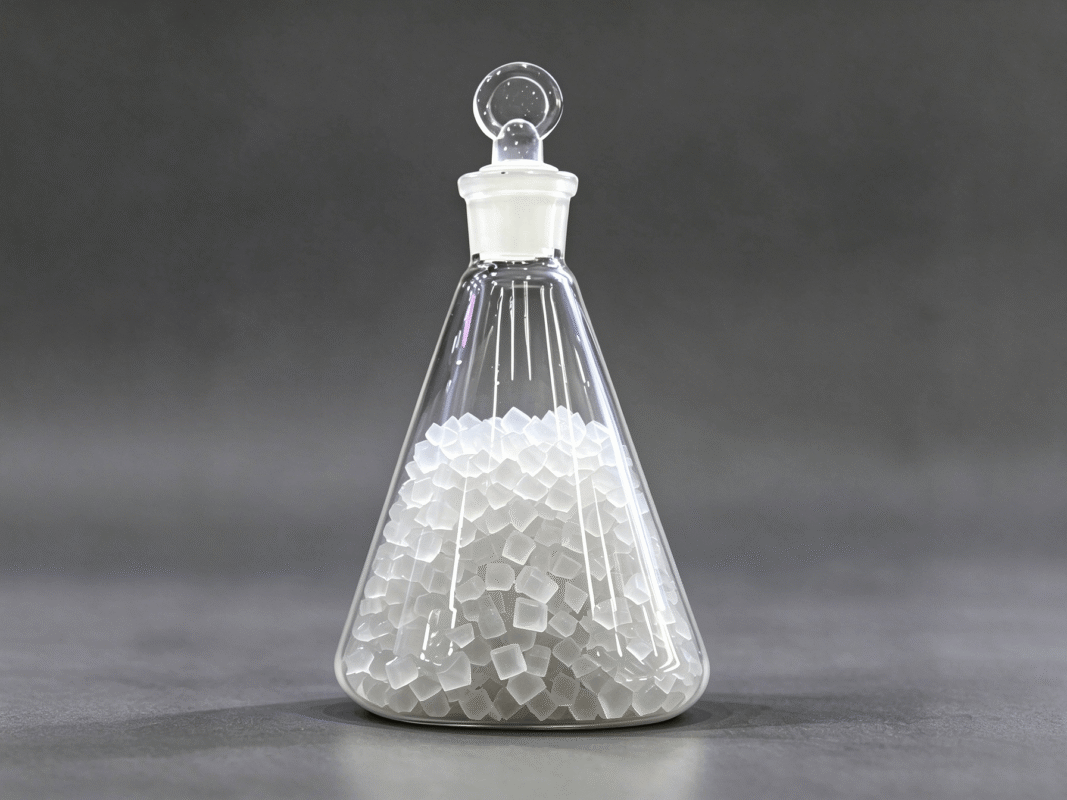

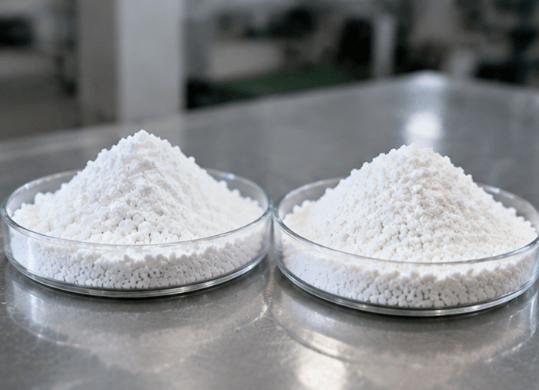
CPE and ACR impact modifiers are both used to improve the toughness of rigid PVC, but they offer different balances of impact resistance, weatherability, processing behavior, and formulation cost. CPE (chlorinated polyethylene) is widely used in cost-sensitive PVC pipes, fittings, and profiles, while ACR (acrylic impact modifier) is often selected for applications requiring strong outdoor durability, color retention, and consistent surface quality. The better choice depends on the finished product, operating environment, processing conditions, and required mechanical performance.
For PVC manufacturers, selecting between CPE and ACR should involve more than comparing their prices per kilogram. Their effects on impact performance, fusion, stiffness, surface appearance, and total formulation cost must be evaluated together.
What Are CPE and ACR Impact Modifiers?
What Is a CPE Impact Modifier?
CPE, or chlorinated polyethylene, is a polymer produced by chlorinating polyethylene. It is commonly used as an impact modifier in rigid PVC formulations.
When properly dispersed in PVC, CPE forms elastomeric domains that help absorb impact energy and reduce the tendency of cracks to propagate through the rigid polymer matrix.
Its main characteristics include:
- Effective impact modification for rigid PVC.
- Good compatibility with PVC formulations.
- Useful toughness across different temperature conditions, depending on grade and formulation.
- Broad application in pipes, fittings, profiles, and other rigid PVC products.
- Potentially attractive formulation economics for standard industrial applications.
CPE is commonly evaluated when manufacturers need to improve impact resistance while maintaining a practical balance between material cost and product performance.
What Is an ACR Impact Modifier?
ACR impact modifiers are acrylic-based polymers designed to improve the toughness of rigid PVC. Many commercial grades use core-shell structures, in which a rubbery acrylic phase helps absorb impact energy while the surrounding polymer structure supports compatibility and dispersion within the PVC matrix.
Depending on the grade, acrylic impact modifiers can provide:
- Improved impact resistance in rigid PVC products.
- Good weathering and UV resistance.
- Better retention of appearance during outdoor exposure.
- Useful surface gloss and processing characteristics.
- Suitability for demanding window profiles, exterior building products, and other durable PVC applications.
ACR impact modifiers should be distinguished from acrylic processing aids. Although both may be based on acrylic chemistry, their primary functions and product specifications are different. An impact modifier is selected to improve toughness, while a processing aid primarily modifies fusion and melt behavior.
CPE vs ACR: Technical Performance Comparison
The main difference between CPE and ACR is not simply their chemical composition. It is how each grade performs within a specific PVC formulation and finished-product application.
| Performance Factor | CPE Impact Modifier | ACR Impact Modifier |
|---|---|---|
| Impact resistance | Effective impact modification | Effective impact modification; grade-dependent efficiency |
| Low-temperature performance | Can provide good low-temperature toughness | Can provide good low-temperature impact performance |
| Weatherability | Good, depending on grade and formulation | Often preferred for demanding long-term outdoor applications |
| Color retention | Depends on grade, pigments, and stabilization | Often advantageous in appearance-sensitive outdoor products |
| Surface quality | Depends on formulation and processing conditions | Can provide favorable surface appearance and gloss |
| Processing behavior | May influence fusion and processing conditions | Grade-dependent; some grades provide favorable fusion behavior |
| Formulation cost | Often attractive for cost-sensitive formulations | May have a higher unit price, depending on grade |
| Typical applications | Pipes, fittings, profiles, and industrial rigid PVC | Window profiles, siding, and demanding outdoor PVC products |
These comparisons describe common selection considerations rather than guaranteed differences between every commercial grade. Actual performance depends on modifier chemistry, dosage, dispersion, PVC resin, stabilizers, lubricants, and extrusion conditions.
Five Key Differences Between CPE and ACR
1. Impact Resistance and Toughness
Both CPE and ACR can improve the impact resistance of rigid PVC by introducing an elastomeric phase that helps dissipate energy during fracture.
However, their impact efficiency depends on the grade, particle morphology, dispersion, and PVC formulation. One product may achieve the required impact performance at a different dosage from another, but this must be established through comparative testing.
For manufacturers producing pipes, fittings, and profiles, the relevant question is whether the finished product passes the required impact tests under its intended service conditions.
2. Weatherability and Outdoor Durability
Weatherability becomes particularly important for PVC products exposed to sunlight, temperature changes, and outdoor environmental conditions.
Acrylic impact modifiers are frequently selected for demanding outdoor applications because their acrylic rubber structures can provide favorable resistance to UV-related degradation and support impact-property retention.
CPE also has useful weathering characteristics, but performance varies by grade and complete formulation. The selection should consider the intended exposure, pigment system, UV protection, and required property retention after aging.
For white window profiles, exterior siding, and architectural components, manufacturers should evaluate both initial impact strength and performance after appropriate weathering tests.
3. Processing and Fusion Behavior
Impact modifiers can influence PVC fusion and melt behavior, but they should not be confused with dedicated processing aids.
Depending on the grade, CPE and ACR may affect fusion timing, torque, melt viscosity, and extrusion stability differently. These effects are especially important in high-output profile and pipe extrusion.
When replacing CPE with ACR, manufacturers should monitor:
- Fusion behavior and plasticization consistency.
- Extruder torque and motor load.
- Melt pressure and temperature.
- Surface finish and die deposits.
- Production output and dimensional consistency.
Do not assume that switching modifiers requires no other formulation adjustment. First compare the new grade under controlled conditions, then optimize the lubricant and processing aid systems if necessary.
4. Surface Appearance and Color Retention
Surface appearance is a major consideration for architectural profiles, exterior decorative products, and visible PVC components.
Acrylic impact modifiers can be advantageous where gloss, color consistency, and long-term outdoor appearance are important. However, surface quality is also influenced by fusion, lubrication, die condition, pigment dispersion, and thermal stability.
Manufacturers should therefore assess the finished profile rather than judging the modifier solely by its technical description.
5. Cost and Total Formulation Economics
CPE is often considered for cost-sensitive PVC applications, while certain ACR grades may justify a higher material cost when they provide the required performance in demanding applications.
However, comparing only the price per kilogram can lead to an incorrect purchasing decision.
A more useful comparison considers:
- Modifier dosage required to meet the target impact specification.
- Impact strength and property retention after aging.
- Processing stability and production consistency.
- Scrap, rejection, and reprocessing costs.
- Required surface appearance and product service conditions.
The most economical option is the one that consistently meets the finished-product specification at an acceptable total production cost.
Which Impact Modifier Is Better for Different PVC Applications?
PVC Pipes and Fittings
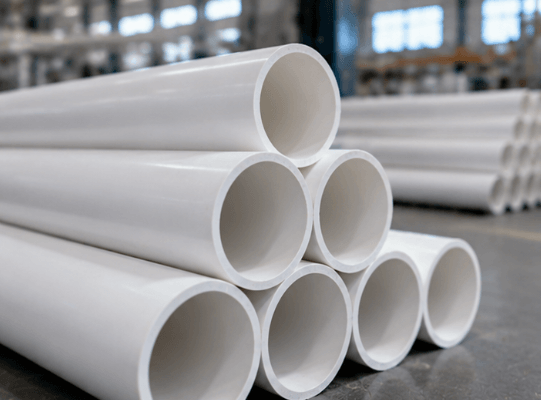
CPE is widely used in rigid PVC pipes and fittings where impact resistance and formulation economics are important. It is a practical candidate for many standard industrial and building applications.
ACR may also be considered when the application requires a different balance of impact efficiency, processing behavior, or outdoor durability.
Selection should depend on the applicable pipe specification, impact test requirements, operating temperature, and formulation economics.
PVC Window and Door Profiles
Window and door profiles often require a combination of impact resistance, weatherability, color retention, and surface appearance.
ACR impact modifiers are frequently evaluated for premium exterior profiles, particularly when long-term appearance and mechanical property retention are important.
CPE remains a candidate for other profile formulations where its performance meets the required specifications and cost targets.
Manufacturers can also consult the guide to PVC profile additives to understand how impact modifiers work alongside stabilizers, lubricants, and processing aids.
PVC Sheets and Decorative Products
For rigid PVC sheets and decorative products, impact resistance must be balanced with surface appearance, stiffness, and any optical requirements.
ACR may be appropriate for products requiring good outdoor durability and appearance. CPE can be evaluated for opaque industrial sheets where its impact performance and formulation economics meet the target requirements.
For transparent PVC products, neither CPE nor ACR should be selected automatically. Optical clarity, haze, and compatibility must be evaluated, and other modifier chemistries such as MBS may be more appropriate depending on the application.
How to Select Between CPE and ACR
Before choosing an impact modifier, manufacturers should establish the required finished-product properties and compare candidate grades using the same evaluation conditions.
Step 1: Define the Impact Requirements
Identify the relevant impact test method, specimen geometry, test temperature, and acceptance criteria. A formulation designed for ordinary indoor handling may not be suitable for outdoor products exposed to cold temperatures or demanding mechanical loads.
Step 2: Identify Environmental Requirements
Determine whether the product will be exposed to sunlight, moisture, temperature fluctuations, or other environmental conditions. For long-term outdoor products, evaluate weathering performance and impact-property retention after aging.
Step 3: Review the Complete Formulation
Document the PVC resin grade, stabilizer package, lubricant system, processing aids, fillers, pigments, and current impact modifier dosage.
These components can influence the final performance of both CPE and ACR. Comparing two modifiers in different formulations will not provide a reliable basis for selection.
Step 4: Conduct Comparative Production Trials
Run controlled trials with the candidate modifiers while maintaining other formulation variables as consistently as practical. Compare impact strength, fusion behavior, extrusion stability, surface quality, and finished-product dimensions.
Step 5: Evaluate Total Cost and Repeatability
Compare the dosage needed to meet the specification, production stability, and material costs. Repeat the selected formulation under representative production conditions before approving it for routine manufacturing.
MKQ Chem CPE and ACR Impact Modifier Options
MKQ Chem lists two relevant impact modifier products for rigid PVC applications:
- MK-301 CPE Impact Modifier: A chlorinated polyethylene impact modifier for applications including PVC pipes, profiles, fittings, and other rigid PVC products.
- MK-302 ACR Impact Modifier: An acrylic impact modifier intended for rigid PVC applications where impact performance and outdoor durability are important considerations.
Manufacturers comparing these grades should request the current technical data sheets and evaluate the products within their own PVC formulations. Exact dosage, impact efficiency, and processing performance should be confirmed through product-specific documentation and production trials.
For an overview of the available products, visit the MKQ Chem CPE and ACR impact modifier product listings.
Conclusion
CPE and ACR impact modifiers both improve the toughness of rigid PVC, but their suitability depends on the product’s mechanical requirements, outdoor exposure, surface appearance, processing conditions, and formulation cost.
CPE is a practical choice for many cost-sensitive pipe, fitting, and profile applications. ACR is frequently considered for demanding outdoor products where weatherability, color retention, and surface quality are important.
There is no universal winner. Manufacturers should compare the exact product grades under the same formulation and testing conditions, then select the modifier that delivers the required performance and the best overall formulation economics.
Frequently Asked Questions
What is the main difference between CPE and ACR impact modifiers?
CPE is a chlorinated polyethylene elastomer used to improve rigid PVC toughness, while ACR is an acrylic-based impact modifier. Their performance differs according to grade, formulation, impact requirements, weather exposure, and processing conditions.
Is ACR better than CPE for outdoor PVC profiles?
ACR is frequently preferred for demanding outdoor profiles because suitable acrylic grades can provide favorable weatherability, color retention, and impact-property retention. However, CPE may also be suitable when the selected grade and complete formulation meet the required outdoor performance specifications.
Is CPE more economical than ACR?
CPE is often attractive for cost-sensitive formulations, but the actual economic advantage depends on dosage, impact efficiency, processing behavior, and finished-product requirements. Compare the total formulation cost rather than unit price alone.
Can CPE and ACR be used together in rigid PVC?
They can be evaluated together in some formulations, but compatibility and the combined performance must be established through controlled testing. Combining modifiers does not automatically improve impact strength or reduce total formulation cost.
Is ACR impact modifier the same as ACR processing aid?
No. ACR impact modifiers primarily improve toughness and impact resistance, while ACR processing aids primarily improve fusion and melt behavior. Although both may use acrylic polymer chemistry, they have different product functions and specifications.