

PVC (Polyvinyl Chloride) is the most widely utilized material in the global wire and cable industry, valued for its inherent insulation properties, durability, and cost-effectiveness. While PVC naturally possesses some degree of flame resistance due to its chlorine content, the addition of plasticizers—required to make the cable flexible—increases its flammability. To meet stringent building codes and safety regulations, engineers must integrate specific flame retardant additives into the PVC compound.
How Do Flame Retardant Additives Work in PVC Compounds?
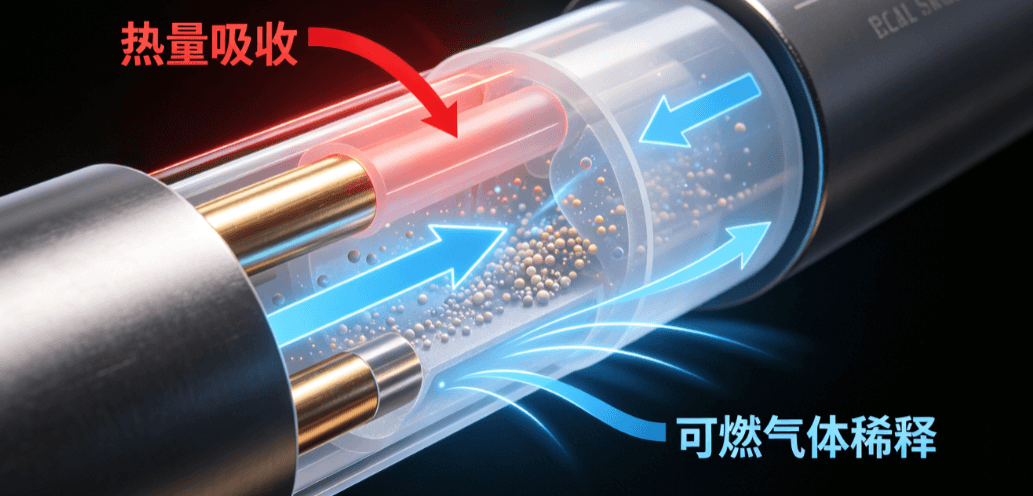
Flame retardancy in PVC cables is not a single chemical reaction but a combination of physical and chemical processes. These additives interfere with the combustion cycle at different stages to prevent the spread of fire.
- Endothermic Cooling: Certain additives, such as metal hydroxides, undergo a chemical decomposition when exposed to heat. This reaction absorbs significant thermal energy, effectively cooling the polymer substrate and slowing down the pyrolysis process.
- Dilution of Combustible Gases: As these additives decompose, they release non-combustible gases like water vapor or carbon dioxide. This dilutes the concentration of flammable gases (hydrocarbons) and oxygen at the flame front, making it harder for the fire to sustain itself.
- Char Formation (Condensed Phase): Some additives promote the formation of a carbonaceous “char” layer on the surface of the cable. This char acts as a thermal barrier, insulating the underlying unburned PVC from the heat and restricting the escape of volatile fuel gases.
- Gas Phase Interruption: Halogenated additives or synergists work by releasing free radicals that scavenge high-energy hydrogen and hydroxyl radicals in the flame. This shuts down the exothermic chain reactions that drive fire growth.
Primary Types of Flame Retardant Additives for PVC
The selection of a flame retardant depends on the specific cable application, such as residential wiring, data center cabling, or industrial power lines. Each additive offers unique performance characteristics and processing requirements.
| Additive Type | Main Mechanism | Key Benefit | Typical Loading Level |
| Alumina Trihydrate (ATH) | Endothermic / Water release | Low toxicity, low smoke, cost-effective | 40% – 60% |
| Magnesium Hydroxide (MDH) | Endothermic / Water release | High processing temperature (up to 330°C) | 40% – 60% |
| Antimony Trioxide (ATO) | Gas phase synergist | Extremely high efficiency with PVC | 2% – 8% |
| Zinc Borate | Char formation / Smoke suppression | Reduces afterglow and smoke density | 2% – 5% |
| Phosphate Plasticizers | Char formation | Maintains flexibility while adding FR | Variable |
At MKQ Chem, we recognize that the balance between mechanical properties and fire safety is delicate. Our specialized range of flame retardant additives for PVC is designed to help manufacturers achieve high Limiting Oxygen Index (LOI) values without compromising the tensile strength or elongation of the cable jacket.
The Role of Synergists in PVC Cable Formulations
In the manufacturing of high-performance PVC cables, additives are rarely used in isolation. The most common example of “synergy” is the combination of Antimony Trioxide (ATO) with the chlorine already present in the PVC resin. On its own, ATO is not a flame retardant; however, when heat triggers the release of hydrogen chloride (HCl) from the PVC, it reacts with the ATO to form antimony trichloride. This compound is a potent flame suppressant in the gas phase.
Using synergists allows us to reduce the total load of additives. This is critical because high loadings of inorganic fillers like ATH can make the PVC compound brittle and difficult to extrude. By optimizing the ratio of ATO and zinc-based suppressants, we can help our clients produce cables that are both highly flame-retardant and mechanically robust for long-term field use.
Key Standards and Testing for PVC Cable Fire Safety?
For a PVC cable to be used in commercial or industrial environments, it must pass rigorous standardized tests. These tests ensure that in the event of a short circuit or external fire, the cable will not contribute significantly to the fire load or release excessive toxic smoke.
- UL 94: This standard tests the flammability of plastic materials. For cables, the V-0 rating is often the goal, meaning burning stops within 10 seconds on a vertical specimen.
- IEC 60332: An international standard for tests on electric and optical fiber cables under fire conditions. It measures the flame spread on a single vertical wire or bunched wires.
- ASTM D2863 (LOI Test): This measures the Limiting Oxygen Index—the minimum concentration of oxygen that will support combustion of the PVC compound. A standard PVC cable typically requires an LOI of 28% or higher to be considered flame retardant.
- UL 1685: This test focuses on smoke release and flame propagation for cables used in specialized environments like cable trays.
Why Smoke Suppression is Crucial in PVC Cables?
While stopping the flame is the primary goal, managing smoke is equally important for life safety. PVC naturally generates dense, dark smoke and acidic HCl gas when burned. In modern construction, “Low Smoke” requirements are becoming mandatory.
Additives like Zinc Borate, Molybdenum compounds, and Calcium Magnesium Carbonates are integrated into our formulations to act as smoke suppressants. These materials work by promoting char rather than soot and by chemically neutralizing a portion of the acid gases produced. When we consult on OEM projects at MKQ Chem, we often emphasize that fire safety is a dual-target: flame extinction and visibility maintenance (smoke reduction).
Choosing the Right Additive for Manufacturing Efficiency?
Selecting an additive isn’t just about the fire test; it’s about the extrusion line. High-loading additives can increase the viscosity of the melt, leading to higher torque in the extruder and potential surface defects on the cable.
- Particle Size: Smaller particle sizes generally provide better mechanical properties but may increase viscosity.
- Surface Treatment: We often recommend silane-treated additives to improve the interfacial bonding between the inorganic filler and the PVC polymer matrix, which enhances moisture resistance and electrical insulation.
- Thermal Stability: If you are running high-speed extrusion lines with high shear heat, you must choose an additive like MDH that won’t decompose prematurely in the barrel.
For manufacturers looking to optimize their formulations, we provide technical data and material samples through our product catalog to ensure the selected additives match both the safety requirements and the processing constraints of your specific equipment.
FAQ
Q: Why is Antimony Trioxide used with PVC if it doesn’t burn on its own?
A: Antimony Trioxide acts as a synergist. It reacts with the chlorine in the PVC resin during combustion to create antimony halides, which are highly effective at quenching flames in the gas phase.
Q: Can I achieve a high LOI using only ATH in PVC cables?
A: Yes, but it requires very high loading levels (often over 50%), which can significantly reduce the flexibility and tensile strength of the cable. A combination of ATH and a synergist like ATO is usually more balanced.
Q: What is the difference between ATH and MDH in cable production?
A: The main difference is thermal stability. ATH begins to release water at about 200°C, while MDH is stable up to 300°C. MDH is preferred for high-temperature PVC formulations or high-speed extrusion where friction heat is high.
Q: How do flame retardants affect the electrical insulation of the cable?
A: Some inorganic fillers can absorb moisture, which might degrade electrical properties. Using surface-treated (hydrophobic) additives helps maintain high insulation resistance even in humid environments.
Q: Are there halogen-free additives for PVC?
A: Since PVC itself contains chlorine (a halogen), the compound can never be truly “Halogen-Free” (LSZH). However, we can use halogen-free additives like ATH or MDH to reduce the overall halogen density and smoke toxicity of the final product.
Reference Sources
ASTM D2863 Standard Test Method for Limiting Oxygen Index
https://www.astm.org/d2863-17a.html
IEC 60332 Flame Retardancy of Electric and Optical Cables
https://www.iec.ch/homepage