
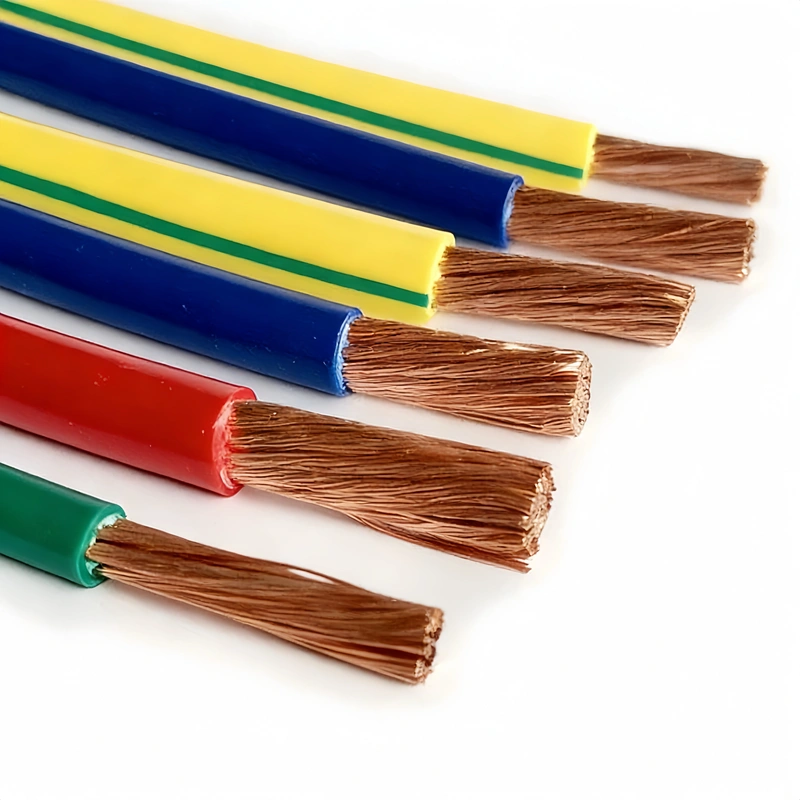
The wire and cable industry relies heavily on Polyvinyl Chloride (PVC) because of its inherent flame retardancy and excellent electrical insulation properties. However, raw PVC resin is brittle and thermally unstable at processing temperatures. To transform this polymer into a functional cable jacket or insulation, a precise combination of additives is required.
At MKQ Chem, we understand that the performance of a PVC cable material depends entirely on the synergy of its chemical components. Whether you are manufacturing automotive harnesses or high-voltage power lines, the formulation must balance flexibility, thermal stability, and environmental compliance. Selecting the right additives is the difference between a high-yield production run and costly material failure.
Why Do Specific Additives Define PVC Cable Performance?
PVC is an amorphous polymer that is uniquely receptive to modification. Unlike polyolefins, PVC can be engineered to be as rigid as a pipe or as flexible as a medical tube through the addition of plasticizers. In the context of cable manufacturing, the “recipe” must meet strict regulatory standards like UL, RoHS, and REACH.
When we develop additive solutions for our clients, we focus on the processing window. The material must withstand the high shear of an extruder without degrading. This requires a robust thermal stabilization system. Furthermore, the cable must remain flexible at sub-zero temperatures while resisting melting at high operating temperatures.
The complexity of these requirements means that “off-the-shelf” solutions rarely work for specialized applications. A deep understanding of how each additive interacts with the PVC molecular chain is essential for any project manager or procurement specialist.
Essential Components of a PVC Cable Material Formulation
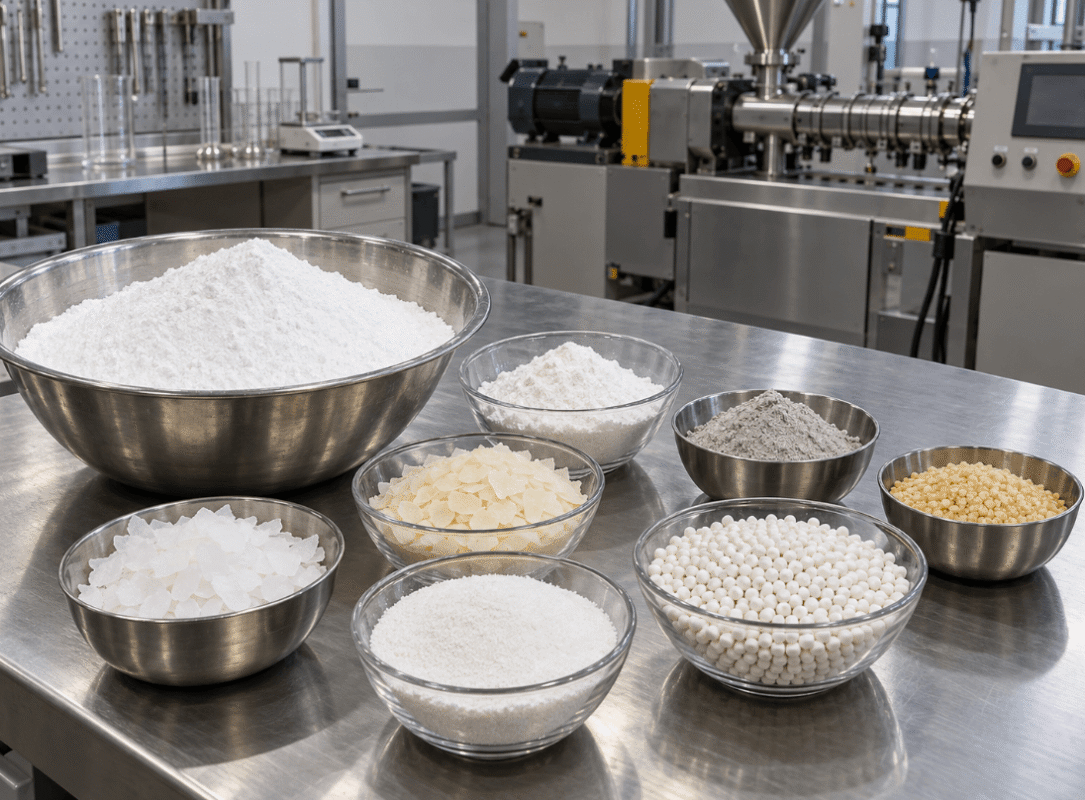
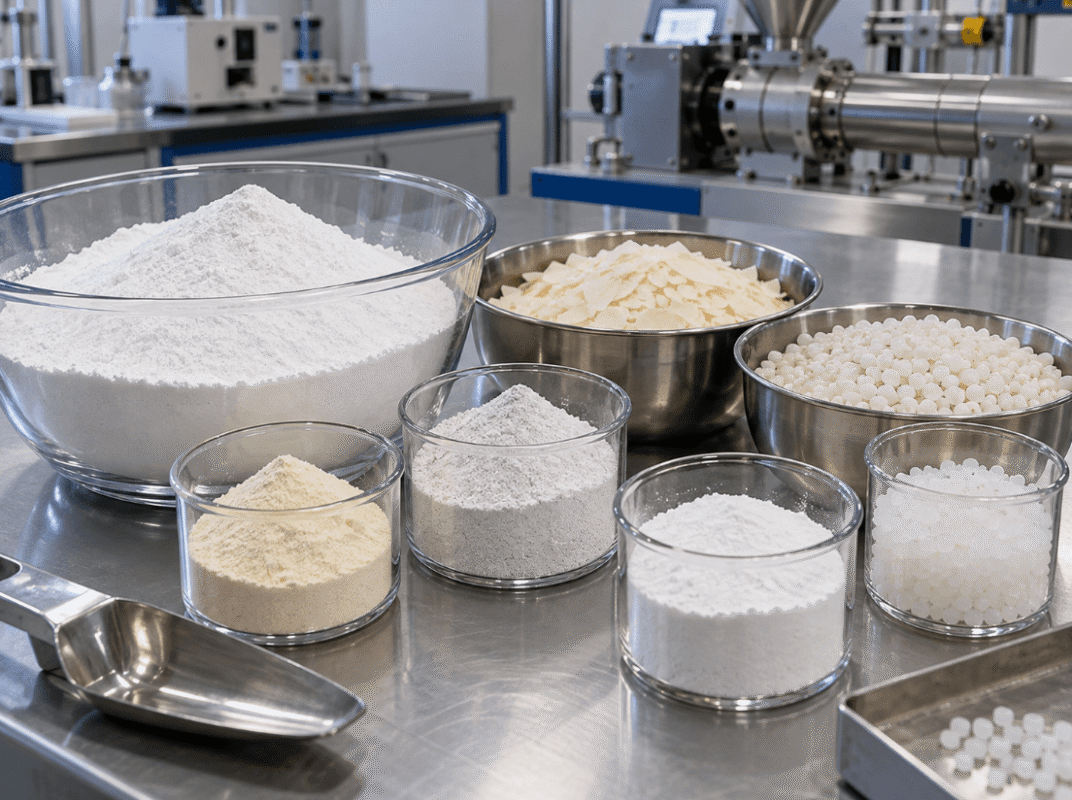
Every high-quality PVC cable compound consists of five to seven primary categories of additives. Each serves a distinct role in either the manufacturing process or the end-use performance of the cable.
- Plasticizers: These are the most critical components for flexibility. Phthalate-free options like DOTP are now preferred for environmental safety.
- Thermal Stabilizers: These prevent the release of hydrochloric acid (HCl) during extrusion. We see a significant shift from lead-based stabilizers to Calcium-Zinc (Ca-Zn) systems for global compliance.
- Impact Modifiers and Processing Aids: These materials, such as Chlorinated Polyethylene (CPE), improve the physical toughness of the cable.
- Flame Retardants: While PVC is naturally flame-resistant, cables often require boosters like Antimony Trioxide (ATO) or Aluminum Trihydroxide (ATH) to pass vertical burn tests.
- Fillers: Calcium carbonate is commonly used to reduce costs and improve specific gravity, though excessive amounts can reduce tensile strength.
| Additive Type | Primary Function | Common Material Example |
| Stabilizer | Heat resistance during extrusion | Ca-Zn Organic Complex |
| Plasticizer | Flexibility and low-temp reach | DOTP, DINP, DOA |
| Impact Modifier | Physical durability and flexibility | CPE 135A |
| Processing Aid | Melt strength and surface finish | ACR (Acrylic Copolymer) |
| Flame Retardant | Smoke suppression and charring | Antimony Trioxide |
The Role of CPE and ACR in Cable Extrusion
In our experience at MKQ Chem, the mechanical integrity of a cable is often determined by the quality of the impact modifiers and processing aids used. Chlorinated Polyethylene (CPE) is a staple in the cable industry. It not only provides the necessary impact resistance but also acts as a permanent non-migratory plasticizer.
Using a high-quality CPE ensures that the cable does not become brittle over time. This is especially vital for outdoor cables exposed to UV radiation and fluctuating temperatures. Similarly, ACR processing aids are used to control the fusion of the PVC compound. If the melt is not uniform, the cable will exhibit surface defects, such as “shark skin,” which can lead to electrical insulation failure.
We provide a comprehensive range of these essential modifiers. You can explore our specific technical grades of CPE and ACR designed for high-speed cable extrusion on our product category page. By optimizing the dosage of these polymers, manufacturers can increase extrusion speeds by up to 15% without compromising surface quality.
Meeting Technical Requirements for International Standards
The global regulatory landscape for PVC cable material is becoming increasingly stringent. Compliance is no longer optional; it is a prerequisite for market entry. The most common requirements focus on heavy metal content and smoke toxicity.
- RoHS/REACH Compliance: Modern cable compounds must be free from lead, cadmium, and hexavalent chromium. This has led to the widespread adoption of our eco-friendly Ca-Zn stabilizers.
- Temperature Ratings: Cables are rated for 60°C, 75°C, 90°C, or 105°C. The higher the rating, the more sophisticated the antioxidant and stabilizer package must be.
- Low Smoke Zero Halogen (LSZH) Trends: While PVC contains halogens, “Low Smoke” PVC is achieved by adding high concentrations of smoke suppressants like Zinc Borate.
- Oil and Chemical Resistance: For industrial cables, the plasticizer choice is critical. Polymeric plasticizers are often required to prevent leaching when the cable comes into contact with oils.
How to Evaluate a PVC Cable Material Supplier?
For procurement managers and engineers, choosing a supplier involves more than just comparing price per ton. The consistency of the chemical additives determines the stability of your entire production line. A slight variation in the purity of a stabilizer can cause hours of downtime due to “plate-out” on the extruder screw.
At MKQ Chem, we recommend a three-step evaluation process. First, verify the technical data sheets (TDS) against your specific machine parameters. Second, request a small-batch sample to test the fusion time using a rheometer. Third, ensure the supplier provides transparency regarding their raw material sources to guarantee long-term consistency.
We pride ourselves on providing not just the chemicals, but the technical consultancy needed to refine your formulation. Our production capacity allows us to support both large-scale OEM projects and specialized custom runs, ensuring that your PVC cable material meets every mechanical and electrical benchmark.
Common Challenges in PVC Cable Production
Even with a high-quality formulation, manufacturers often face issues like porosity or color instability. Porosity is usually caused by moisture in the fillers or the decomposition of low-quality additives. Ensuring that all components are pre-dried or treated with moisture scavengers is a standard industrial practice.
Color stability is another frequent hurdle. During the high-temperature extrusion of PVC, the polymer can undergo “pinking” or yellowing if the stabilizer levels are insufficient. We solve this by adjusting the synergy between the primary stabilizer and secondary antioxidants. This ensures that the final cable jacket maintains its specified color for the duration of its service life, which is a key requirement for color-coded wiring systems.
FAQ
Q: What is the most common reason for PVC cable failure during testing?
A: Most failures are due to improper stabilization or poor plasticizer selection, leading to premature brittleness or “cracking” during the cold-bend test.
Q: Can I use lead stabilizers for cables exported to Europe?
A: No, the European Union’s REACH and RoHS regulations strictly prohibit the use of lead stabilizers in cables; you must switch to Calcium-Zinc or organic-based stabilizers.
Q: How does CPE 135A improve PVC cable materials?
A: CPE 135A increases the elongation at break and improves the low-temperature impact strength, making the cable more durable in harsh environments.
Q: What is the role of ACR in the extrusion process?
A: ACR (Acrylic Processing Aid) promotes the gelation of the PVC compound, ensuring a smooth surface finish and reducing thickness variations in the cable jacket.
Q: Is it possible to make PVC cables flame retardant without Antimony Trioxide?
A: Yes, though it is challenging. One can use high loadings of Aluminum Trihydroxide (ATH) or Magnesium Hydroxide (MDH), but this often requires a specialized resin to maintain flexibility.
Reference Sources
ISO 6722-1: Road vehicles — 60 V and 600 V single-core cables
https://www.iso.org/home.html
ASTM D2126: Standard Test Method for Response of Rigid Cellular Plastics to Thermal and Humid Aging
https://www.astm.org/d2126-15.html
SGS RoHS Compliance Services for Electrical and Electronics
https://www.sgs.com/en