
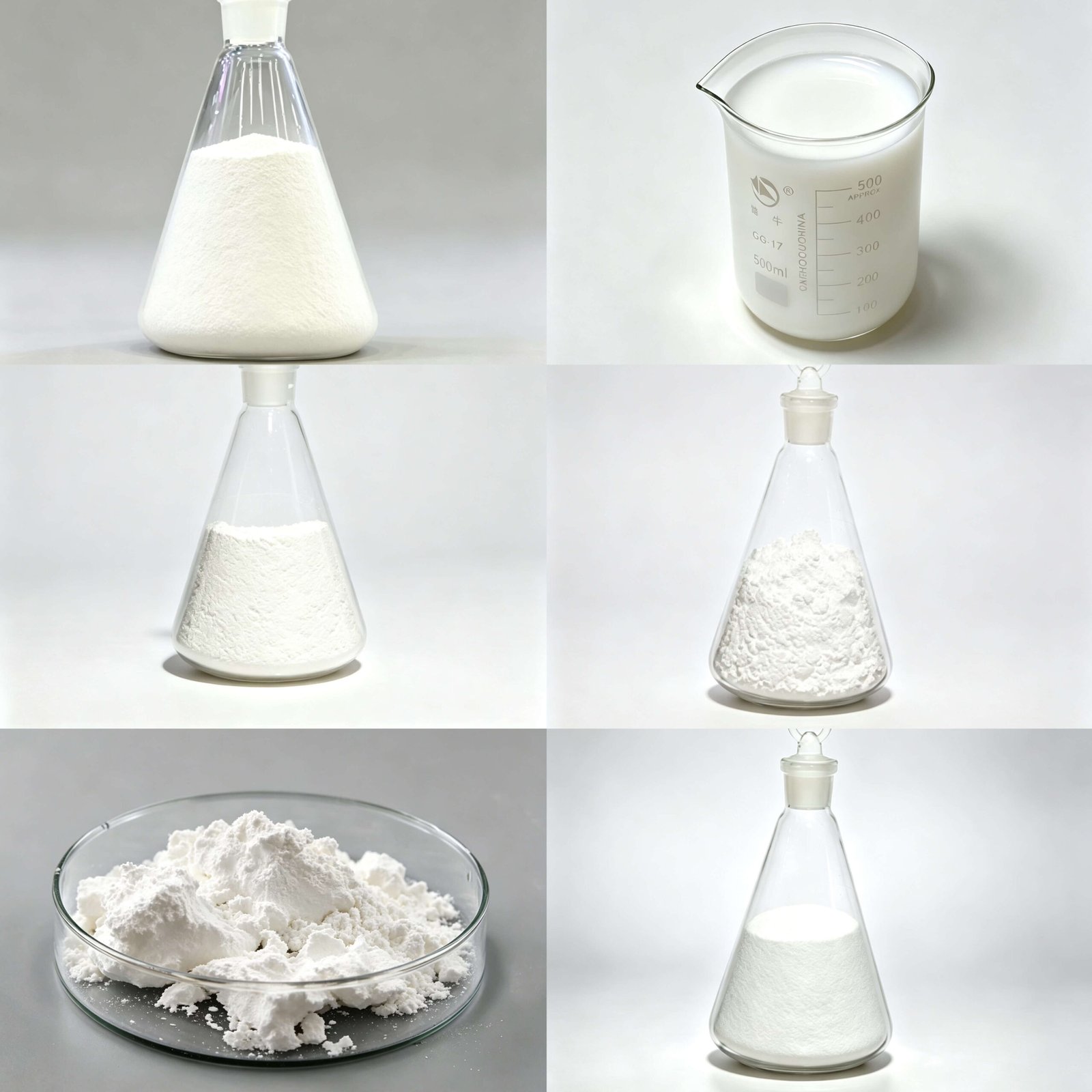
What is ptfe?
ptfe (polytetrafluoroethylene) is a high-performance fluoropolymer renowned for its exceptional chemical resistance, extremely low coefficient of friction, non-stick properties, broad thermal stability, and electrical insulation capabilities. Manufacturers widely use it in chemical manufacturing, mechanical components, electrical and electronic applications, food processing equipment, the medical sector, and industrial sealing systems. Globally, the material enjoys fame under the brand name “Teflon,” and people often refer to it as the “King of Plastics.”
This comprehensive guide details the definition, structure and properties, main types, and application areas of ptfe.
Structure of ptfe
Polytetrafluoroethylene (PTFE) is a synthetic fluoropolymer formed by the polymerization of the monomer tetrafluoroethylene (TFE). Composed entirely of carbon and fluorine atoms, its molecular structure features a long carbon backbone completely encased in a sheath of highly electronegative fluorine atoms. The carbon-fluorine bond is one of the strongest single bonds in organic chemistry. This dense fluorine “shield” prevents other chemical substances from interacting with the carbon backbone, rendering the polymer virtually chemically inert.
Key Properties of ptfe
The robust protective layer formed by carbon-fluorine bonds makes PTFE one of the engineering polymers with the best chemical and heat resistance. However, specific values depend on the manufacturer’s PTFE grade and detailed specifications (including processing methods, testing methods, temperatures, and filler systems).
1. Excellent chemical resistance
It exhibits resistance to a wide range of substances—including acids, alkalis, solvents, oils, fuels, corrosive chemicals, and—under various conditions—oxidizing chemicals—making it highly valuable in chemical processing environments.
2. Extremely low coefficient of friction
One of its most important characteristics is its extremely low coefficient of friction, which imparts excellent “non-stick” properties, enabling its use as a dry-running or low-lubrication material in applications such as bearings, bushings, seals, sliding components, valve seats, and mechanical guide rails.
3. Thermal Stability
The material maintains mechanical stability over an extremely wide temperature range; it is suitable for long-term use between -180°C and 260°C while retaining its structural integrity.
4. Excellent electrical insulation:
Due to its exceptional dielectric strength and electrical insulation properties—which remain stable across varying frequencies and temperatures—it is an ideal high-frequency electrical insulation material, commonly used in cables and electronic components.
5. Non-stick Properties
This polymer exhibits exceptional hydrophobic (water-repellent) and oleophobic (oil-repellent) properties, preventing moisture absorption and surface wetting. It also offers excellent mold-release capabilities and outstanding resistance to adhesion, making it widely used in non-stick applications.
6. Weather and UV Resistance
PTFE exhibits excellent resistance to outdoor environments, including UV radiation and weathering.

Types of ptfe → MKQ Chem
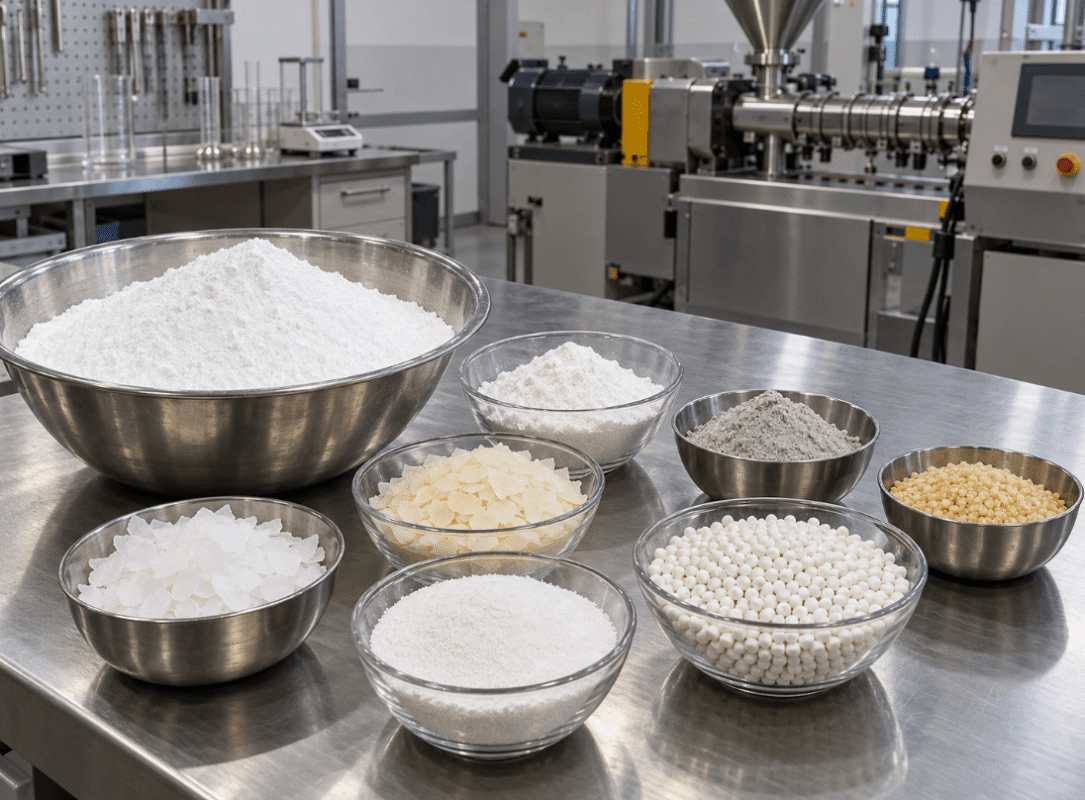
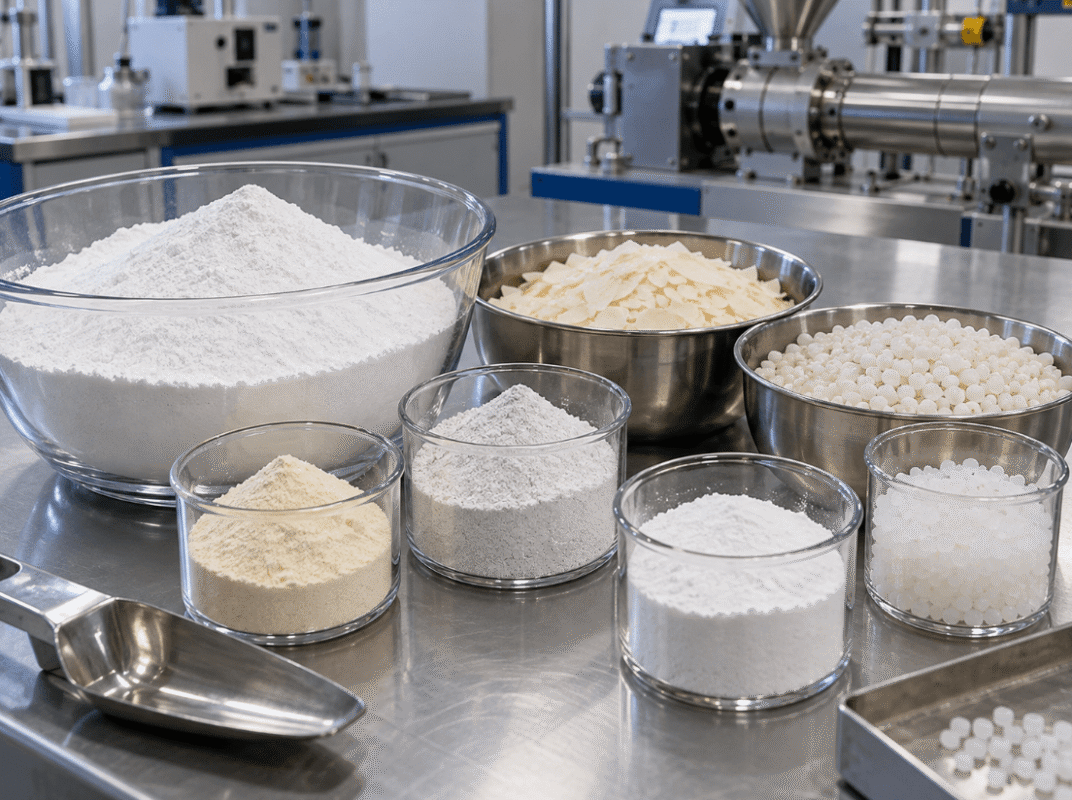
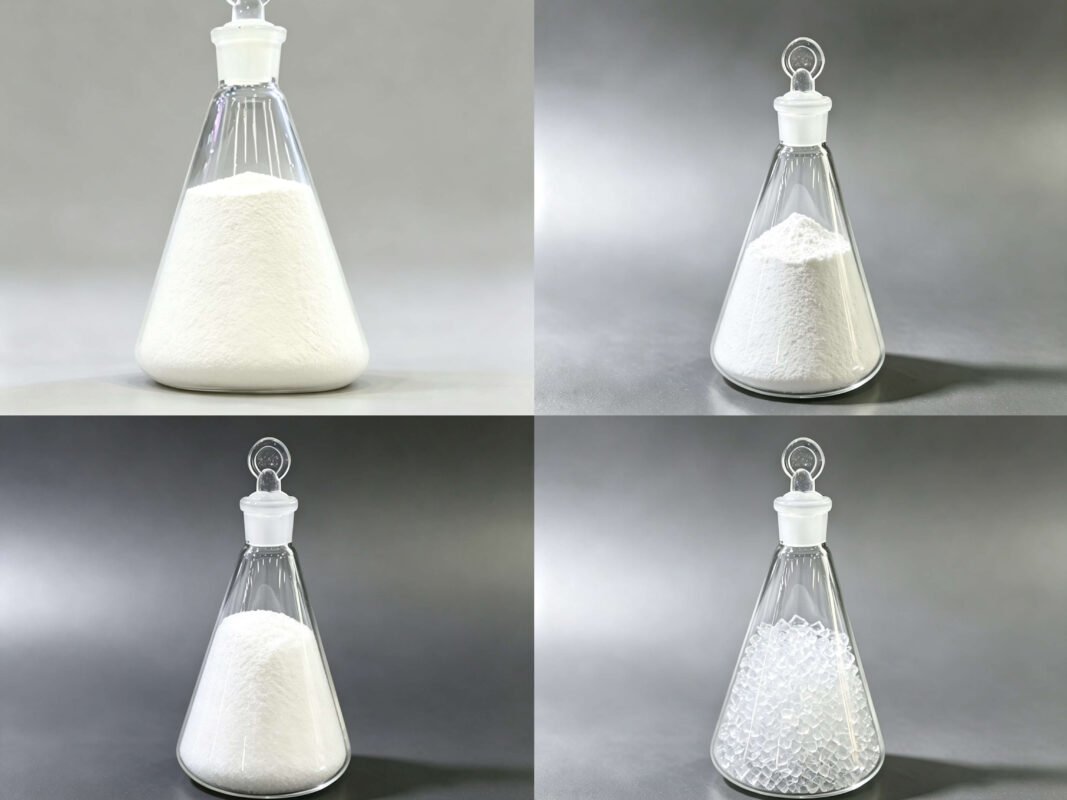
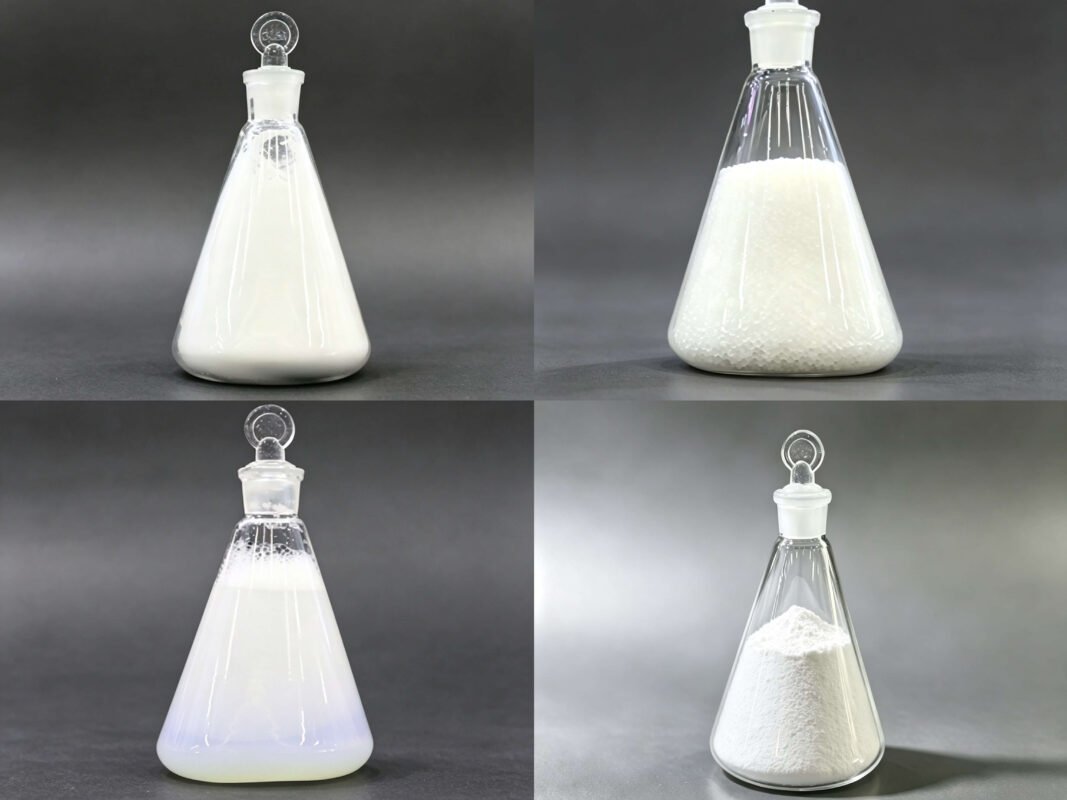
Polytetrafluoroethylene (PTFE) can be classified according to its physical form and processing method.
1. Virgin ptfe
Virgin PTFE contains no reinforcing fillers.
Its properties include:
- Excellent chemical resistance
- Superior electrical insulation properties
- Very low coefficient of friction
- Outstanding non-stick characteristics
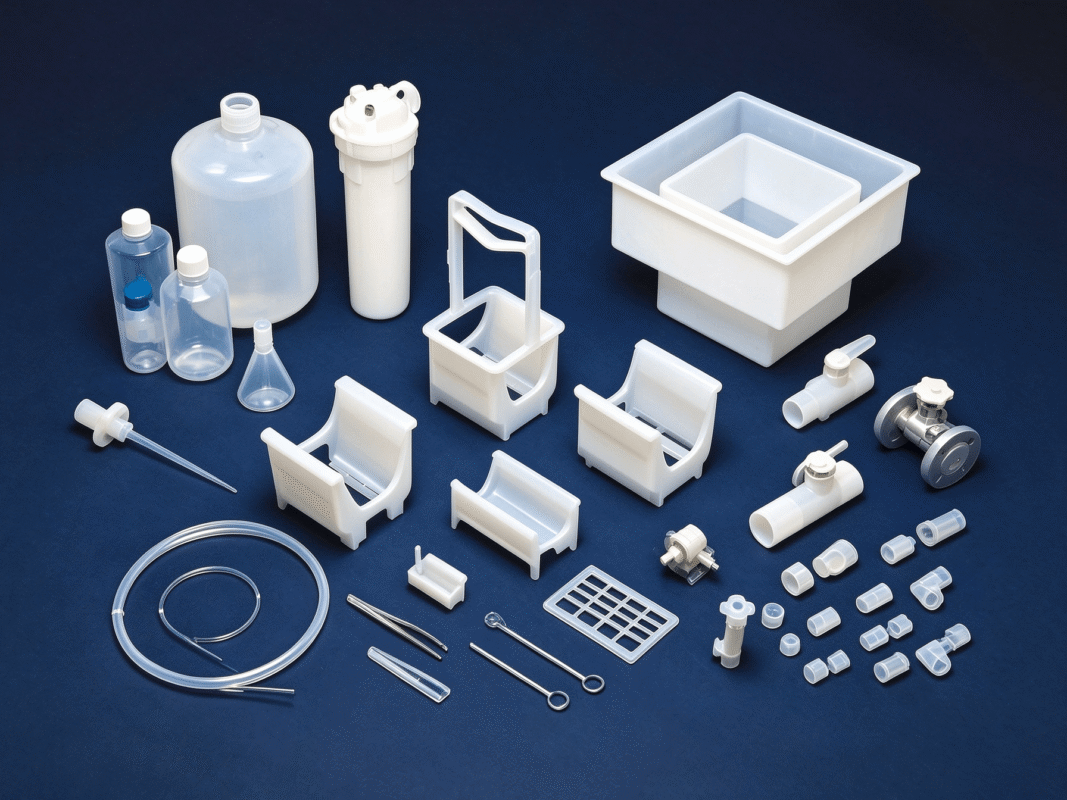
It is commonly used in seals, electrical components, laboratory equipment, and chemical processing applications.
2. Filled ptfe
Fillers can be added to PTFE to improve its specific mechanical or tribological properties.
Common fillers include:
- Glass fiber
- Carbon
- Graphite
- Bronze
- Molybdenum disulfide (MoS₂)
For example, compared to pure PTFE, glass-fiber-filled PTFE typically offers better wear resistance and dimensional stability, while carbon-filled PTFE provides superior wear resistance and thermal conductivity.
3. Expanded Polytetrafluoroethylene (ePTFE)
ePTFE is produced by stretching and expanding PTFE to form a microporous structure.
Its application areas include:
- Membrane materials
- Filtration
- Medical products
- Sealing materials
- Waterproof, breathable materials
Its microporous structure combines properties such as chemical corrosion resistance, low surface energy, and controllable permeability.

Key Applications
Its unique combination of properties makes it suitable for use in many industries:
1. Chemical Industry
- PTFE is widely used in chemical processing equipment due to its chemical resistance.
- Applications include: pipe linings, valves, pumps, gaskets, bearings, seals, chemical containers, storage tanks, and linings for reaction vessels.
2. Mechanical Engineering
- This product can be used for components requiring low friction and wear resistance.
- Examples of applications include dry bearings, bushings, self-lubricating sleeves, slide plates, gears, valve seats, mechanical seals, guide rings, and dynamic seals; these components operate efficiently without liquid lubrication and reduce wear in high-friction machinery.
3. Electrical and Electronic Fields
- It possesses excellent dielectric properties and maintains good electrical insulation performance over a wide temperature range.
- Consequently, manufacturers use it in applications such as wire and cable insulation, coaxial cable jackets, high-frequency components, connectors, insulating parts, semiconductor manufacturing equipment, capacitor films, and transformers.
4. Medical Applications
- Medical device manufacturers use certain PTFE and ePTFE products in medical devices and components due to their chemical stability and unique surface properties.
- Applications include medical catheters, membrane materials, vascular graft materials, surgical components, and implants such as artificial blood vessels and cardiac patches. Manufacturers produce ePTFE through stretching, creating a microporous structure that enables its use in facial augmentation and soft tissue repair.
5. Food Processing Equipment
- It features low surface energy and non-stick properties; provided that relevant food-contact requirements are met, it is suitable for specific food processing equipment and mold-release applications..
6. Aerospace Sector
- PTFE and filled PTFE compounds are used in applications requiring low friction, temperature resistance, chemical resistance, and lightweight construction. Technicians use PTFE to insulate wiring in aircraft and aerospace equipment, protecting critical electronic systems from extreme temperature fluctuations and corrosive fluids.
- Examples include seals, bearings, electrical insulators, and specialized sliding components.
7. Other Applications
- Filtration and Textiles: Manufacturers use a stretching process to convert PTFE into microporous membranes, producing industrial filtration materials and fabrics that block liquid water while remaining breathable (allowing water vapor to pass through).
- Household Use: The most well-known applications include non-stick cookware, as well as thread seal tape (plumber’s tape) and expanded breathable membranes (such as ePTFE).
In summary
PTFE is one of the most important engineering polymers for applications involving corrosive chemicals, high temperatures, low friction, demanding sealing conditions, or electrical insulation. Filled grades, along with other fluoropolymers such as PVDF, FEP, PFA, and ETFE, offer varying balances between performance and processability.
Future development is likely to shift away from a sole focus on improving virgin PTFE toward engineered PTFE composites and specialty fluoropolymer products. The industry is also paying increasing attention to environmental and regulatory issues associated with fluoropolymers, including production emissions, processing conditions, and end-of-life management.
FAQ
Q: Is PTFE safe?
A: Yes, it is safe, environmentally friendly, and non-toxic. Pure PTFE is biologically inert, making it suitable for food-contact applications and specialized medical devices.
Q: Is PTFE resistant to all chemical substances?
A: No, PTFE is not completely inert under all conditions. Certain highly reactive substances and high-temperature environments can attack or decompose fluoropolymers. Only highly reactive alkali metals and a few fluorinating agents at high temperatures can cause it to degrade.
Q: Does PTFE undergo degradation?
Although PTFE can operate continuously within the temperature range of -200°C to 260°C, it begins to degrade when temperatures exceed 260°C and may release harmful decomposition products. Therefore, processing and operating temperatures must be strictly controlled.
Reference Sources:
Performance Fluoropolymer Partnership (PFP): https://fluoropolymerpartnership.com
PFAS Central:https://pfascentral.org
Fluoropolymer information: https://www.plasticsengineering.org