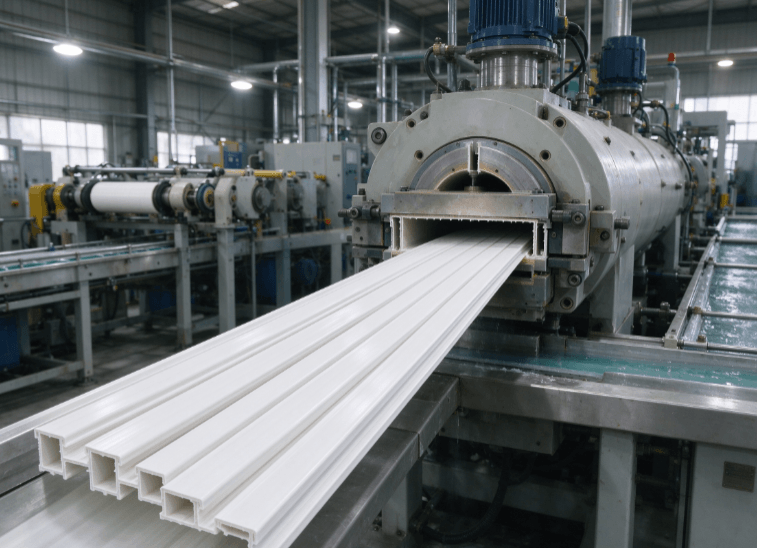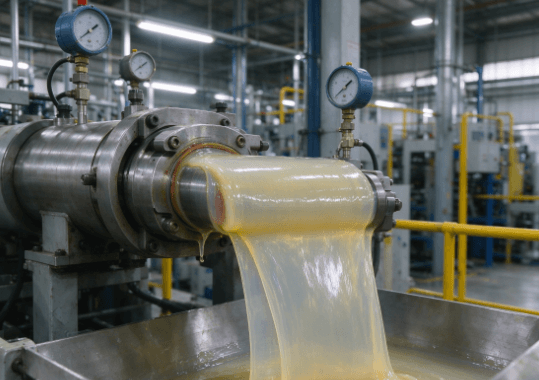

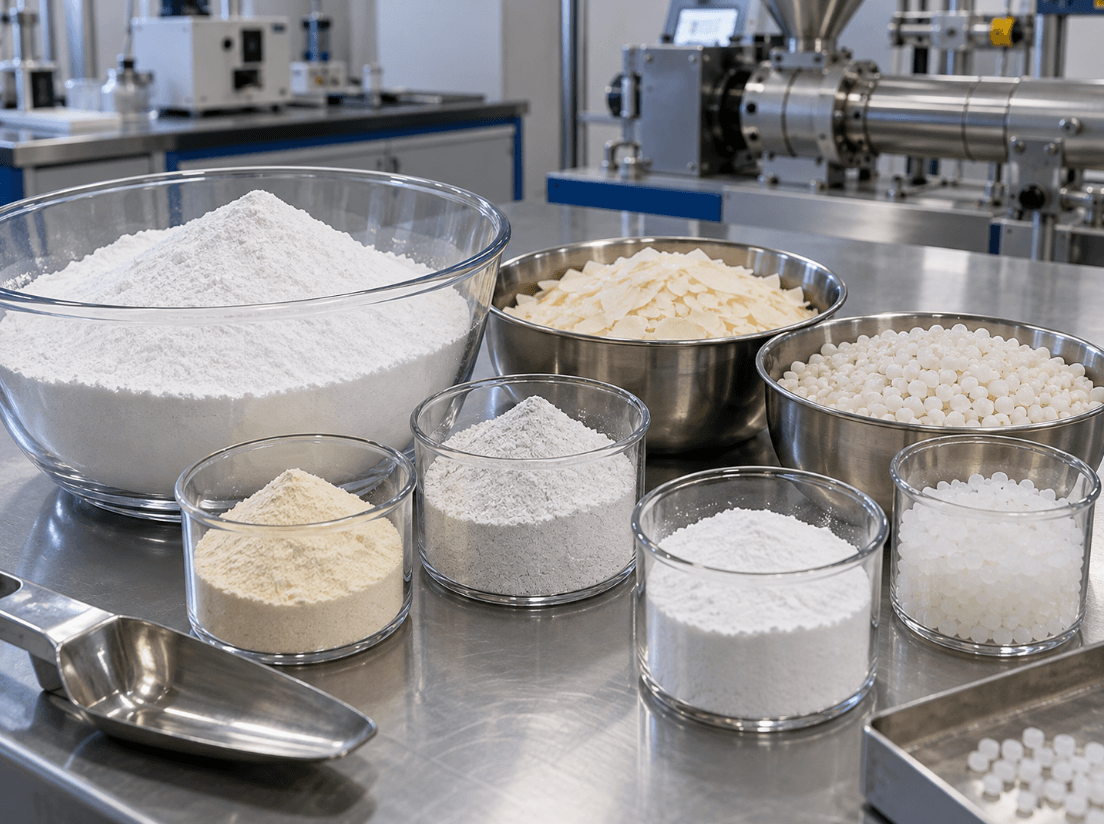
PVC thermal degradation occurs when heat and processing stress cause polyvinyl chloride to lose hydrogen chloride (HCl) from its polymer chains. This process, known as dehydrochlorination, can produce yellowing, brown discoloration, black specks, and changes in mechanical properties. Preventing degradation requires a balanced heat-stabilizer system, suitable processing temperatures, controlled residence time, appropriate lubrication, and consistent equipment operation. Lowering temperature alone may not solve the problem if the compound is poorly stabilized or experiences excessive shear.
For PVC pipe, profile, sheet, and foam board manufacturers, recognizing early signs of thermal degradation helps identify process problems before they lead to rejected products, equipment contamination, or unplanned production interruptions.
What Is PVC Thermal Degradation?
PVC thermal degradation is the chemical deterioration of polyvinyl chloride caused by heat, often combined with mechanical shear during processing. One of the main mechanisms is dehydrochlorination, in which HCl is released from susceptible sites along the polymer chain. The resulting conjugated double-bond sequences can absorb visible light and cause the material to change color.
As degradation progresses, the material may lose its original appearance and processing consistency. Severe degradation can compromise product properties and create deposits or dark particles in the melt.
PVC is particularly sensitive to thermal history because its processing conditions must provide enough heat for fusion while avoiding excessive degradation. The acceptable processing window depends on the resin, stabilizer package, lubricant system, equipment, and intended application.
What Causes PVC Thermal Degradation?
1. Excessive Temperature or Uneven Heating
Excessive melt temperature can accelerate degradation, particularly when the heat-stabilizer system is unable to protect the compound for the time required by the process. Localized overheating can also occur even when the average barrel temperature appears normal.
Potential sources include incorrect temperature settings, malfunctioning heating or cooling controls, restricted material flow, and hot spots in the barrel or die.
Manufacturers should compare set temperatures with actual process conditions where measurable, inspect temperature-control equipment, and check whether discoloration repeatedly appears at a particular stage of production.
2. Excessive Residence Time
PVC that remains in a hot processing zone for too long has more time to undergo degradation. This can happen during prolonged production interruptions, low-output operation, restricted flow, or material accumulation inside the extruder and die.
Material retained in dead zones can become severely degraded and later enter the product as yellow streaks, brown particles, or black specks.
Use the equipment manufacturer’s shutdown and restart procedures to manage retained material safely. Avoid leaving PVC exposed to processing heat longer than necessary.
3. Excessive Shear and Frictional Heating
Mechanical shear contributes to the energy input during PVC processing. High screw speed, excessive mechanical resistance, unsuitable screw conditions, or an imbalanced formulation can increase frictional heating and affect the melt’s thermal history.
When torque or pressure rises unexpectedly, check the entire process rather than assuming that the barrel temperature is the only problem. Review feeding, screw speed, die restrictions, fusion behavior, and the lubrication system.
4. Inadequate or Unsuitable Heat Stabilization
Heat stabilizers help delay PVC degradation by interacting with unstable sites, released HCl, or intermediate products formed during degradation. Different stabilizer chemistries work through different mechanisms, and their effectiveness depends on the complete formulation and processing conditions.
A stabilizer package suitable for one product may not provide the same performance in another application. Pipe, window profiles, flexible compounds, and foam boards can have different requirements for processing stability, color retention, and finished-product properties.
When discoloration persists despite reasonable process settings, review the stabilizer grade, dosage, compatibility, material storage, and formulation records before making adjustments.
5. Lubrication and Formulation Imbalance
Lubricants influence friction, PVC fusion, melt flow, and release from metal surfaces. An unsuitable balance between internal and external lubrication can affect fusion behavior and processing stability.
Too much external lubricant may delay fusion or contribute to die deposits, while inadequate lubrication can increase friction under some processing conditions. Both situations may complicate thermal control.
For additional guidance, see common PVC processing problems and their solutions, which discusses thermal instability, plate-out, and other extrusion issues.
Common Signs of PVC Thermal Degradation
| Observed Sign | Possible Explanation | Recommended Investigation |
|---|---|---|
| Yellowing | Early discoloration associated with degradation or inadequate stabilization | Review temperature history, residence time, and stabilizer performance |
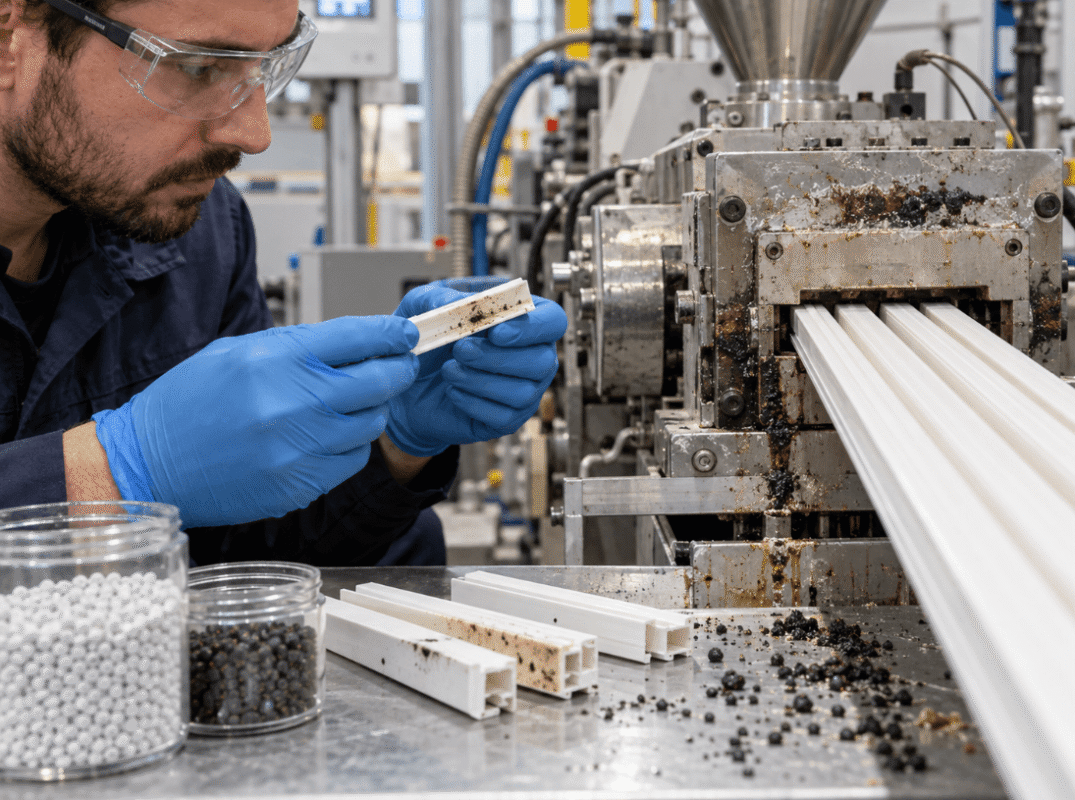
| Brown or black specks | Severely degraded material, deposits, or contamination | Inspect the die, screw, and material flow path |
| Dark streaks | Localized overheating, retained material, or contamination | Check whether the defect recurs at a specific location |
| Unusual odor or fumes | Possible overheating or chemical decomposition | Follow plant safety procedures and investigate the source immediately |
| Changing mechanical properties | Thermal damage or other formulation and processing changes | Compare product test results and production records |
Color is a useful warning sign, but it is not a complete measure of thermal stability. Pigments can mask discoloration, and other problems can produce similar visual defects. Where necessary, combine visual inspection with appropriate laboratory testing.
If unusual fumes or suspected HCl release occur, follow the site’s emergency and exposure-control procedures. Do not rely on odor alone to determine whether the area is safe.
How to Prevent PVC Thermal Degradation
1. Optimize the Temperature Profile
Set barrel, die, and other temperature controls according to the formulation and equipment requirements. Avoid unnecessary temperature increases intended to compensate for poor fusion without first investigating the underlying cause.
Monitor actual process behavior where possible. A temperature setting is not necessarily the same as the melt temperature experienced by the material, particularly when shear heating or localized restrictions are present.
2. Control Residence Time and Production Interruptions
Establish clear operating procedures for startup, normal production, short stops, extended interruptions, and shutdown. Follow the extruder manufacturer’s instructions for removing or managing retained material.
Inspect recurring black specks or streaks for evidence of material accumulating in the screw, adapter, or die. Maintenance and cleaning procedures should address the actual location of the buildup.
3. Select and Validate the Heat-Stabilizer System
Choose a stabilizer package based on the resin, processing method, finished-product requirements, and applicable market restrictions. Confirm the supplier’s technical recommendations and evaluate the complete formulation rather than selecting a stabilizer by its category name alone.
Manufacturers evaluating calcium-zinc systems can review the PVC stabilizer product range to identify available grades for further technical assessment. Product suitability and dosage should be confirmed against the actual application and current technical documentation.
4. Balance Lubricants and Processing Aids
Review internal and external lubrication together with the processing aid, resin, and filler system. The objective is to achieve the required fusion and material flow without excessive friction or delayed fusion.
Processing aids can improve fusion and melt behavior, but they do not replace the function of a heat stabilizer. If the material is yellowing or burning, increasing processing aid dosage alone is not a reliable correction.
5. Maintain Consistent Material Handling and Equipment
Keep raw materials protected from contamination and moisture where relevant to the formulation. Verify weighing accuracy, mixing consistency, feeding stability, and the condition of temperature sensors and control systems.
Document formulation changes and maintenance activities so that recurring defects can be traced to a particular material batch, equipment condition, or process adjustment.
How to Investigate a Thermal Degradation Problem
A structured investigation is more reliable than changing several additives or machine settings at once.
- Record the defect: Note the color, location, frequency, affected production batch, and time when the defect first appeared.
- Review process history: Check temperature settings, output, screw speed, torque, pressure, interruptions, and startup or shutdown events.
- Inspect the equipment: Examine accessible flow paths and tooling for deposits, restrictions, damage, or retained material, following approved maintenance procedures.
- Review the formulation: Verify the stabilizer package, lubricant balance, processing aid, resin grade, and recent dosage changes.
- Test one corrective change at a time: Where safe and practical, use controlled trials to identify which change improves stability without creating other defects.
- Confirm repeatability: Evaluate the finished product against the relevant appearance, dimensional, and mechanical specifications.
For technical validation, ISO 305:2019 describes discoloration methods for assessing the thermal stability of PVC and related compounds under specified heating conditions. The results are comparative and must be interpreted within the method used.
Where color change is not a reliable indicator, ISO standards for PVC thermal stability testing can be consulted to identify applicable methods for evaluating HCl evolution. Confirm the exact standard and edition before specifying a test or comparing results.
Conclusion
PVC thermal degradation is primarily associated with heat-driven dehydrochlorination, which can cause discoloration and deterioration of material properties. Excessive temperature, long residence time, high shear, unsuitable stabilization, and formulation imbalance can all contribute to the problem.
Prevention requires coordinated control of the stabilizer system, temperature profile, material residence time, lubrication, and equipment condition. Manufacturers should use visible defects as diagnostic clues, investigate the root cause, and validate corrective actions through controlled trials and appropriate testing.
Frequently Asked Questions
What is the main cause of PVC thermal degradation?
PVC thermal degradation is mainly associated with dehydrochlorination, in which heat promotes the release of hydrogen chloride from susceptible sites in the polymer chain. Excessive thermal exposure, long residence time, shear heating, and inadequate stabilization can accelerate the process.
What are the early signs of PVC thermal degradation?
Early signs can include yellowing, changes in color consistency, and localized discoloration. Brown or black specks and dark streaks may indicate more severe degradation or retained material, although contamination and other process problems can produce similar defects.
Can a heat stabilizer completely prevent PVC degradation?
No. Heat stabilizers delay degradation and improve processing stability, but their effectiveness depends on the formulation and thermal history. Excessive heat or prolonged residence time can still damage PVC even when a suitable stabilizer is present.
How can manufacturers distinguish thermal degradation from plate-out?
Thermal degradation involves chemical changes in PVC, while plate-out refers to deposits accumulating on equipment surfaces. The two can occur together, so inspect the deposit, examine the affected product, and review the process and formulation before deciding on corrective action.
How is PVC thermal stability tested?
Appropriate methods include standardized discoloration testing and methods that measure HCl evolution under specified conditions. ISO 305 covers discoloration methods, while other ISO methods address the tendency of PVC compounds to evolve HCl. Select the method according to the material, test objective, and applicable standard edition.