
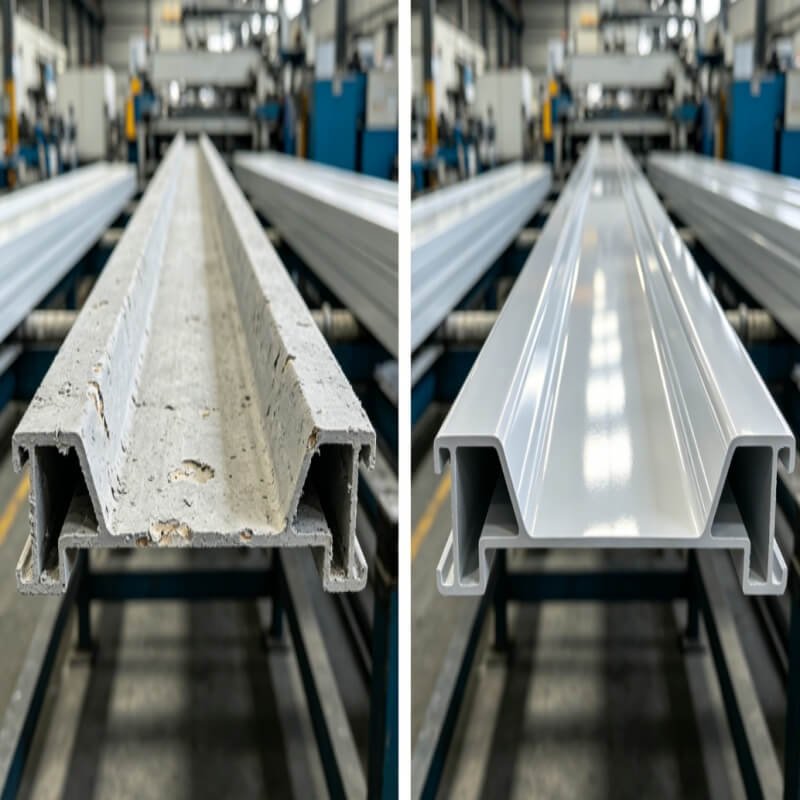
The aesthetic appeal and functional integrity of PVC profiles depend heavily on surface quality. In high-stakes industries like window extrusion, construction, and automotive trim, a “rough” surface is more than a visual flaw; it often signals underlying structural inconsistencies or thermal degradation. Achieving a mirror-like gloss or a consistent matte finish requires a deep understanding of polymer rheology and chemical synergy.
Surface finish in PVC extrusion is the result of the complex interaction between the melt and the metal surfaces of the die. When the PVC compound exits the extruder, its “viscoelastic memory” and the friction encountered at the die wall determine the final texture. To optimize this, engineers must look beyond simple temperature adjustments and analyze the chemical equilibrium of the compound.
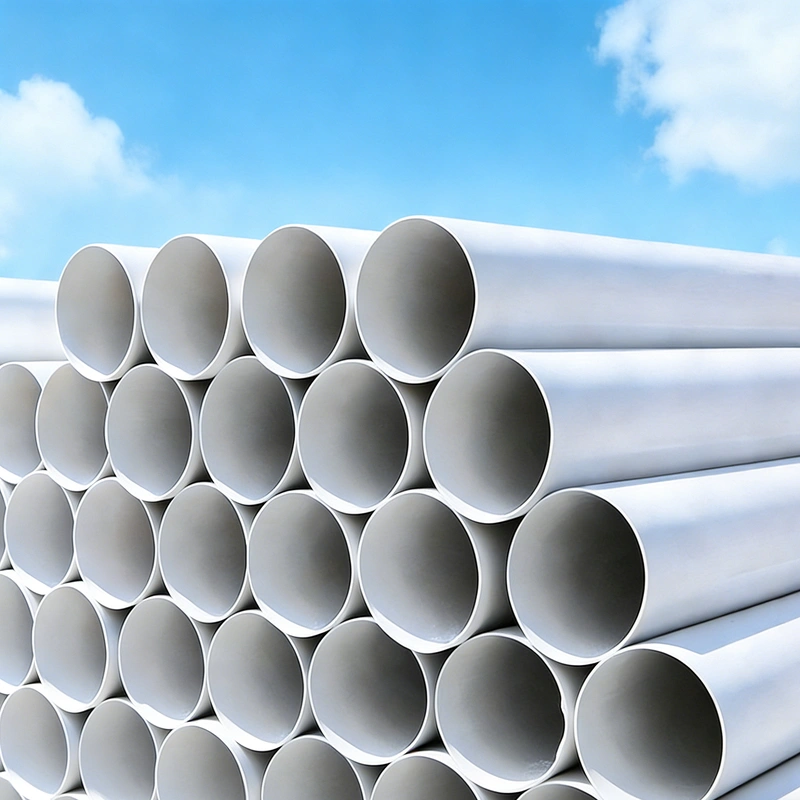
The Rheological Foundation of PVC Surface Quality
PVC is inherently heat-sensitive and has a high melt viscosity. Unlike polyolefins, PVC does not melt into a simple liquid; it transitions into a “gelled” state where primary particles are fused. If the gelation level is too low, the surface appears grainy or “sandy” because the particles haven’t fully integrated. Conversely, over-gelation can lead to thermal degradation, resulting in pitting or yellowing.
The transition from the die to the cooling tank is the most critical phase. This is where “melt fracture” often occurs. As the outer layer of the melt sticks slightly to the die wall while the core moves faster, the resulting stress leads to “sharkskin” or micro-tears. Managing this velocity gradient is the primary goal of surface finish optimization.
Optimizing Formulations for High-Gloss Profiles
The chemical composition of the PVC dry blend is the most significant lever for surface control. Three specific additive categories—stabilizers, lubricants, and processing aids—must work in perfect synchronization.
1. The Role of PVC Stabilizers
Thermal stability is the prerequisite for a smooth finish. If the PVC polymer begins to dehydrochlorinate during extrusion, the released HCl gas creates microscopic voids and surface roughness. High-quality PVC stabilizers ensure that the polymer chains remain intact under high shear and temperature. In lead-free or Ca-Zn systems, the stabilizer choice also influences “plate-out”—the accumulation of additives on the die surface that eventually streaks the profile.
2. Balancing Internal and External Lubricants
Lubrication is a “balancing act” that directly dictates surface gloss.
- Internal Lubricants: These reduce the friction between PVC molecular chains, lowering melt viscosity and improving flow.
- External Lubricants: These create a thin film between the PVC melt and the hot metal surfaces of the extruder and die.
If external PVC lubricants are insufficient, the melt will drag against the die, causing a matte or torn finish. However, excessive external lubrication leads to “slippage,” where the melt doesn’t gel properly, resulting in a dull, inconsistent surface and potential plate-out issues.
3. Processing Aids as Surface Enhancers
Acrylic-based PVC processing aids are essential for high-gloss applications. These high-molecular-weight polymers promote fusion and increase the “melt strength” of the PVC. By increasing the elasticity of the melt, processing aids allow the extrudate to pull away from the die exit more cleanly, effectively “healing” potential surface fractures before they solidify.
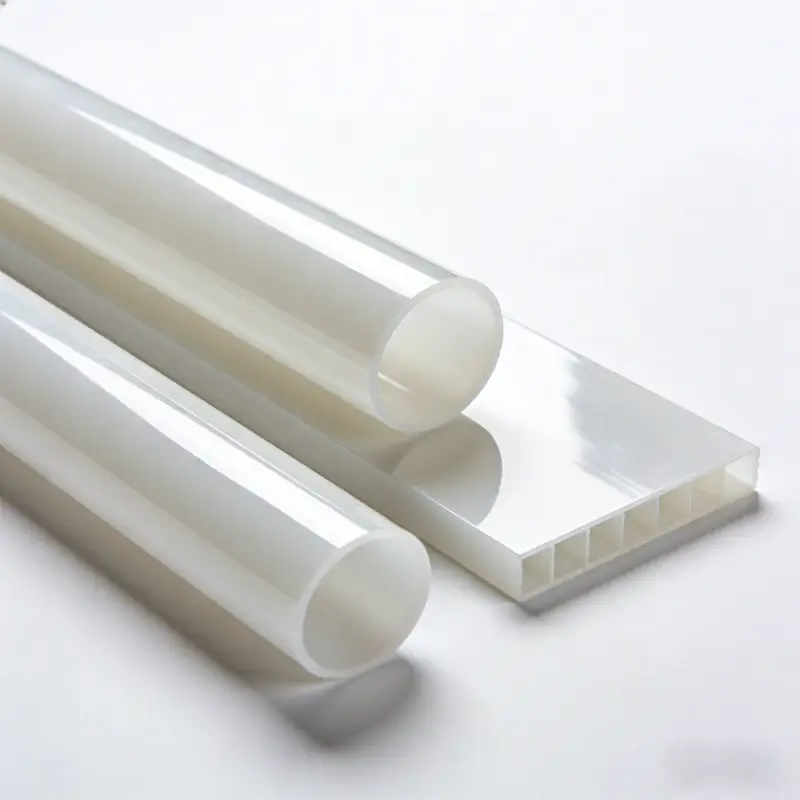
Comparison: Formulation Factors Impacting Surface Finish
| Additive Type | Primary Function for Surface | Risk of Improper Dosage |
| Stabilizer | Prevents thermal pitting/discoloration | Low: Degradation; High: Plate-out |
| External Lubricant | Reduces die-wall friction (Metal release) | Low: Sharkskin; High: Poor fusion/Slippage |
| Internal Lubricant | Lowers melt viscosity | Low: Overheating; High: Loss of physical properties |
| Processing Aid | Increases melt strength and gloss | Low: Grainy surface; High: Excessive torque |
Critical Extrusion Parameters for Surface Optimization
Even a perfect formulation can fail if the mechanical process is misaligned. For engineers troubleshooting on the shop floor, three variables are paramount:
1. Die Temperature Calibration
The die temperature should generally be higher than the barrel temperature to keep the “skin” of the profile fluid. If the die is too cold, the outer layer of the PVC freezes too quickly, leading to a matte finish. Increasing the die tip temperature by 5–10°C can often resolve sudden gloss loss.
2. Screw Speed and Shear Management
High-speed extrusion increases productivity but also increases shear heat. Excessive shear can “break” the lubricant film, leading to localized burning or “die lines.” Finding the “sweet spot” where the screw speed provides enough pressure without degrading the polymer is vital for maintaining a consistent finish over long production runs.
3. The Vacuum and Cooling Interface
In the calibration unit (vacuum tank), the profile is pulled against a chilled metal surface to set its shape. If the vacuum is too high or the cooling is uneven, the surface can develop “chatter marks” or water spots. Proper water flow and precise vacuum control ensure that the surface “frosted” by the die remains undisturbed as it solidifies.
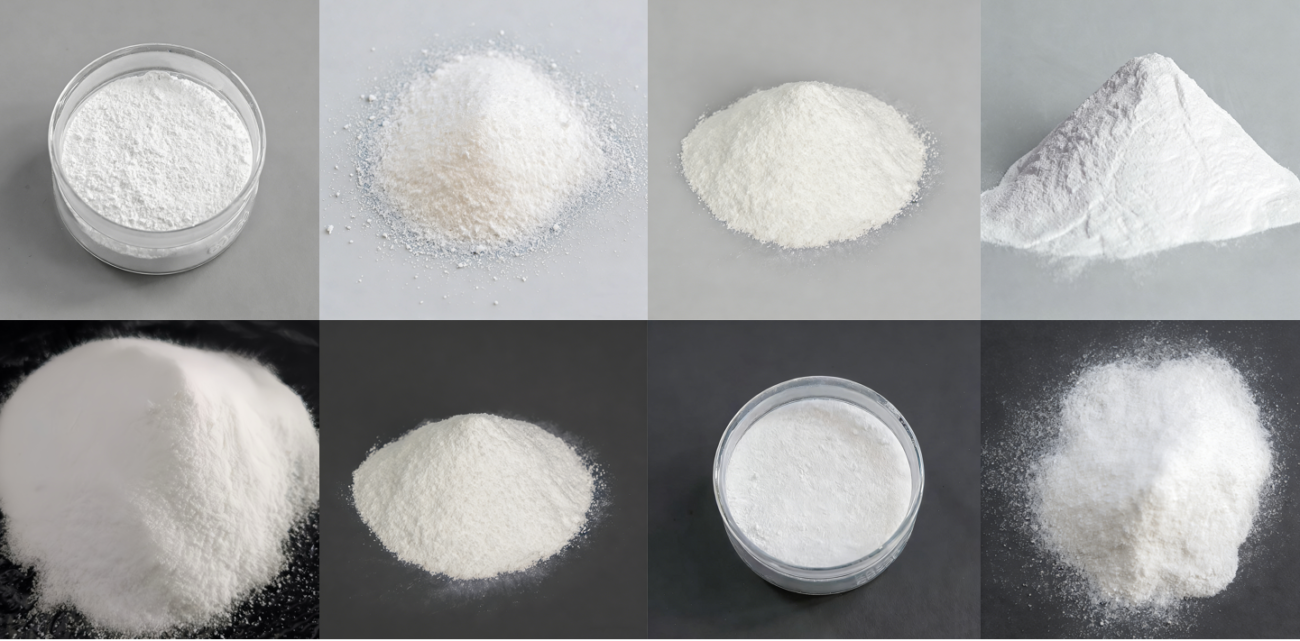
Troubleshooting Common Surface Defects
| Symptom | Probable Technical Cause | Solution Path |
| Melt Fracture (Sharkskin) | High shear stress at the die exit | Increase die temperature or add processing aids |
| Die Lines (Continuous Streaks) | Damage to the die or plate-out buildup | Clean die or adjust external lubricant/stabilizer balance |
| Pitting (Orange Peel) | Volatile moisture or air entrapment | Check dryer settings or increase back pressure |
| Dull/Matte Finish | Poor fusion or low die temperature | Increase processing aid dosage or die heat |
Strategic Material Selection
In industrial PVC processing, the synergy between chemical additives and mechanical settings cannot be overstated. When selecting components for a formulation, it is standard practice to evaluate the compatibility of the stabilizer system with the lubricant package. High-performance profiles often utilize specialized acrylic processing aids to achieve the high-gloss finish required in the premium window and door markets.
For manufacturers aiming to reduce scrap rates and improve “first-pass” quality, focusing on the interfacial tension between the melt and the die is the most effective technical strategy. By utilizing a balanced additive system—incorporating efficient heat stabilizers and calibrated lubricants—producers can achieve a superior surface finish that meets both aesthetic standards and rigorous durability requirements.
FAQ
Q:What causes “plate-out” on PVC profiles?
A:Plate-out occurs when incompatible additives (usually stabilizers or lubricants) migrate to the surface of the melt and deposit onto the metal die. Over time, these deposits break off or cause streaks, ruining the surface finish.
Q:How does the K-value of PVC resin affect the surface?
A:Higher K-values (higher molecular weight) result in higher melt viscosity. While this improves physical properties, it makes achieving a smooth surface finish more difficult, requiring more processing aids and lubricants.
Q:Can moisture in the compound affect surface gloss?
A:Yes. PVC is slightly hygroscopic. Moisture turns into steam during extrusion, creating microscopic bubbles or “silver streaks” on the profile surface, commonly referred to as splay.
Q:Does recycled PVC (regrind) impact surface quality?
A:Regrind often has a different thermal history and particle size. Using more than 20% regrind without adjusting the lubricant and stabilizer package typically results in a loss of gloss and increased surface roughness.
Reference Sources
- ASTM D4216 – Standard Specification for Rigid PVC and CPVC Exterior Profile Extrusions.
- Journal of Vinyl and Additive Technology – Rheological studies on PVC melt fracture and surface finish.
- The Vinyl Institute – Technical reports on PVC formulation and extrusion best practices.
- Plastics Technology Online – Troubleshooting guide for PVC profile extrusion.