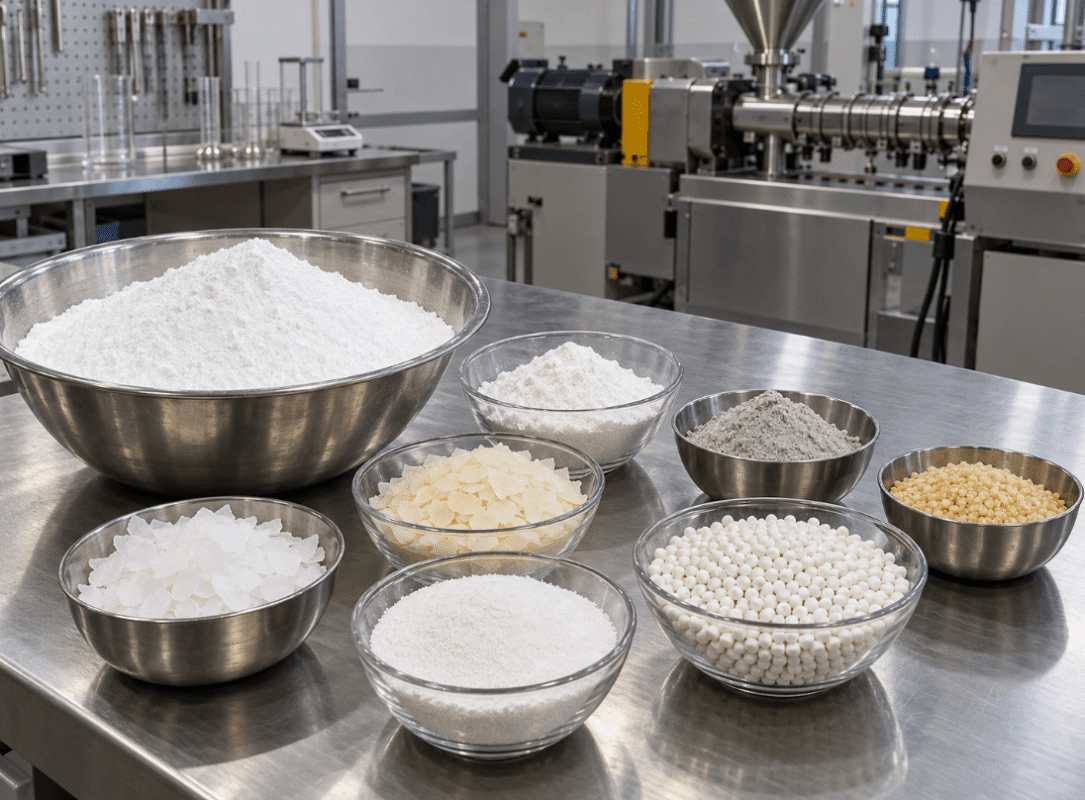


Polytetrafluoroethylene (PTFE) is a high-performance fluoropolymer characterized by exceptional chemical resistance, high-temperature tolerance, a low coefficient of friction, and excellent electrical insulation properties. Often referred to as the “king of plastics,” it is widely utilized across various sectors, including chemical processing equipment, electrical and electronic systems, medical devices, semiconductors, aerospace, and mechanical sealing.
This blog post explores PTFE manufacturing and processing methods. The insights help manufacturers choose raw materials, optimize production efficiency, and achieve high product performance.
Manufacturing Process of polytetrafluoroethylene: From Monomer Preparation to Polymerization
PTFE production begins with the monomer tetrafluoroethylene, also known as TFE. Polymerization converts this monomer into a high-molecular-weight resin.
Monomer Preparation: Industrially, manufacturers primarily produce TFE via the high-temperature thermal cracking of chlorodifluoromethane (HCFC-22). Given that TFE is highly explosive, operators must rigorously dry, wash, and cryogenically distill it to obtain an ultra-high-purity monomer suitable for polymerization.
Polymerization Methods: The polymerization of TFE takes place in an aqueous medium in the presence of a dispersing agent. There are two main polymerization processes, which yield PTFE resins with distinct properties and different processing requirements:
1. Suspension Polymerization
- Process Characteristics: Operators polymerize TFE in an aqueous medium under agitation, using a water-soluble initiator (such as a persulfate) to initiate the process.
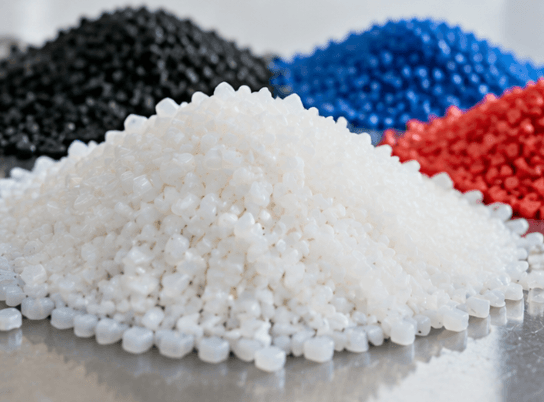
- Product Form: PTFE produced via suspension polymerization consists of relatively large particles, typically resulting in granular PTFE resin. This resin can subsequently be processed using specialized techniques such as compression molding and sintering.
- Primary Applications: Suitable for compression molding, plunger extrusion, and the machining of sheets or rods.
2. Dispersion Polymerization
- Process Characteristics: Polymerization is carried out in an aqueous medium with the addition of a dispersing agent (such as a substitute for ammonium perfluorooctanoate, PFOA) under gentle agitation.
- Product Forms:
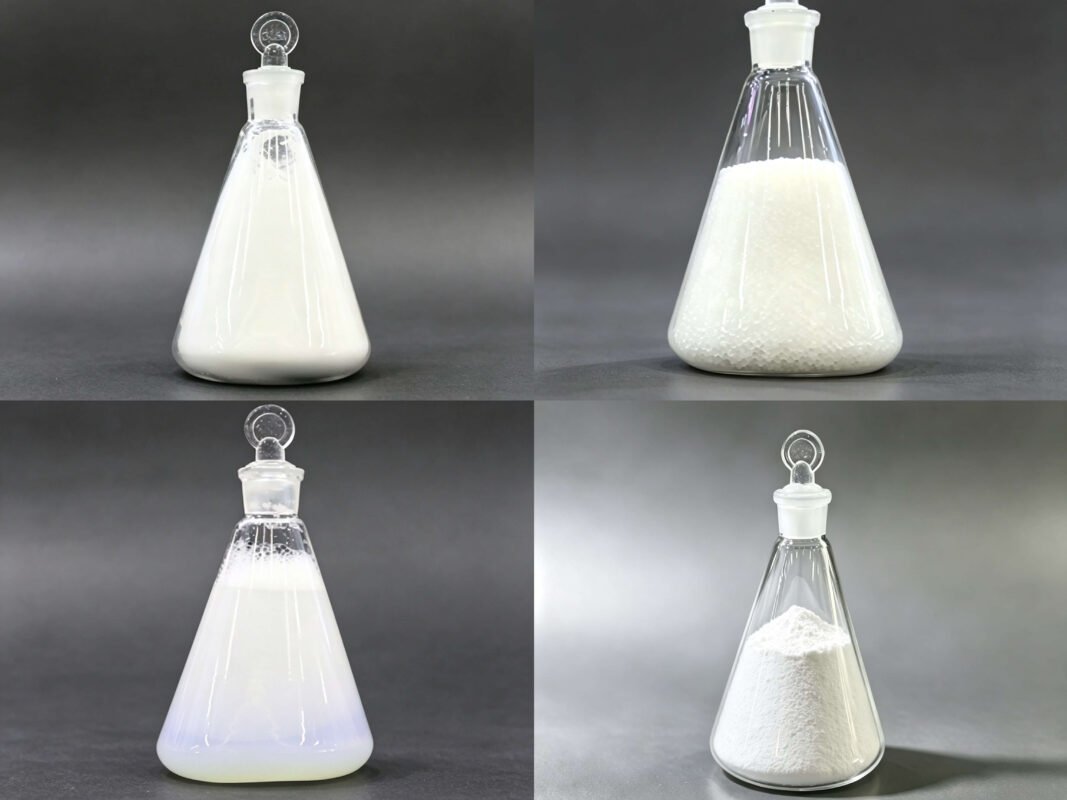
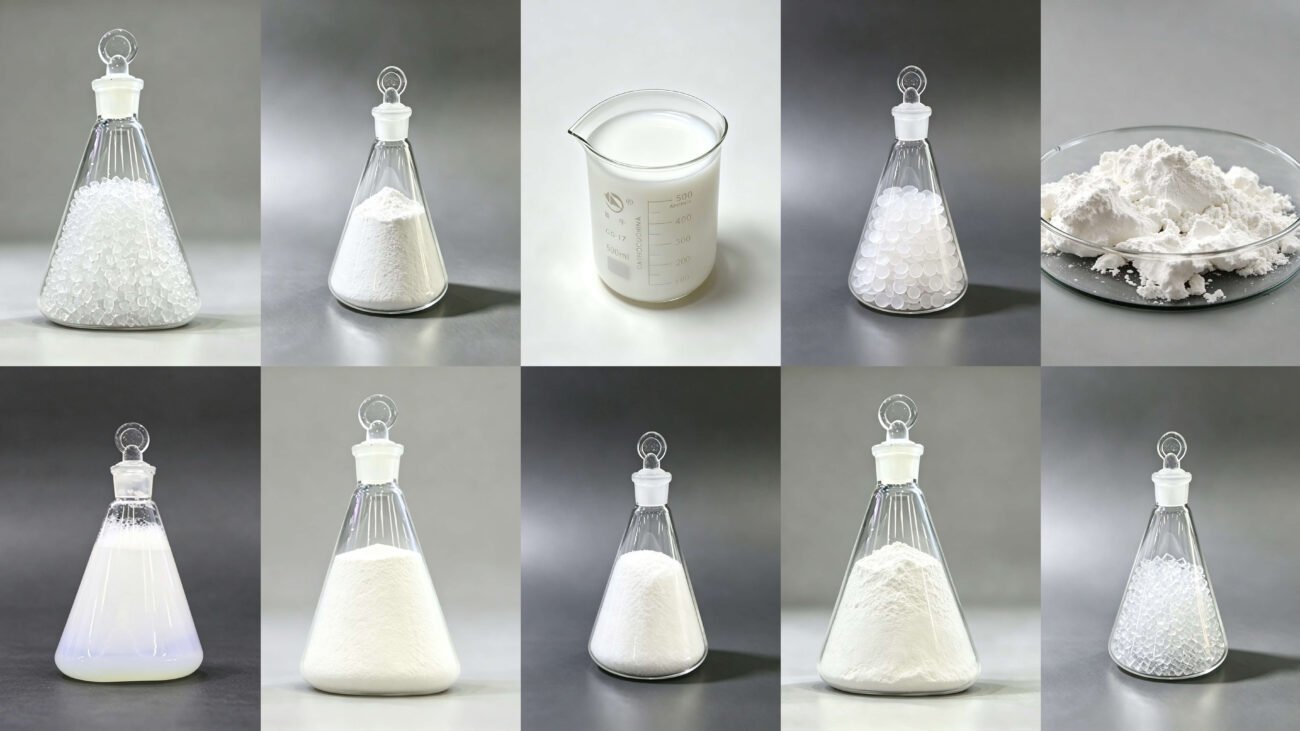
- Concentrated Dispersion: Produced in the presence of a fluorinated dispersing agent, resulting in a stable aqueous PTFE dispersion (latex) that can be used directly for impregnation and coating applications.
- Fine Powder Resin: Obtained by coagulating, washing, and drying the PTFE dispersion.
- Primary Applications: Suitable for processes such as paste extrusion, calendering, expansion (to create ePTFE), coating, and impregnation (e.g., for thread-seal tape, wire and cable insulation, and microporous membranes/ePTFE). It is widely used in fields including coatings, impregnation, fine powder processing, and PTFE dispersion-based products.
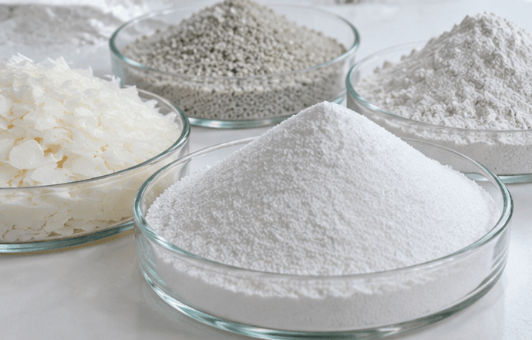
Manufacturers can add fillers like glass fibers, carbon fibers, graphite, or bronze during or after polymerization. These additives improve PTFE properties such as compressive strength, wear resistance, and thermal conductivity.
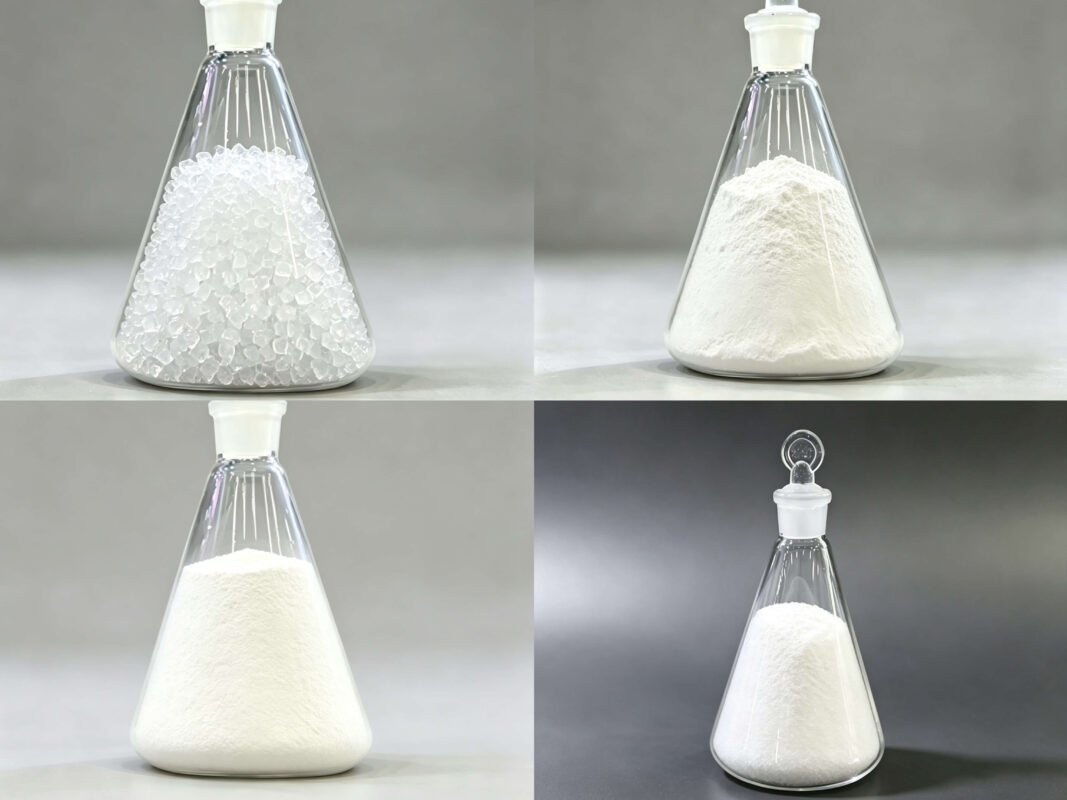
MKQ Chem → PTFE Product Series
MK-21T PTFE Micropowder
MK-22 PTFE Concentrated Dispersion
MK-23F PTFE Dispersion Resin
MK-24 PTFE Suspension Fine Powder
MK-27 PTFE Suspension Fine Powder
PTFE Suspension Medium-size Powder
PTFE Pre-sintered Material

Processing Techniques for polytetrafluoroethylene
The manufacturing and processing of PTFE differ significantly from those of conventional thermoplastics. The primary reason for this is its extremely high melt viscosity—it does not flow even above its melting point, remaining instead in a highly elastic state. Consequently, traditional injection molding and standard melt-extrusion methods are unsuitable for conventional PTFE resins; its manufacturing and processing are more akin to powder metallurgy techniques.
The processing method for PTFE resin depends primarily on the form of the resin, the structure of the product, and the intended end-use application. Different types of PTFE resins require specific molding processes. Currently, the most common industrial methods for processing PTFE include the following:
1. Compression Molding
Used for producing large-sized blanks (such as sheets, rods, and large lining rings) and employs suspension-polymerized resin.
- Cold Pressing (Preforming): Operators load PTFE powder into a mold and subject it to pressure at room temperature using hydraulic equipment, forming a “preform” (or “green part”) with a specific density.
- Sintering: Technicians place the preform in a sintering furnace and slowly heat it to a temperature above its melting point. At this temperature, the interfaces between the resin particles undergo melting and diffusion, transforming the resin from an amorphous/microcrystalline state into a homogeneous, continuous mass.
- Cooling: Following sintering, operators must control the cooling rate (typically through rapid cooling or a regulated temperature decrease) to adjust the crystallinity and density of the product, as well as to minimize internal stresses and micro-cracks.
2. Paste Extrusion
This is the signature method for processing PTFE fine powder. It utilizes dispersion-grade resins and is suitable for manufacturing tubing, thin-walled wire insulation, fibers, sealing tapes (thread seal tape), and ePTFE microporous membranes.
- Mixing: Operators blend PTFE fine powder with an appropriate amount of liquid lubricant to form a uniform paste, which they then pre-press into a preform (pre-compacted billet).
- Extrusion: A specialized paste extruder forces the preform through a die to produce tubes, rods, or strips.
- Drying and Sintering:Following extrusion, technicians remove the lubricant via heating, after which the material undergoes sintering.
- Stretching (if ePTFE membrane is required): The material is subjected to uniaxial or biaxial stretching at specific temperatures to create a microporous, expanded structure (ePTFE).
3. Ram Extrusion
This is a continuous or semi-continuous pressing-and-sintering process, suitable for the continuous production of small-diameter solid rods or thick-walled tubes, using suspension-grade resin.
- Extrusion: PTFE powder is fed into a barrel and pushed through a die under high pressure by a reciprocating plunger, forming a continuous preformed product.
- Sintering: Technicians subsequently sinter the extrudate, or apply a continuous sintering process.
- Cooling: The product is cooled and then subjected to further dimensional processing.
4. Aqueous Dispersion Processing
Used for applications such as the impregnation of fiberglass fabric and the application of anti-corrosive coatings on metal surfaces (e.g., non-stick coatings for cookware), utilizing a dispersion.
- Surface treatment: The dispersion is applied to a pre-treated substrate (such as metal, glass cloth, etc.) via methods including spraying, dipping, or roll coating.
- Drying: Technicians dry the material to remove moisture and other volatile components.
- Sintering: After drying, high-temperature sintering fuses PTFE particles into a continuous coating. The resin melts, levels, and bonds firmly to the substrate. This coating delivers non-stick, corrosion-resistant, and electrical insulation properties.
5. Ram Extrusion
Unlike traditional compression molding, ram extrusion provides uniform material compaction. This reduces internal density risks in large products, making it ideal for large or complex workpieces.
- Pressing: PTFE powder is loaded into a flexible mold and placed inside an isostatic pressing apparatus, where pressure is applied uniformly from all directions via a liquid medium to produce a preform with uniform density.
- Sintering: The preform is removed and subjected to a sintering process, followed by mechanical machining as required.
6. Machining
Machining of PTFE is typically a secondary processing operation performed after compression molding and sintering or extrusion. This is the primary method used for the commercial production of skived (turned) PTFE films. The thickness uniformity of such films depends largely on the quality of the preform and the control of the sintering process.
- Skiving: A process in which a rotating PTFE rod is continuously shaved with a cutting tool to produce an ultra-thin film (widely used for insulation and sealing applications).
- Conventional Machining: The use of processes such as turning, milling, and drilling to fabricate complex PTFE components, including seals, gaskets, and valve parts.
Among these, manufacturers widely use the skiving process—which involves the rotary cutting of a cylindrical PTFE billet into a continuous thin sheet—to produce PTFE films, gasket materials, and insulation materials.

Summary
The manufacturing and processing of PTFE constitute a technical system specifically tailored to its extreme characteristic: an inability to flow in a molten state. In the manufacturing phase, manufacturers employ suspension or emulsion polymerization to produce either granular resin or fine powder/dispersion. In the processing phase, operators use techniques analogous to powder metallurgy—such as cold pressing and sintering or ram extrusion—alongside “paste extrusion” with post-processing (e.g., calendering or expansion) to transform the resin into finished products.
This unique processing chain enables engineers and manufacturers to utilize PTFE in demanding applications. PTFE offers exceptional chemical inertness, heat resistance, and a low coefficient of friction.
As key industries evolve, demand for high-performance PTFE materials is steadily rising. Looking ahead, PTFE processing will target higher precision and fewer defects. Future developments will also focus on high-performance composites and automated production.
FAQ
Q: Why can’t PTFE be processed via conventional injection molding like PVC or PE?
The primary reason is PTFE’s extremely high molecular weight and melt viscosity. Even above its melting temperature, the melt resists flow. Thus, it fails the fluidity requirements of standard injection molding.
Q: Why is sintering required for PTFE processing?
High-temperature sintering fuses PTFE particles into a continuous, dense structure. This process enhances the mechanical strength and overall performance of the finished product.
Q: What is the difference between PTFE fine powder and granular resin?
Manufacturers produce granular resin using suspension polymerization, applying it to compression molding and ram extrusion. Fine powder resin comes from dispersion polymerization followed by coagulation. They mainly use fine powder for paste extrusion.
Reference Sources:
Performance Fluoropolymer Partnership (PFP): https://fluoropolymerpartnership.com
U.S. EPA (Environmental Protection Agency): https://www.epa.gov
PlasticsEurope:https://plasticseurope.org/
Polyvinylidene fluoride overview: https://en.wikipedia.org/wiki/Polyvinylidene_fluoride