
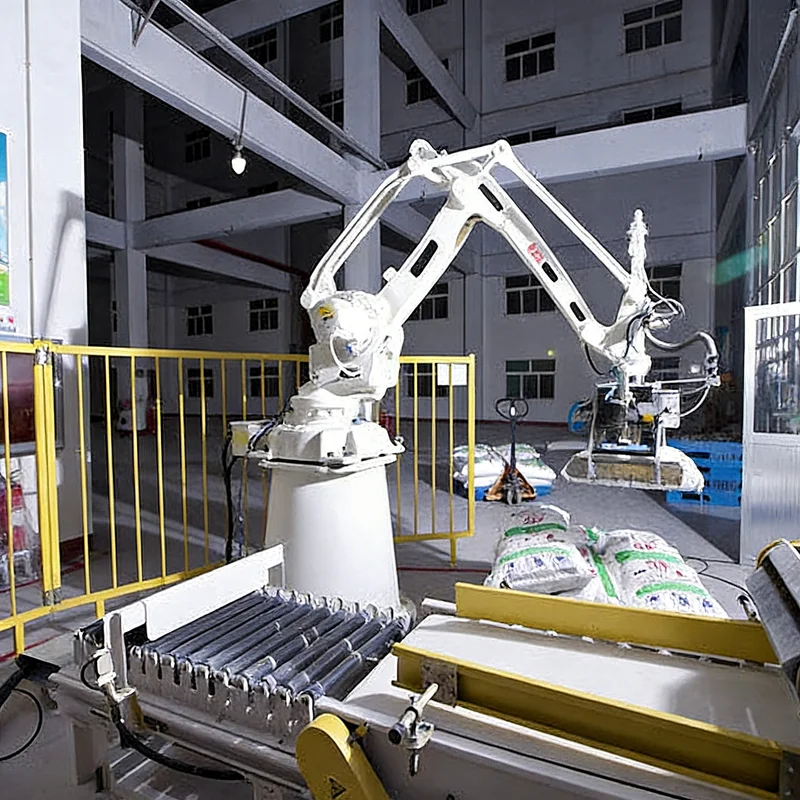
Polyvinyl Chloride (PVC) is a uniquely versatile polymer, yet it is notoriously difficult to process in its raw state. Unlike many thermoplastics, PVC is heat-sensitive and prone to thermal degradation before it reaches a flowable state. This is why pvc extrusion profiles are not just a product of machinery, but a product of precise chemical engineering.
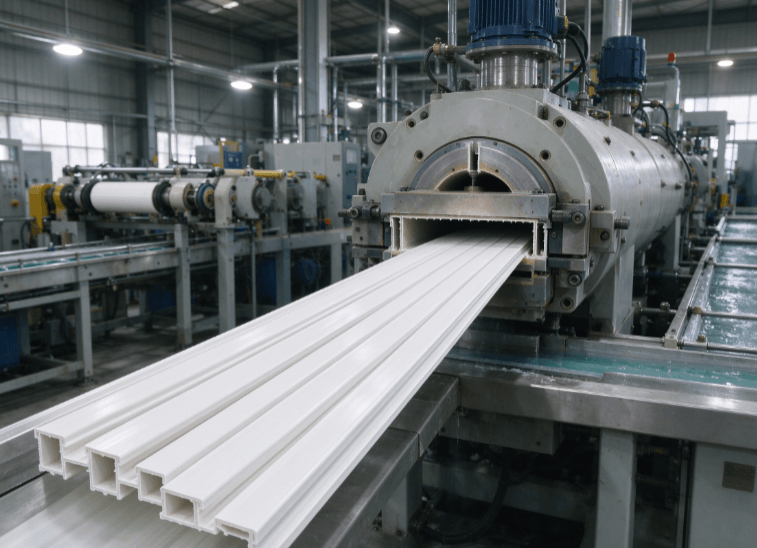
The extrusion process transforms a dry powder blend into a continuous, shaped profile through a combination of thermal energy, mechanical shear, and high-pressure shaping. For engineers and project managers in the construction or industrial sectors, understanding the synergy between the extrusion line and the chemical formulation is critical for ensuring dimensional stability and long-term performance.
The Stages of the PVC Extrusion Process
The transformation from resin to profile follows a rigorous sequence. Any fluctuation in temperature or screw speed can result in “die lines,” “surging,” or compromised structural integrity.
1. Material Preparation (The Dry Blend)
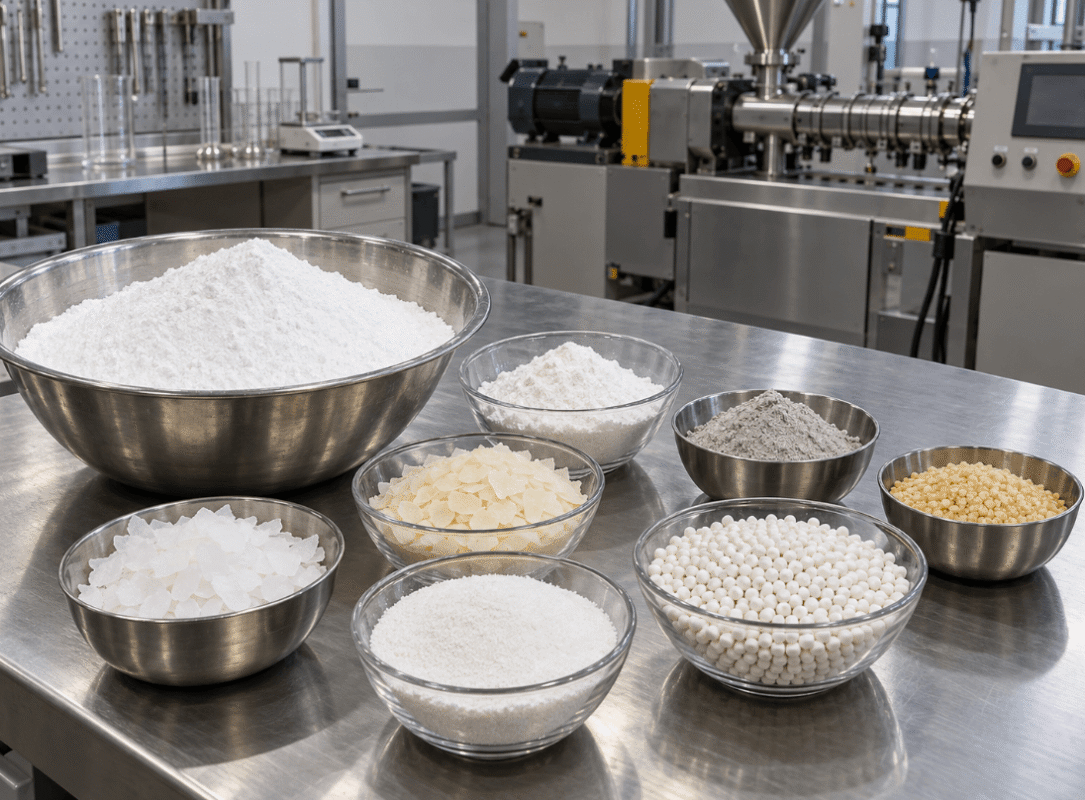
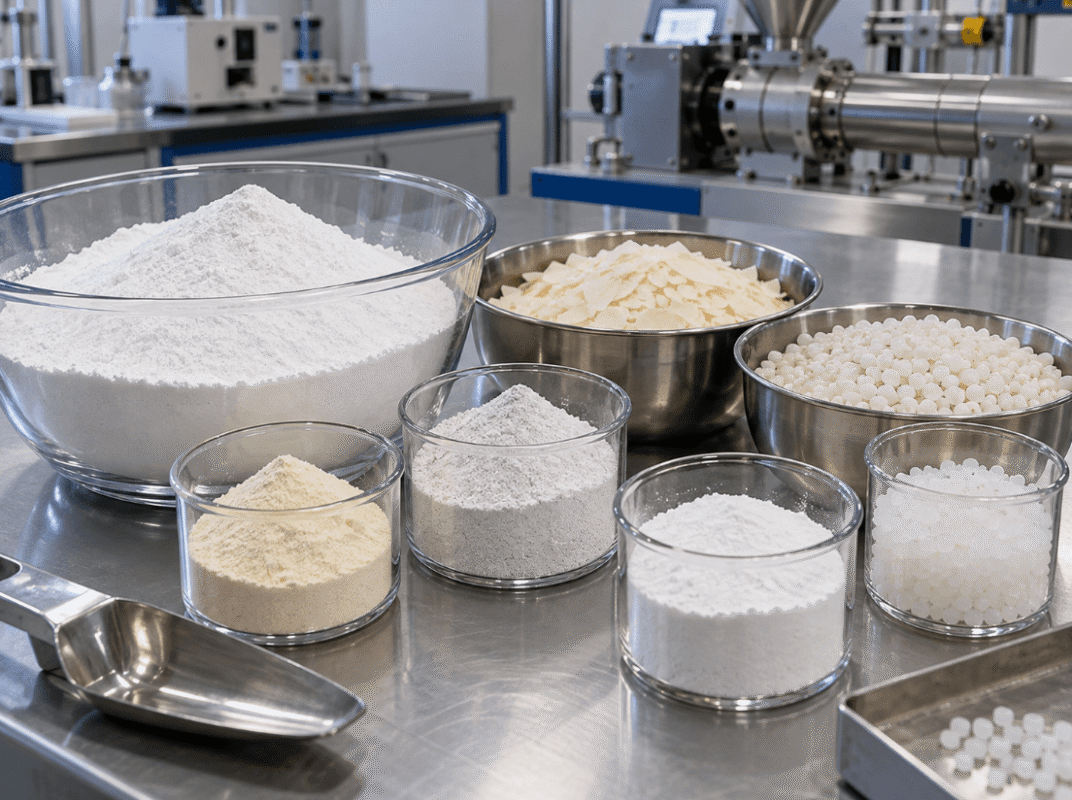
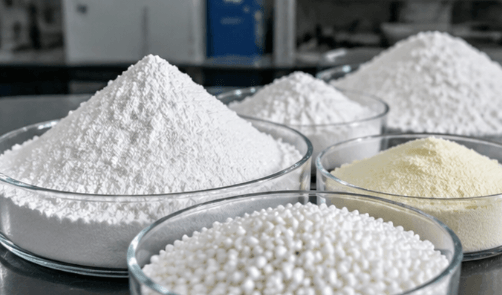
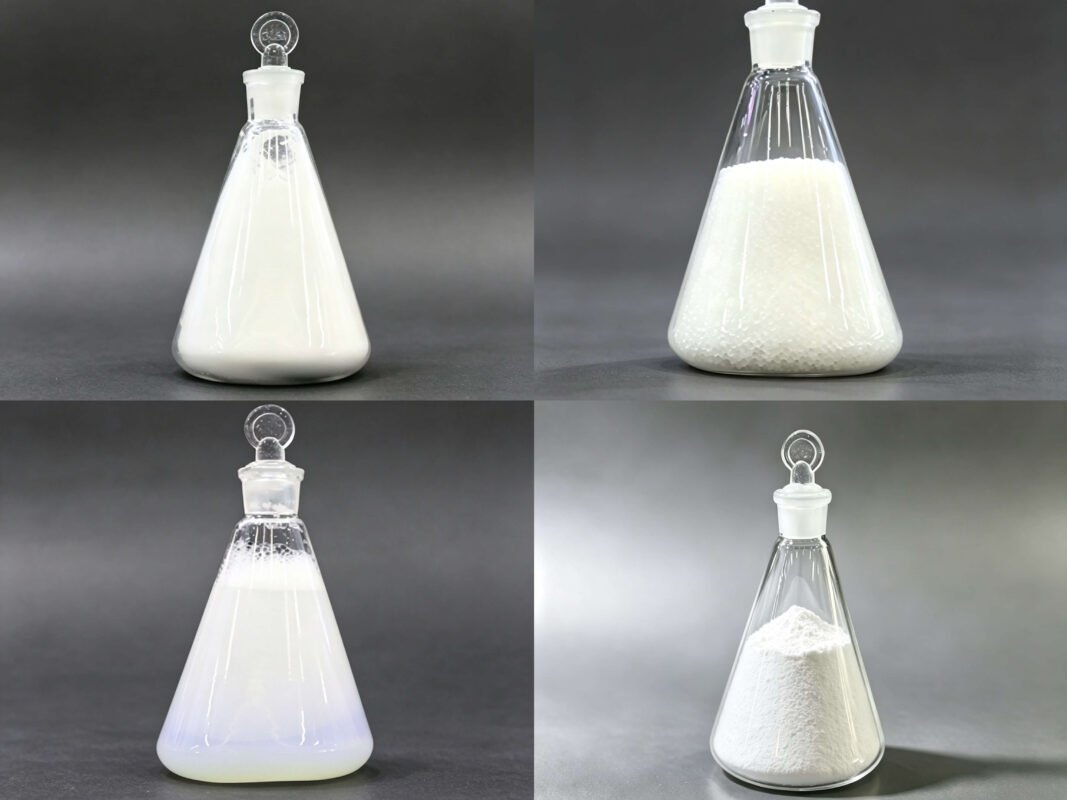
PVC resin is first mixed with a “cocktail” of additives in a high-speed mixer. This stage is crucial. The friction generates heat, allowing the PVC pores to open and absorb liquid components like stabilizers or lubricants. The result is a free-flowing powder known as a “dry blend.”
2. Feeding and Plasticization
In a typical profile extrusion line, a conical or parallel twin-screw extruder is used. Twin screws provide the necessary shear to break down the PVC grains without overheating the material. As the material moves through the vented barrel, volatiles and moisture are removed to prevent internal voiding in the final profile.
3. Shaping via the Extrusion Die
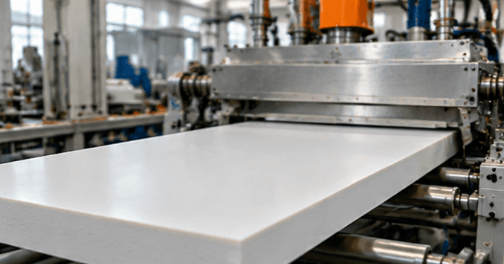
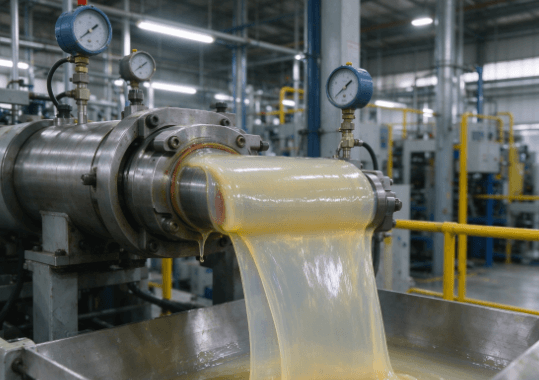
The molten PVC (melt) is forced through a custom-engineered die. The die dictates the cross-sectional geometry of the profile. Because polymers exhibit “die swell” (expanding slightly after exiting the die), the die design must account for the specific rheology of the PVC formulation.
4. Vacuum Calibration and Cooling
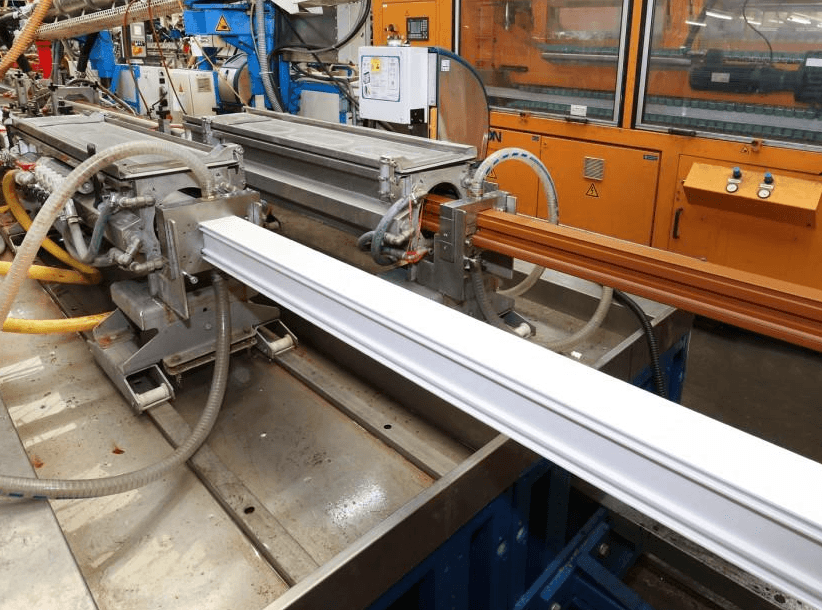
Once the melt exits the die, it is still soft. It enters a vacuum calibration unit—a series of dry or wet sizing tools that hold the profile’s shape while it is cooled by water. The vacuum pulls the profile walls against the cold metal surfaces of the calibrator to ensure high dimensional precision.
5. Haul-off and Cutting
A caterpillar or belt “haul-off” pulls the profile at a consistent speed. This speed must be perfectly synchronized with the extruder’s output to prevent stretching or thickening. Finally, a saw or “guillotine” cuts the profiles to the required lengths.
Critical Additives in PVC Profile Formulation
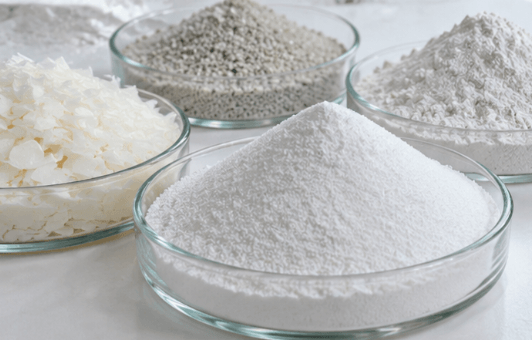
Raw PVC resin is practically unprocessable. To achieve the physical properties required for pvc extrusion profiles, manufacturers rely on high-performance chemical additives. Based on industrial standards and the specialized range offered by MKQ Chemical, the following additives are essential:
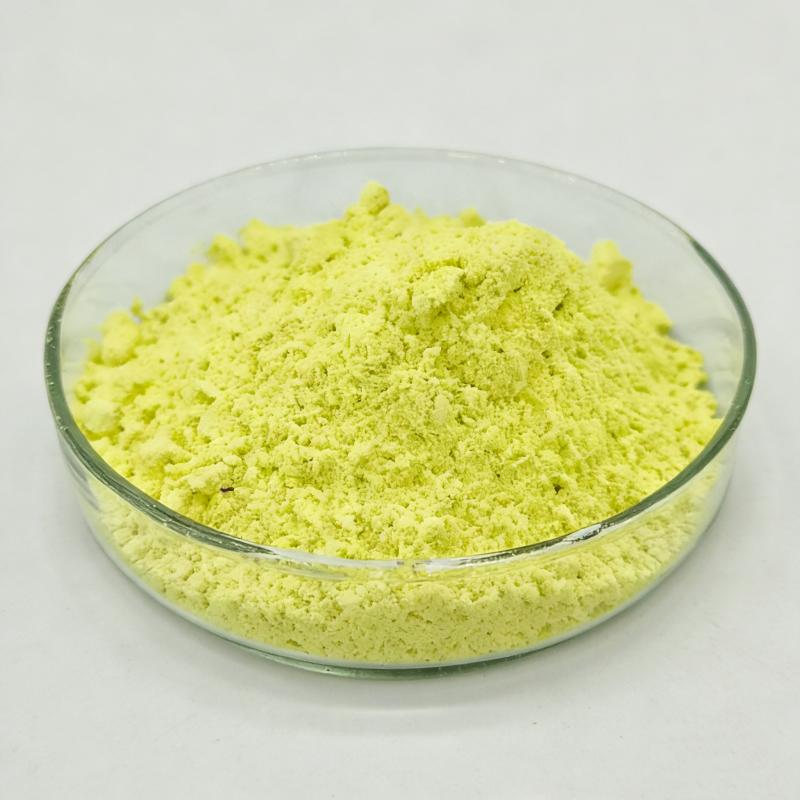
| Additive Type | Primary Function | Impact on Profile |
| Heat Stabilizers | Prevents HCl release during heating | Prevents yellowing and charring |
| Processing Aids (ACR) | Promotes fusion and melt strength | Improves surface gloss and wall uniformity |
| Lubricants (Internal) | Reduces friction between polymer chains | Lowers melt viscosity and prevents overheating |
| Lubricants (External) | Prevents PVC from sticking to metal | Enhances surface finish and prevents die buildup |
| Impact Modifiers | Absorbs energy during physical stress | Prevents cracking in cold weather or during installation |
The Role of Processing Aids and Impact Modifiers
For thin-walled profiles, the melt strength must be high enough to resist sagging during the gap between the die and the calibrator. Acrylic-based processing aids (ACR) are the industry standard for enhancing this melt elasticity. Simultaneously, for outdoor applications like window frames, impact modifiers (such as CPE or ACR-based modifiers) ensure the profile does not become brittle when exposed to UV radiation or fluctuating temperatures.
Lubrication Balance: The Technical “Sweet Spot”
A common challenge in extrusion is the “lubrication balance.” If external lubricants (like PE wax or Stearic Acid) are too high, the material may slip on the screws, leading to poor fusion. If they are too low, the material will stick to the die, causing surface defects. Expert formulators carefully calibrate these levels to ensure a smooth, continuous run.
Applications and Material Suitability
PVC profiles are categorized based on their rigidity and environmental exposure.
- Rigid PVC (uPVC): Used extensively in window frames, door sills, and siding. Its high modulus of elasticity and resistance to atmospheric corrosion make it a preferred alternative to wood and aluminum.
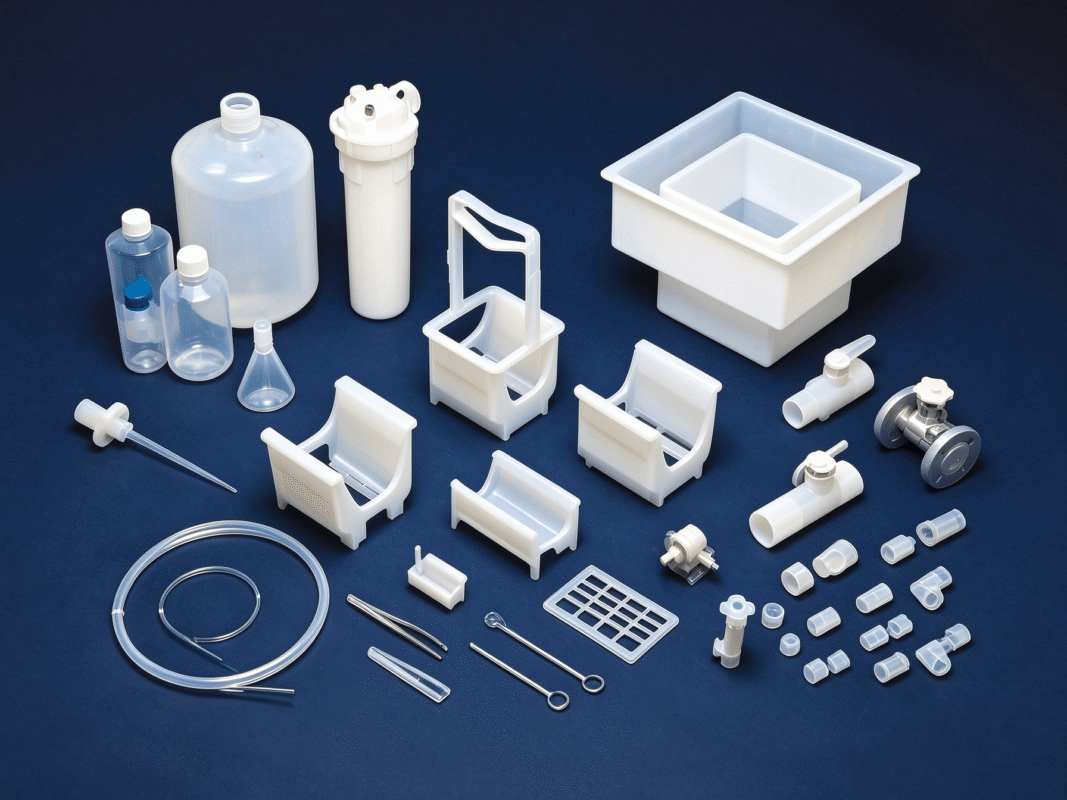
- Flexible PVC: Achieved by adding plasticizers. Common applications include gaskets, seals, and electrical cable trunking where flexibility and chemical resistance are required.
- Multi-Hollow Profiles: These complex geometries are designed for thermal insulation. The air pockets within the profile act as thermal breaks, which is a standard requirement in modern energy-efficient building codes.
Why Formulation is the Key to “Top-Tier” Profiles
In large-volume manufacturing, the difference between a high-quality profile and a failing one often comes down to the quality of the additives used. Industrial grade additives, such as the PVC stabilizers and modifiers provided by MKQ Chem, are engineered to provide a wider processing window. This means the material is less sensitive to minor fluctuations in extruder temperature, reducing scrap rates and improving the consistency of the final product.
When evaluating a PVC profile for a project, engineers look for:
- Fusion Degree: Measured via methylene chloride tests to ensure the resin has fully merged.
- Color Stability: Determined by the efficacy of the heat stabilizer package.
- Weathering Resistance: Driven by the titanium dioxide (TiO2) content and the UV stability of the impact modifiers.
Common Troubleshooting in Profile Extrusion
Even with the best machinery, chemical imbalances can cause production downtime:
- Yellowing: Usually indicates insufficient heat stabilization or the melt temperature is too high.
- Rough Surface: Often a sign of “melt fracture” or an imbalance in external lubricants.
- Dimensional Instability: Generally caused by improper cooling in the calibration stage or excessive haul-off tension.
FAQ
Q1:What is the difference between PVC and uPVC profiles?
A:uPVC (Unplasticized Polyvinyl Chloride) does not contain added plasticizers, making it rigid and hard. Most construction profiles, like window frames and pipes, are uPVC. “PVC” is often used as a general term, but in technical contexts, it may refer to flexible versions.
Q2:Why does PVC need a stabilizer?
A:PVC is chemically unstable at its melting point. Without a heat stabilizer, the polymer chains release hydrochloric acid (HCl), which leads to a “zipper reaction” that destroys the material’s properties and turns it black.
Q3:What is “Plate-out” in extrusion?
A:Plate-out occurs when additives (usually lubricants or pigments) migrate out of the PVC melt and deposit on the die or calibrator surfaces. This causes surface defects and requires the line to be stopped for cleaning.
Q4:How does screw speed affect profile quality?
A:Higher screw speeds increase “shear heat.” While this increases output, it can also lead to thermal degradation if the stabilization package is not robust enough to handle the extra heat.
Reference Sources
- ASTM D4216: Standard Specification for Rigid Poly(Vinyl Chloride) (PVC) and Related PVC and Chlorinated Poly(Vinyl Chloride) (CPVC) Building Products Compounds.
- ISO 1163: Plastics — Unplasticized poly(vinyl chloride) (PVC-U) moulding and extrusion materials.
- Journal of Vinyl and Additive Technology: “Effect of Lubricants on the Rheology and Processing of PVC.”
- Specialty Chemicals Magazine: “The Evolution of Lead-Free Stabilizers in PVC Extrusion.”