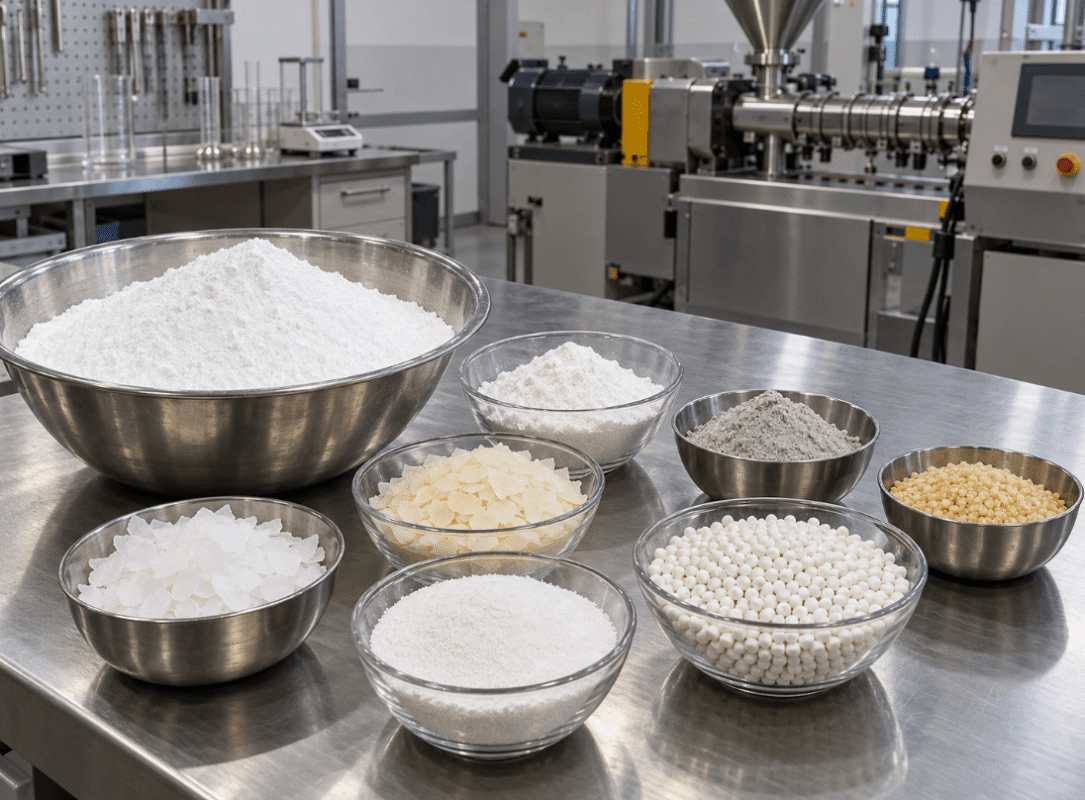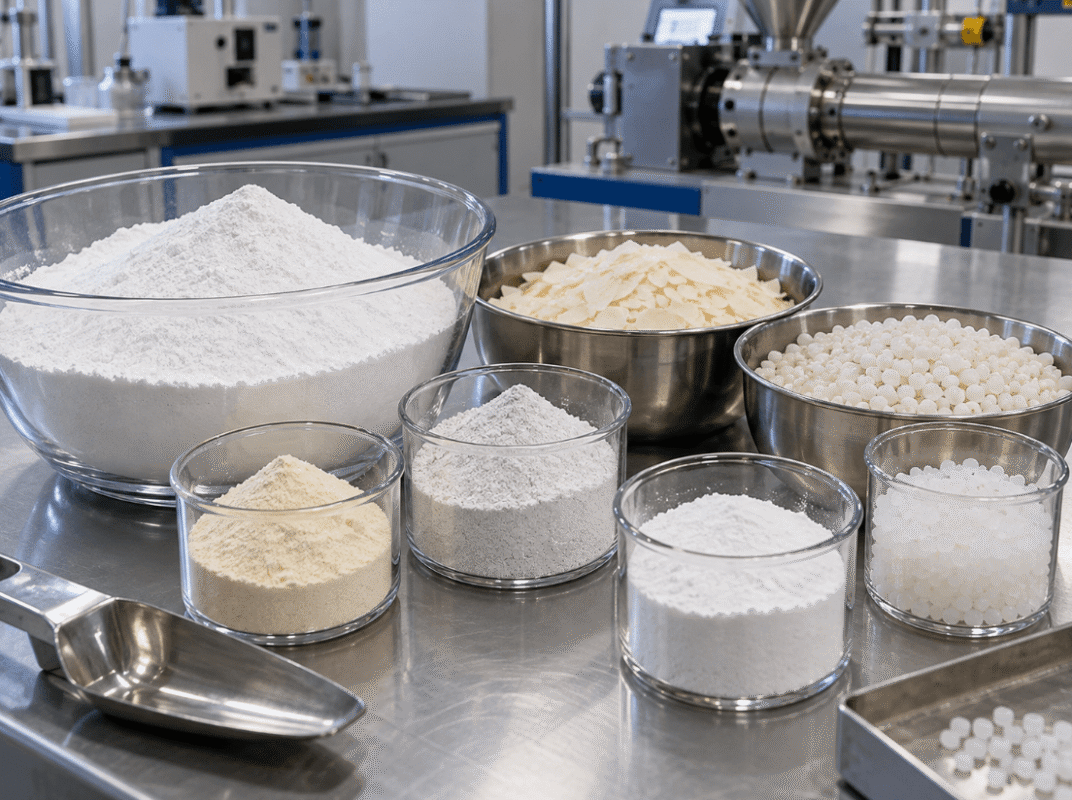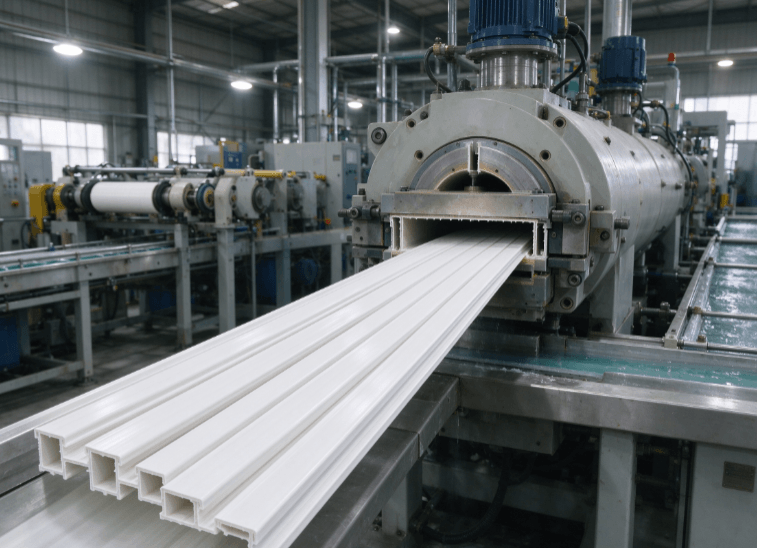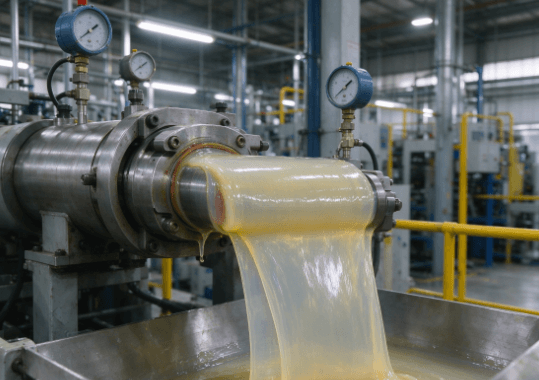

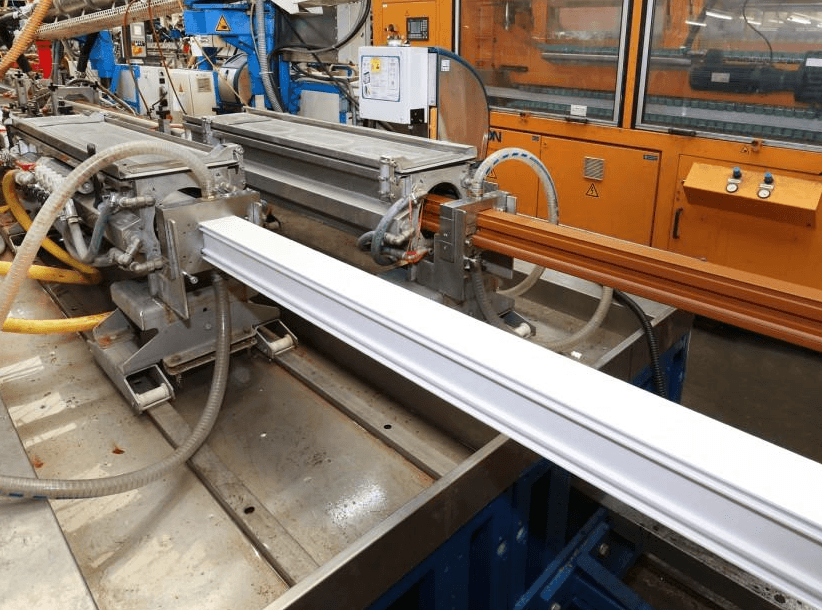
A suitable PVC lubricant for PVC profiles helps control friction, fusion behavior, melt flow, and release from extrusion tooling. In rigid PVC window frames, door profiles, and decorative sections, the objective is to maintain stable extrusion while achieving the required dimensions and surface finish. The right lubricant depends on the PVC resin, stabilizer system, filler loading, processing aid, die geometry, and operating conditions. Increasing lubricant dosage alone does not guarantee better processing because excessive lubrication can delay fusion or contribute to deposits.
For profile manufacturers, lubricant selection should be treated as a formulation decision. Internal and external lubrication must work together with PVC fusion, thermal stabilization, calibration, and cooling to produce consistent profiles.
Why Lubricants Matter in PVC Profile Extrusion
Rigid PVC compounds contain multiple ingredients that must fuse and flow through the extruder and profile die. Friction between the compound and metal surfaces, as well as friction within the material, affects torque, melt development, pressure, and material release.
Lubricants help manage these interactions. Their effectiveness depends on the chemistry and dosage of each grade and its compatibility with the complete formulation.
- Processing stability: A balanced lubrication system helps maintain consistent material flow under suitable operating conditions.
- Fusion control: Lubricant selection influences how PVC develops its melt structure during extrusion.
- Die release: Appropriate external lubrication helps reduce unwanted adhesion between the PVC melt and metal surfaces.
- Surface appearance: Proper lubrication can help prevent defects associated with sticking, deposits, or unsuitable fusion behavior.
- Dimensional consistency: Stable extrusion and calibration help profiles maintain their specified geometry.
Lubricants do not replace heat stabilizers or processing aids. Stabilizers help protect PVC against thermal degradation, while processing aids primarily modify fusion and melt strength. A reliable formulation accounts for each additive’s role.

Internal vs. External Lubricants for PVC Profiles
Internal and external lubricants influence different aspects of PVC processing. Internal lubricants primarily affect friction and flow within the compound, while external lubricants help reduce friction at the interface between the PVC melt and metal equipment surfaces.
| Comparison | Internal Lubricants | External Lubricants |
|---|---|---|
| Primary function | Modify internal friction and melt flow | Reduce friction at metal surfaces |
| Processing effect | Influence viscosity and fusion behavior | Influence release and fusion timing |
| Potential issue if unbalanced | Unsuitable flow or fusion behavior | Sticking, delayed fusion, or deposits |
| Key evaluation | Torque, melt behavior, and profile consistency | Die release, deposits, and surface appearance |
The categories are functional rather than absolute. Some lubricant grades provide both internal and external effects, so their performance should be evaluated using the manufacturer’s technical documentation and the actual PVC formulation.
How Lubricant Balance Affects Profile Surface Quality
PVC profile surface defects can arise from lubrication imbalance, but similar symptoms may also be caused by poor fusion, thermal degradation, die contamination, or inconsistent calibration. Manufacturers should identify the likely cause before changing the lubricant system.
| Observed Problem | Possible Cause | Recommended Check |
|---|---|---|
| Material sticking to the die | Insufficient effective external lubrication, contamination, or unsuitable processing conditions | Inspect the die and review release behavior |
| Deposits or plate-out | Excessive lubricant migration, additive incompatibility, or thermal issues | Review lubricant balance and die cleanliness |
| Rough or uneven surface | Incomplete fusion, unstable flow, die damage, or unsuitable lubrication | Check fusion behavior, tooling, and the formulation |
| Unstable extrusion output | Lubrication imbalance, inconsistent feeding, or changing melt conditions | Compare torque, pressure, output, and material conveyance |
| Discoloration | Thermal degradation or inadequate stabilization | Review temperature, residence time, and stabilizer performance |
Adding more external lubricant is not always the right response to die sticking, and reducing lubricant is not automatically the right response to poor fusion. The corrective action depends on the evidence collected from the extrusion line.
Factors to Consider When Selecting a PVC Profile Lubricant
1. PVC Resin and Stabilizer System
PVC resin characteristics affect fusion, melt viscosity, and processing behavior. The stabilizer system also influences thermal stability and the formulation’s operating window.
A lubricant that performs well in one rigid PVC compound may behave differently when the resin grade or stabilizer package changes. Manufacturers should validate the lubricant within the intended formulation instead of transferring dosage assumptions between recipes.
2. Calcium Carbonate and Other Fillers
Filler loading changes compound rheology and can affect friction, fusion, and surface appearance. Highly filled profile formulations may require a different lubrication balance from formulations with lower filler content.
When changing calcium carbonate loading, review both internal and external lubrication. Evaluate dispersion, torque, fusion behavior, and finished-profile quality together rather than increasing the dosage of every lubricant.
3. Profile Geometry and Die Design
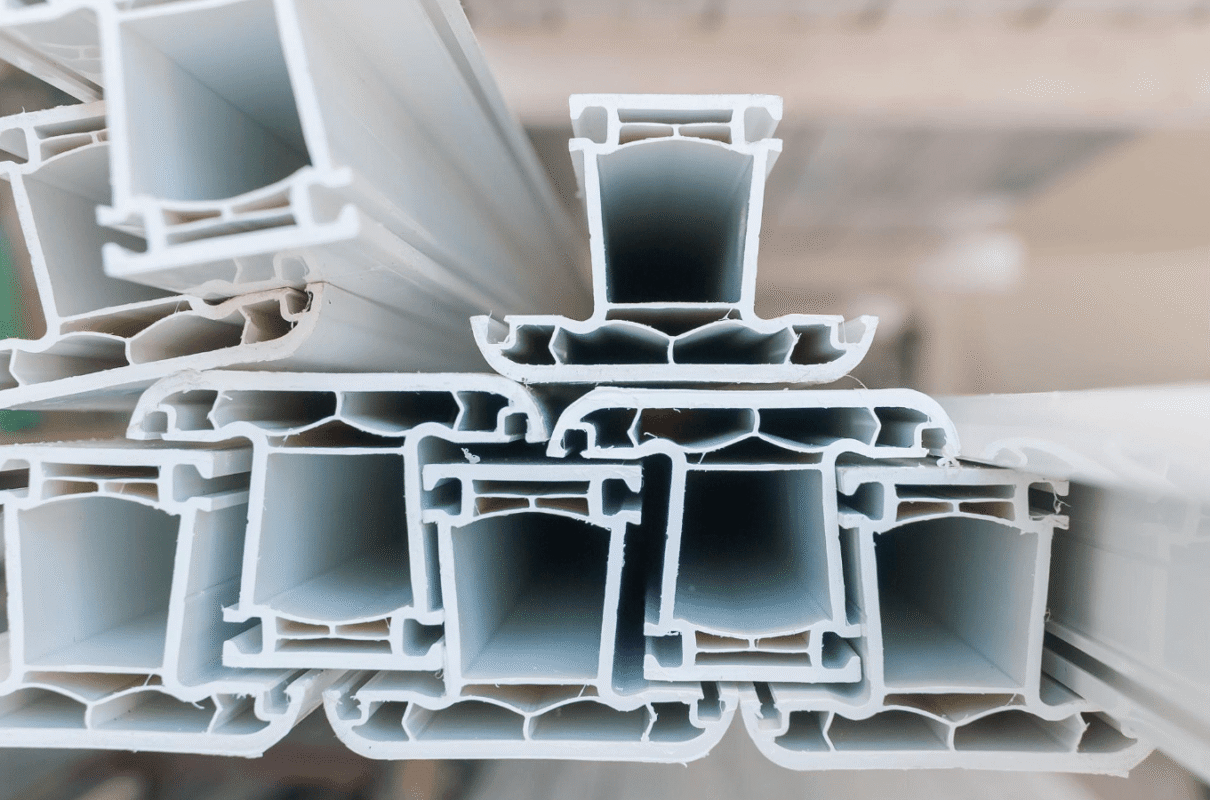
Complex window and door profiles contain multiple chambers, thin walls, corners, and narrow flow channels. These features make uniform melt distribution and stable die flow important.
Lubricant selection should account for the actual profile geometry and die conditions. If a defect appears only in one section of a profile, inspect local flow restrictions, die deposits, and calibration conditions before assuming that the entire formulation is unsuitable.
4. Processing Temperature and Production Rate
Temperature, screw speed, shear, residence time, and output influence PVC fusion and lubricant behavior. Changes in production rate may alter the processing window even when the formulation remains unchanged.
Record the temperature profile, actual melt temperature where available, torque, pressure, screw speed, and output during formulation trials. These records help distinguish lubricant-related changes from other process variations.
Choosing a Suitable Lubricant Grade
Lubricant selection should begin with the processing problem and the finished-profile requirements. A product’s chemical name alone does not establish whether it is suitable for a particular PVC profile formulation.
For example, MKQ Chemical’s MK-2021 oxidized polyethylene wax (OPE wax) is listed for PVC applications, including edge banding strips, blinds, skirting boards, and other extruded profiles. Its published recommended dosage is 0.3–1.0 phr based on 100 parts of PVC resin, with the upper end intended for highly filled systems. This is a grade-specific reference, not a universal dosage for all PVC profile lubricants.
When comparing candidate products, review:
- The grade’s stated internal, external, or combined lubrication function.
- Technical specifications and recommended dosage.
- Compatibility with the existing resin, stabilizer, and filler system.
- Effects on fusion, die release, surface appearance, and production stability.
- Batch specifications and available quality documentation.
Manufacturers can also consult the guide to PVC profile additives for a broader view of the roles of lubricants, processing aids, stabilizers, and other formulation components.
How to Validate Lubricant Performance on a Production Line
Step 1: Establish a Baseline
Record the current formulation, resin grade, filler loading, lubricant dosages, stabilizer system, extrusion settings, output, and finished-profile quality. This provides a reference for evaluating changes.
Step 2: Identify the Main Processing Issue
Determine whether the primary concern is die sticking, plate-out, unstable output, poor surface finish, or inconsistent fusion. Check tooling condition and temperature settings before attributing the problem to lubricant dosage.
Step 3: Review the Technical Data Sheet
Confirm the candidate lubricant’s intended applications, recommended dosage, relevant physical properties, and compatibility guidance. If the supplier’s recommendation is unclear, provide the formulation and processing conditions for technical review.
Step 4: Conduct Controlled Trials
Change one principal variable at a time wherever practical. Keep other ingredients and processing settings consistent so that the effect of the lubricant can be evaluated. Record torque, pressure, output, die deposits, and surface appearance during each trial.
Step 5: Confirm Finished-Profile Quality
Check dimensions, wall consistency, surface appearance, and relevant mechanical requirements. Repeat the selected formulation under representative production conditions before approving it for regular manufacturing.
This process helps manufacturers avoid unnecessary additive consumption and reduces the risk of introducing new processing problems while correcting an existing one.
What Should Buyers Ask a PVC Lubricant Supplier?
Commercial buyers should evaluate technical suitability, documentation, and supply consistency rather than comparing products only by unit price.
- Application suitability: Is the grade intended for rigid PVC profile extrusion?
- Dosage guidance: What starting range is recommended for the actual formulation?
- Technical documentation: Can the supplier provide the current TDS and SDS?
- Quality control: Are batch specifications and certificates of analysis available?
- Sample evaluation: Can the grade be tested before a bulk purchasing decision?
- Commercial terms: What packaging, minimum order quantity, lead time, and export documentation apply?
When requesting a recommendation, provide the profile type, PVC resin grade, filler loading, stabilizer system, current lubricant package, extrusion equipment, and the specific processing issue. These details help the supplier assess the grade against the actual application.
For a wider discussion of internal and external lubrication, refer to the PVC lubricant selection guide.
Conclusion
A suitable PVC lubricant for PVC profiles helps balance melt flow, fusion behavior, die release, and surface quality. The best result depends on the complete formulation, profile geometry, extrusion conditions, and the specific function of the lubricant grade.
Manufacturers should start with application-specific technical guidance, diagnose processing problems before adjusting dosage, and validate candidate lubricants through controlled production trials. This approach supports more consistent profile quality and more reliable extrusion performance.
Frequently Asked Questions
Why are lubricants used in PVC profile extrusion?
Lubricants control friction within the PVC compound and at metal surfaces. A balanced system helps manage melt flow, fusion timing, die release, and surface appearance during profile extrusion.
What is the difference between internal and external lubricants for PVC profiles?
Internal lubricants primarily influence friction and flow within the compound, while external lubricants mainly reduce friction between the PVC melt and metal surfaces. Their effects depend on the specific chemistry, dosage, and formulation.
Can excessive lubricant cause poor PVC profile quality?
Yes. Excessive lubrication can delay fusion, affect material conveyance, or contribute to deposits and surface defects. However, the cause should be confirmed before changing the formulation because similar defects may originate from tooling or temperature conditions.
Which lubricant should be used for PVC window profiles?
The appropriate grade depends on the resin, stabilizer system, filler loading, die design, and production conditions. Evaluate the supplier’s technical specifications and validate the candidate grade in the actual formulation.
How can manufacturers test a new PVC profile lubricant?
Establish a baseline, review the technical data sheet, conduct controlled trials, and compare torque, pressure, output, die release, surface appearance, and finished-profile dimensions. Confirm repeatability before adopting the new formulation.